
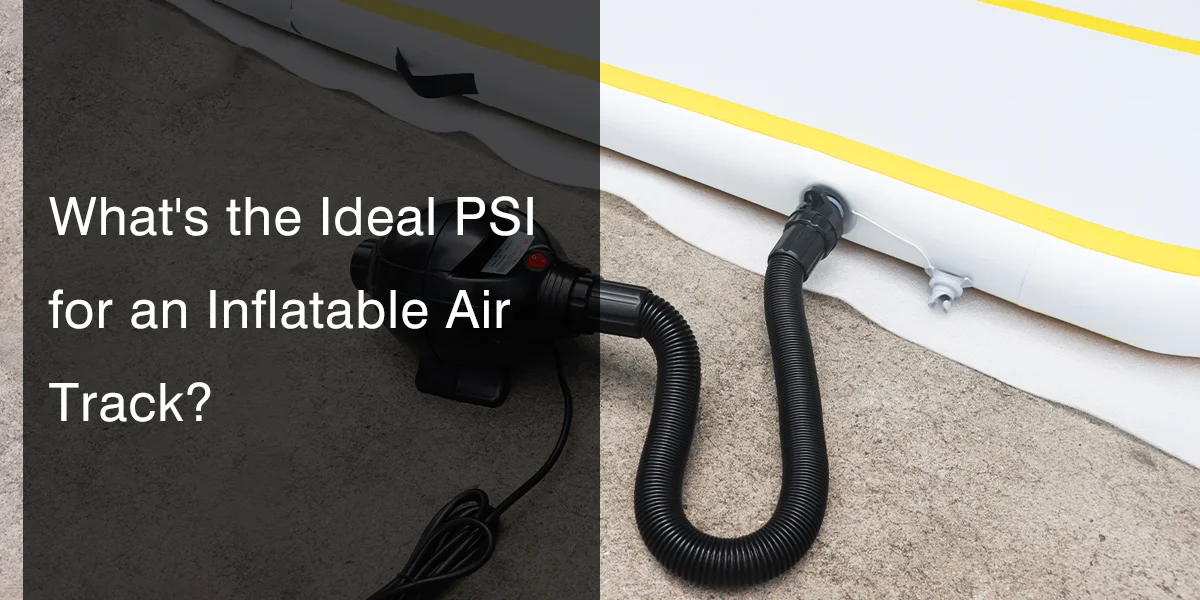
The correct PSI for an inflatable Air Track is model-dependent. There is no single pressure setting that is safe or suitable for every Air Track, because thickness, internal construction, user weight and training use can all change the recommended operating pressure.
I’m Charlie from Huale. We manufacture inflatable drop-stitch Air Tracks for gymnastics gyms, schools, distributors and private-label brands. When buyers ask us what PSI they should use, our first question is always which Air Track model and specification are you using?
Short answer: always start with the pressure range or maximum pressure specified for the exact Air Track model. Within that approved range, pressure can be adjusted for the user and training purpose, but the mat should never bottom out or exceed the manufacturer’s stated limit.
This guide explains how thickness, user weight, training type and temperature affect Air Track pressure, and how to check whether a mat is too soft or too firm without relying on a universal PSI number.
Is There a Standard PSI for Every Air Track?
Short answer: no. Different Air Track manufacturers and product structures can specify very different operating pressures, so a pressure value from another brand or model should not automatically be applied to your mat.
The correct pressure depends on factors such as:
- Air Track thickness
- Drop-stitch and rail construction
- Product dimensions
- User weight
- Training activity
- The manufacturer’s tested operating limit
For example, published Air Track manuals from different manufacturers show substantially different recommended pressure ranges. This is why the product manual or manufacturer specification should remain the primary reference.
| Common PSI Question | Recommended Approach |
|---|---|
| What PSI should I use? | Use the operating pressure specified for your exact Air Track model. |
| Can I use another brand’s PSI? | Not automatically. Air Track construction, thickness and tested pressure limits can differ between models. |
| Can pressure be adjusted within the approved range? | Yes. User weight, training purpose and preferred surface response can influence the final setting, provided it remains within the model’s permitted range. |
How Do You Know If an Air Track Is Too Soft or Too Firm?
A pressure gauge and the manufacturer’s product specification should be your primary references. Physical testing can then be used as a secondary check to confirm that the mat provides enough support for the intended user.
Signs an Air Track may be underinflated
- The user can feel or contact the floor through the mat during normal use.
- The surface deforms excessively under the intended user load.
- The Air Track does not maintain enough support for the planned training activity.
- The measured pressure is below the operating guidance for that specific model.
Signs the pressure needs to be checked before adding more air
- The gauge is already approaching the manufacturer’s specified pressure limit.
- The mat feels significantly firmer than required for the intended drill.
- The product has recently moved from a colder environment into a warmer one.
- The mat has been exposed to direct sunlight or another significant temperature change.
The important point is not to chase a particular “feel” by continuously adding air. First confirm the model’s permitted pressure, then fine-tune within that range while checking that the user does not bottom out.
Does Temperature Change Air Track Pressure?
Yes. Changes in temperature can change the pressure inside an inflated Air Track. A mat inflated in a cool environment may feel firmer after the surrounding temperature rises, while a mat moved into colder conditions may feel softer.
This matters particularly when an Air Track is used outdoors, stored in a cool warehouse and then moved indoors, or exposed to strong sunlight.
Do not compensate by using a fixed percentage of extra or reduced pressure. Instead, allow the product to adjust to the new environment, check the pressure again with a suitable gauge and make sure it remains within the operating limit specified for the model.
For outdoor use, also follow the product manufacturer’s instructions regarding heat, surface preparation, storage and supervision.
Why Correct Air Track Pressure Matters for Training and Product Use
Correct pressure affects more than rebound. It also influences how the mat supports the user and how the inflatable structure behaves during repeated use.
If pressure is too low for the user and training activity, the mat may deform excessively or allow the user to bottom out. If pressure is increased beyond the product’s specified limit, unnecessary stress can be placed on the inflatable structure, including seams, rails and valves.
The goal is therefore not to make an Air Track as soft or as hard as possible. The goal is to operate the product within its approved pressure range while providing enough support for the intended user and activity.
Pressure should also be checked again when the user group, environment or product setup changes. Gyms, schools and other multi-user facilities should include this check in their normal equipment setup procedure.
Does Air Track Thickness or Size Change the Required PSI?
Yes, product dimensions are part of the pressure decision, but they should not be converted into a universal PSI chart.
Thickness affects how far the surface can deform before the user reaches the floor, while length and width influence the overall product structure and intended use. A 10cm home-training mat and a thicker commercial Air Track therefore should not automatically use the same pressure simply because both products use drop-stitch construction.
User weight and training style also matter. This is why pressure should be confirmed together with the final Air Track specification rather than treated as an isolated number.
If you are still deciding between product dimensions, use our Air Track size guide to compare different lengths, or review the Air Track thickness guide for 10cm, 20cm and 30cm options.
Summary: What PSI Should You Use for an Air Track?
There is no universal Air Track PSI that should be applied to every model. The correct starting point is always the operating pressure specified for the exact product you are using.
From there, pressure can be adjusted within the permitted range according to factors such as thickness, user weight and training purpose. The Air Track should provide enough support to prevent bottoming out, while the manufacturer’s stated pressure limit should never be exceeded.
For B2B buyers developing an Air Track range, pressure should be confirmed as part of the final product specification rather than copied from another supplier or generic online chart. Review our Air Track manufacturing and product range if you need to compare construction, sizes and customization options.
Frequently Asked Questions About Air Track PSI
What PSI should an Air Track be?
There is no single PSI that applies to every Air Track. Use the operating pressure specified for your exact model, then adjust within the permitted range according to user weight and intended use. Never exceed the manufacturer’s stated pressure limit.
What PSI should a 20cm Air Track be?
A 20cm thickness alone is not enough to determine the correct PSI. Construction, dimensions, user load and the manufacturer’s tested operating range also matter. Check the specification for the exact 20cm model instead of applying a generic pressure number.
How do I know if my Air Track is underinflated?
An Air Track may be underinflated if the user can bottom out, the mat deforms excessively under normal use or the measured pressure is below the guidance for that model. Stop using the mat and check its pressure and setup before continuing.
Does a thicker Air Track need more PSI?
Not necessarily. Thickness changes how the Air Track responds to pressure and user load, but thicker does not automatically mean higher PSI. The correct setting should be confirmed for the individual model.
Can hot weather increase Air Track pressure?
Yes. Internal pressure can change when the surrounding temperature changes. Recheck the pressure after significant temperature changes and make sure the Air Track remains within its specified operating limit.


