Inflatable River & Whitewater SUP Manufacturer

OEM and private-label river SUP boards for outdoor brands, paddling schools, rental outfitters and specialist distributors.
Huale helps B2B buyers evaluate board length, width, rocker, rail construction, fin configuration, grab-handle layout, deck control, accessories and sample-testing requirements before approving a river SUP model.

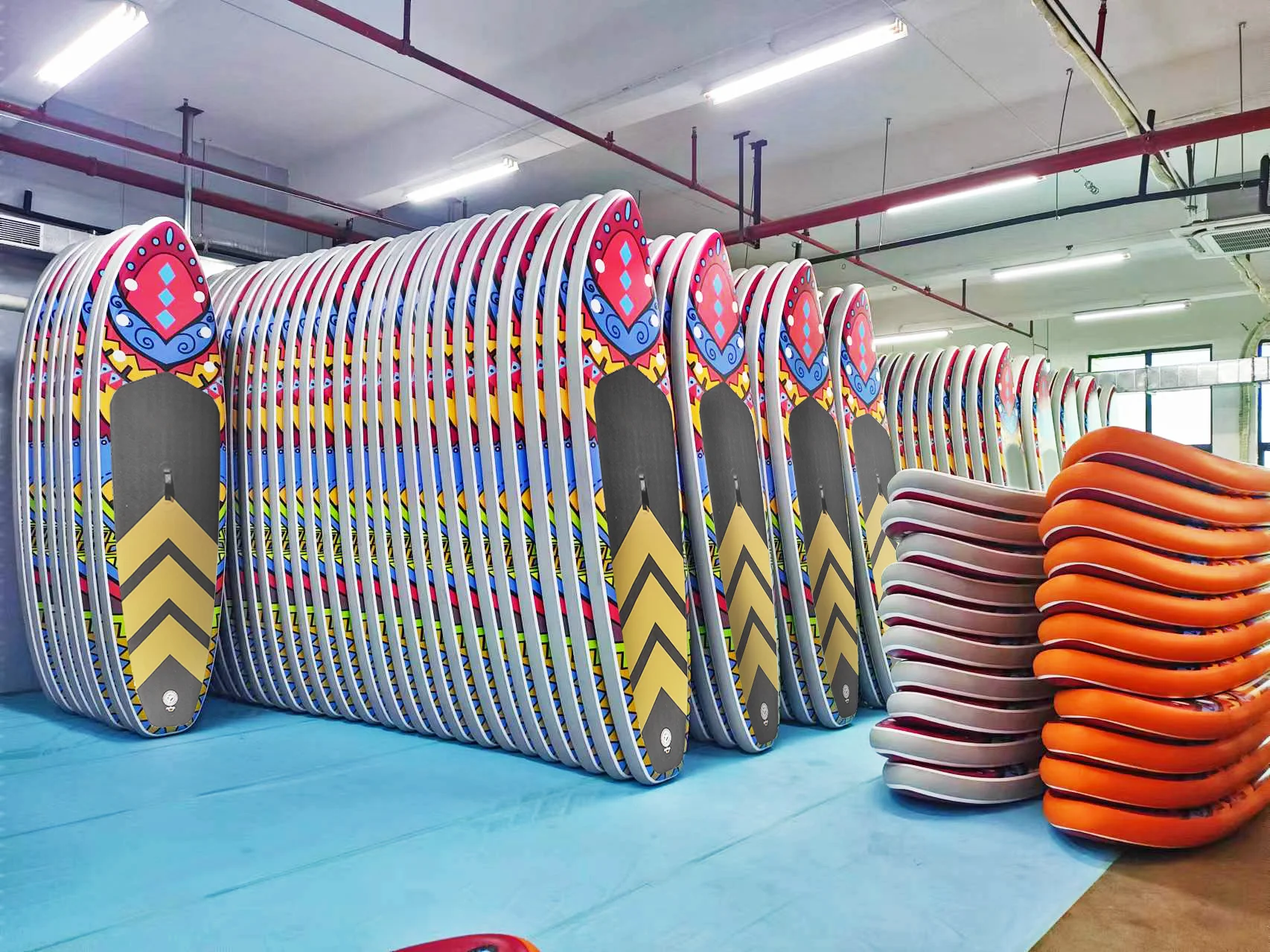
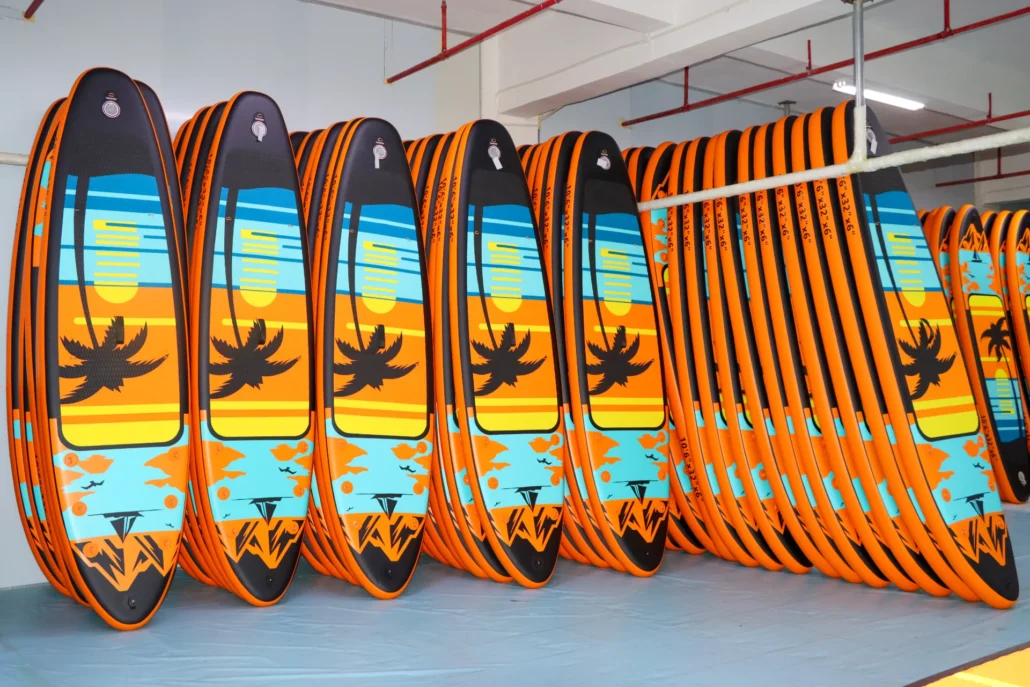
Stack of colorful surfboards with vibrant designs arranged neatly in a factory setting with industrial lights overhead.
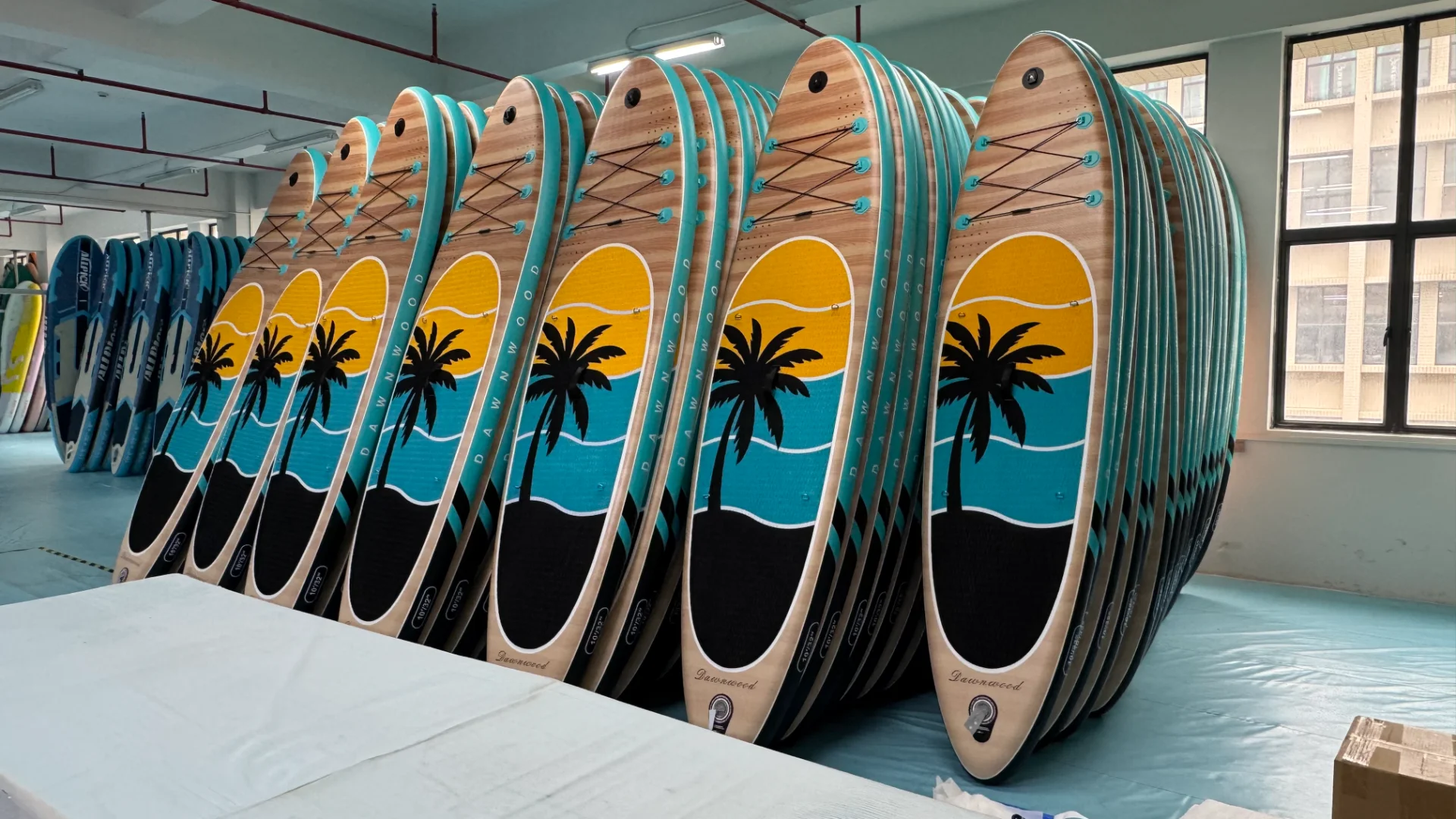
Several surfboards with palm tree designs stacked vertically in a factory building, with windows letting in natural light.
Huale inflatable SUP factory production line
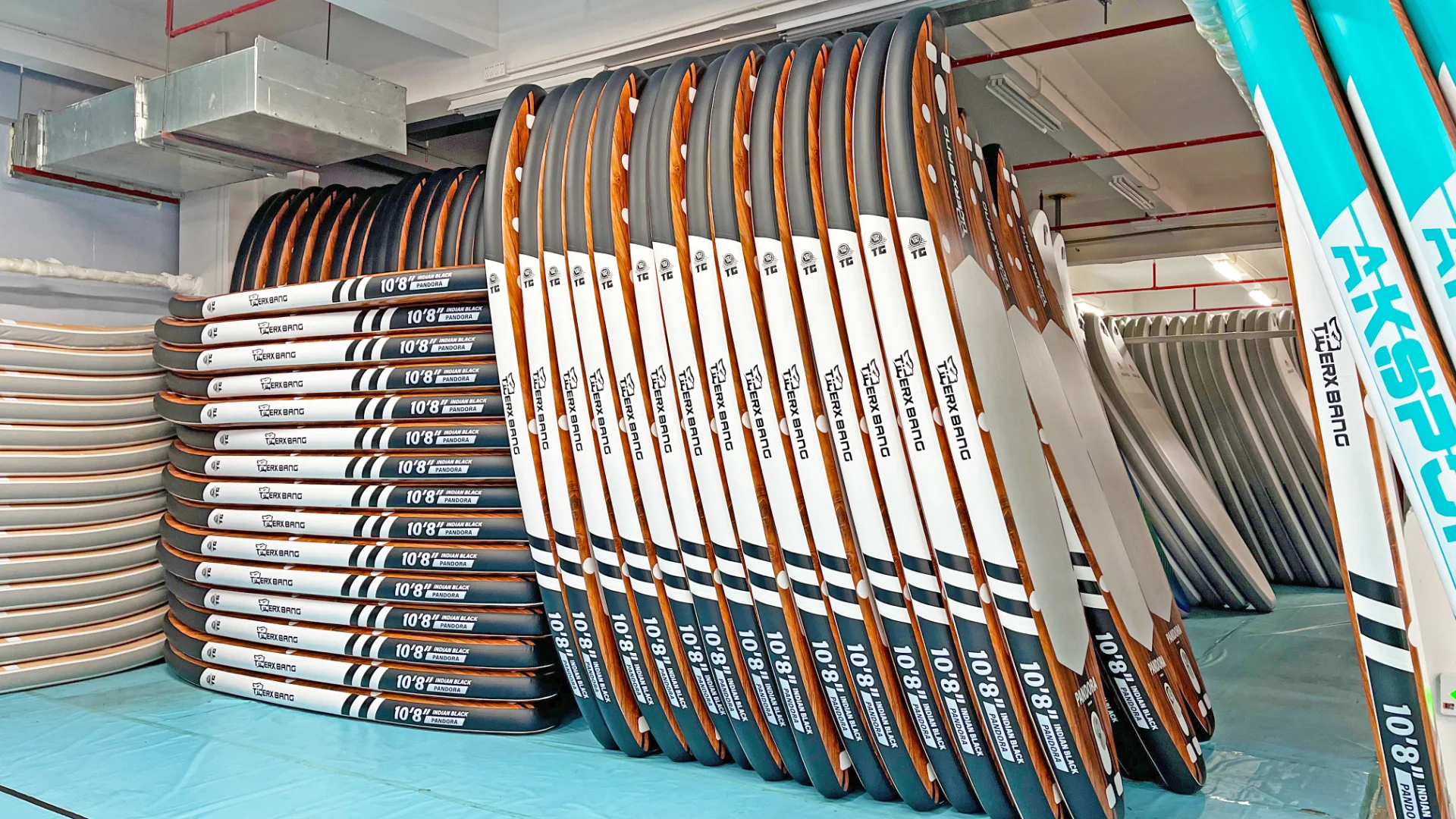
A row of paddleboards neatly stacked in a storage room with visible labels and vibrant designs.
Reference Stability Platforms

Three Stable SUP Platforms for Outdoor & Rental Programs

Compare three wider inflatable SUP platforms with different capacity, deck-space and recreational-use directions. These models can support selected outdoor, rental and leisure programs, while technical whitewater projects require a separate board specification.

High Capacity · Stability

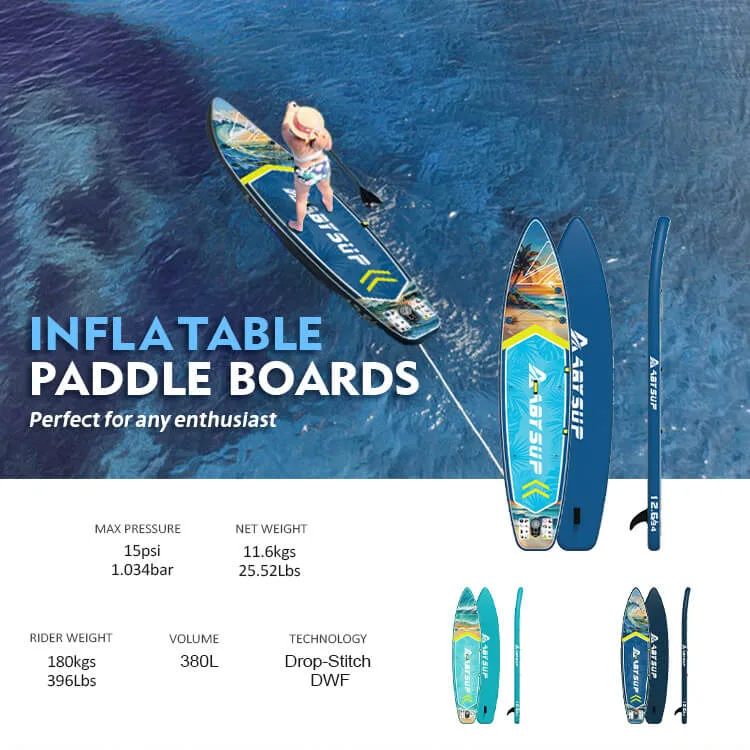
12' × 34" High-Capacity Stability SUP

Approx. 11.6 kg · 380 L · Up to 180 kg · 15 PSI

A larger, higher-volume platform for buyers prioritizing load capacity, usable deck space and stability across recreational, rental and outdoor programs.

  • 34-inch platform for stability-focused positioning
  • 380 L volume for larger riders and additional gear
  • OEM graphics, deck pad, accessories and packaging options
View model details
Wide Platform · Fishing & Yoga

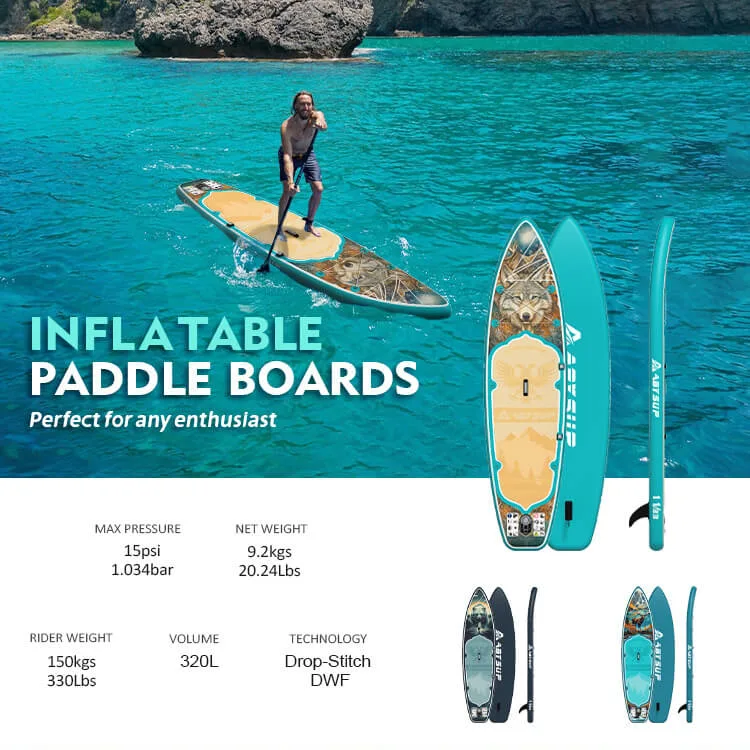
11' × 33" Wide Stability SUP

Approx. 9.2 kg · 320 L · Up to 150 kg · 15 PSI

A wide recreational platform for buyers developing stability-led collections including fishing, yoga, rental and general leisure applications.

  • 33-inch deck for a wider standing area
  • 320 L volume for recreational use and light gear
  • Configurable EVA, fittings, graphics and retail package
View model details
Extra-Wide · Recreational Stability

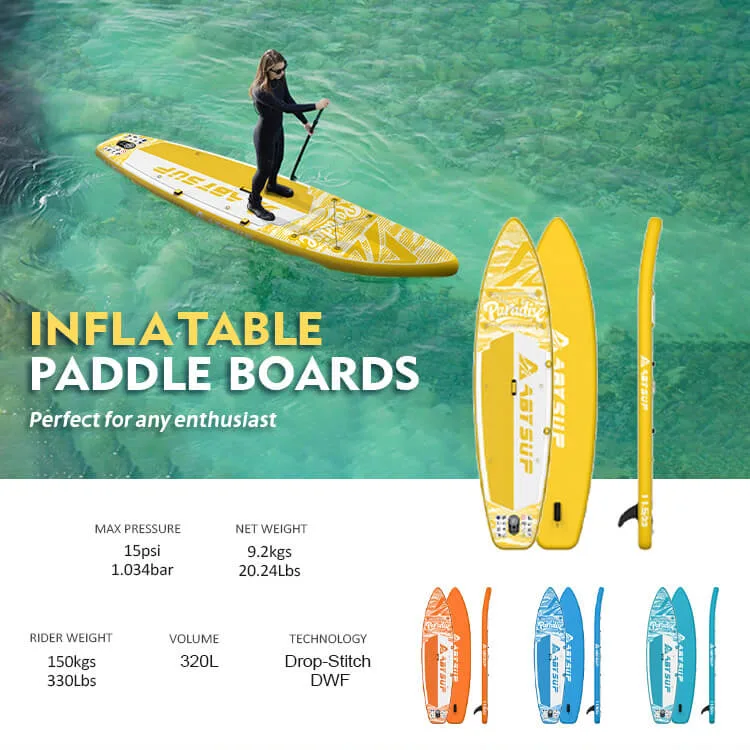
11' × 33" Extra-Wide Recreational SUP

Approx. 9.2 kg · 320 L · Up to 150 kg · 15 PSI

A stability-led recreational model for buyers building leisure, yoga, fishing or rental ranges where an accessible standing platform is a key product requirement.

  • Wide standing area for recreational stability
  • 320 L platform for multi-purpose product programs
  • Custom graphics, EVA layout and accessory options
View model details
Product selection note: These three models are stability-oriented SUP platforms rather than technical whitewater boards. If a project is intended for whitewater use, rocker, outline, fin configuration, deck control, reinforcement and sample-testing requirements should be developed and confirmed separately.
Application Classification

Not Every River SUP Requires the Same Board Specification

River touring, general moving-water use and technical whitewater place different demands on board shape, maneuverability, fins, handles and reinforcement.

01

Recreational Moving-Water SUP

Suitable for brands targeting calm or gently moving rivers, easy portage, recreational cruising and broad outdoor retail use.

Buyer focus: manageable weight, general stability, deck traction, carrying comfort and a practical accessory package.
02

River Touring SUP

Suitable for longer river trips, expedition-style retail collections and paddlers carrying dry bags or light touring equipment.

Buyer focus: tracking, usable volume, cargo layout, portage handles, fin depth and packed weight.
03

Whitewater-Specific SUP

Requires a separate development process focused on maneuverability, rocker, shallow-water fins, deck control and reinforcement around selected wear areas.

Buyer focus: intended river conditions, rider experience, local operating guidance and application-specific sample testing.
A River SUP category name does not confirm suitability for a particular rapid, water level or operating site. Final use should be evaluated against the approved product specification, rider requirements and local river conditions.

How to Select a River SUP Shape

The correct shape depends on whether the product is intended for recreational river use, longer touring, rental instruction or technical moving-water applications.

Maneuverability

Shorter, More Responsive Outline

A shorter waterline can improve turning and repositioning, but it normally sacrifices some straight-line tracking compared with a touring shape.

Buyer check: intended current, rider skill, turning requirements, deck space and expected load.
River Touring

Longer Outline for Distance and Cargo

Longer river boards can provide improved tracking and cargo capacity for touring, but they require more room to turn and transport.

Buyer check: portage length, storage, cargo positions, fin depth and target paddling distance.
Stability

Width, Tail Shape and Usable Volume

A wider mid-section and suitable tail can improve initial stability, while excessive width may reduce responsiveness and increase packed weight.

Buyer check: rider profile, rental use, cargo, deck control and retail positioning.
Rocker

Rocker Matched to the Intended Environment

Rocker influences how the board meets waves, current features and shallow obstacles. It should be developed with the complete outline and tested as part of the sample.

Buyer check: use environment, sample profile, rider feedback and final inflated shape.
River-Specific Outfitting

Fin, Handle and Deck-Control Options

River outfitting should be selected according to water depth, transport, rider control, replacement requirements and the intended operating environment.

01

Short and Flexible Fin Directions

Low-draft, flexible or shorter removable fins can be reviewed for shallow-water applications where a long rigid center fin may be impractical.

02

Grab and Portage Handle Layout

Center, nose, tail or side handles can be positioned according to carrying, retrieval, training and rental-fleet requirements.

03

EVA Coverage and Tail Control

Deck-pad coverage, surface texture and tail kick-pad design should be evaluated for stance changes, wet grip and rider movement.

Fin systems, handles and deck layouts are configuration options—not universal safety guarantees. Final suitability should be confirmed through application-specific sampling, local operating procedures and qualified rider evaluation.

Construction Priorities for River SUP Projects

River products should be evaluated as a complete structure. Adding more material is not automatically better if it increases weight, folding difficulty or production inconsistency.

Drop-Stitch and Outer-Layer Selection

Confirm the core, outer-layer structure, board weight and stiffness target according to the intended use and transport requirements.

Rail Construction

Review inner and outer rail layers, bonding method, visible workmanship and reinforcement requirements around selected wear zones.

Nose, Tail and Hardware Reinforcement

Additional reinforcement can be considered around handles, fin boxes, attachment points and areas identified during sample review.

Repairability and Replacement Parts

Rental and school buyers should plan fin replacement, valve tools, repair materials, identification labels and after-sales procedures with the original order.

The approved sample should record the construction, rail system, reinforcement positions, board weight, specified pressure and inspection criteria used for bulk production.

River SUP vs Touring and All-Round SUP

Clear category separation helps buyers avoid selling a flat-water board as a technical river product without the required specification changes.

SUP Category Main Design Priority Typical B2B Application Key Configuration Focus Main Trade-Off
All-Round SUP Accessible general recreation Mainstream retail, beginners and calm-water rental Stability, simple accessories and broad market appeal Limited specialization for moving water
Touring SUP Tracking and cruising efficiency Outdoor retail and longer-distance paddling Longer outline, cargo layout and fin tracking Less maneuverable than shorter river designs
River Touring SUP Tracking with river-oriented portability and cargo River trekking, touring and outdoor activity programs Fin depth, portage, deck grip and reinforcement review Not automatically suitable for technical whitewater
Whitewater-Specific SUP Maneuverability and application-specific control Paddling schools, specialist brands and selected outfitters Rocker, shallow-water fins, handles and sample testing Reduced flat-water tracking and smaller general-retail audience
Review the inflatable touring SUP range or compare all inflatable SUP categories before finalizing the product-line structure.
Commercial Planning

What Should Be Confirmed Before a Bulk River SUP Order?

River products require more project-specific decisions than a standard graphic change. Commercial terms should be confirmed after the complete specification is defined.

01

Sample Scope

Confirm whether the sample uses an existing model, a modified platform or a newly developed river-specific shape.

02

MOQ and Model Mix

MOQ depends on construction, graphics, material colors, accessories, packaging and whether models can share common components.

03

Lead Time

Sample and bulk-production timing should be confirmed after drawings, materials, fittings, test scope and packaging are approved.

04

Fleet Support

Rental and school programs should include spare fins, repair materials, valve tools, identification labels and replacement planning.

FOB pricing and container planning should be calculated from the approved construction, dimensions, graphics, fins, handles, accessories, packaging and quantity—not from the River SUP category name alone.

What Buyers Should Verify on a River SUP Sample

Sample approval should confirm the inflated shape, rocker, rails, fin system, handle reinforcement, deck layout and complete product package.

01

Dimensions, Outline and Rocker

Compare length, width, thickness, tail, nose profile and inflated rocker against the approved drawing.

02

Flatness and Structural Alignment

Review the deck, bottom and rails for unexpected distortion, twisting or visible differences from the approved sample.

03

Fin Box and Fin Compatibility

Confirm fin-box position, bonding, alignment, replacement fit and the approved shallow-water fin configuration.

04

Handle and Hardware Reinforcement

Inspect handles, D-rings, bungees and mounts against the approved placement and reinforcement plan.

05

Pressure Retention and Bonded Areas

Check the valve, rails and bonded components according to the order-specific pressure-retention and inspection method.

06

Complete Fleet Package

Confirm the board, fins, paddle, pump, backpack, repair items, manuals, labels and packing list before approval.

Review Huale’s rapid prototyping and testing process for sample development, revisions and approval control.

Global Compliance Standards:
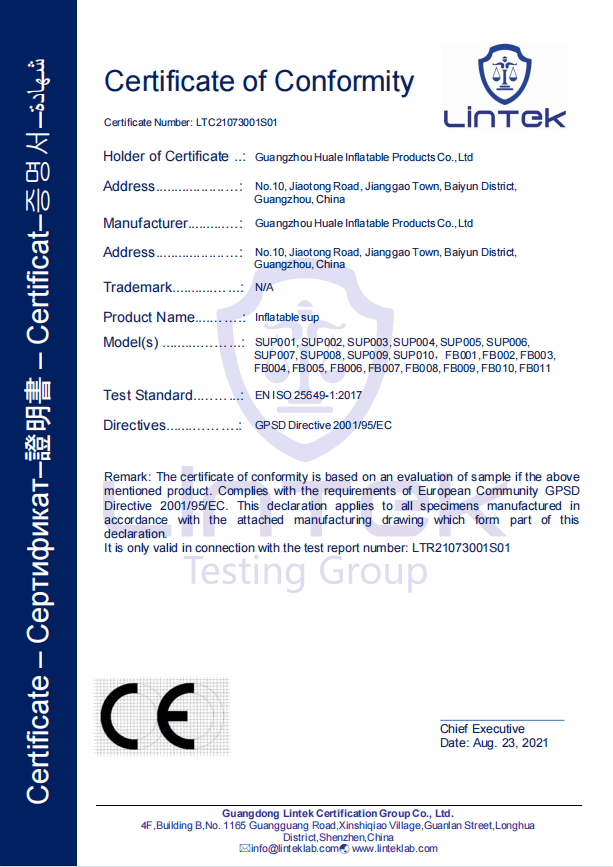
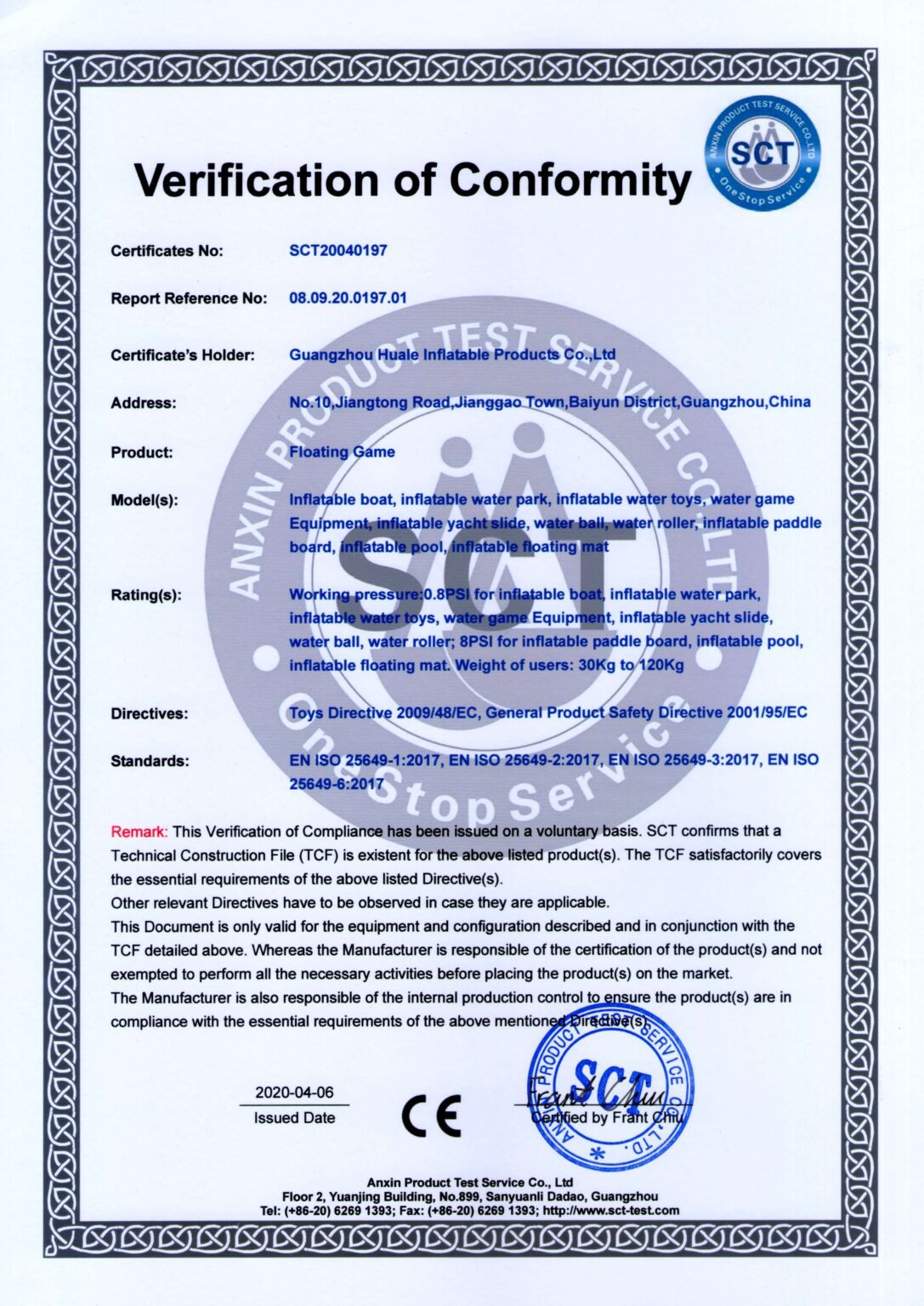
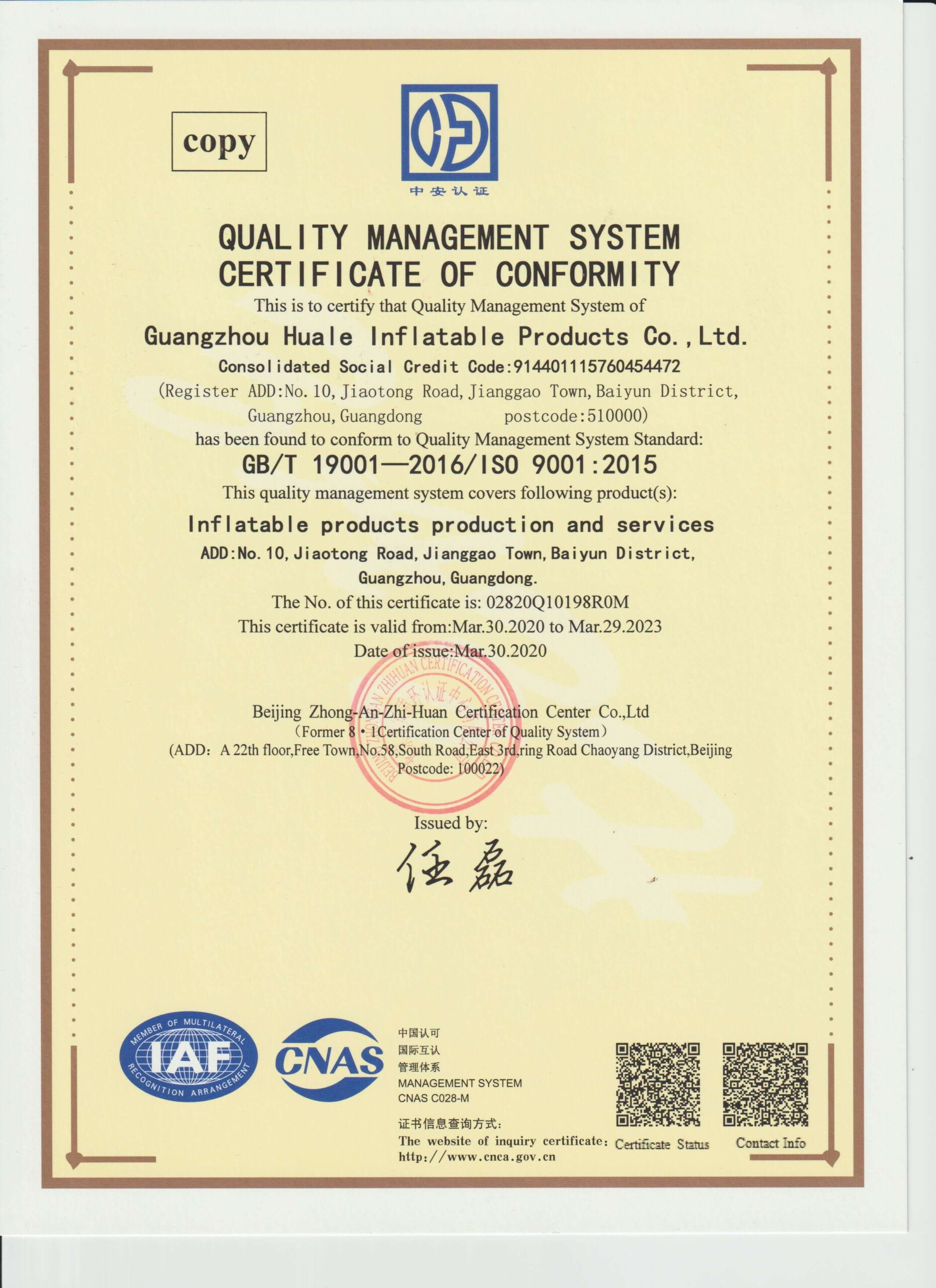
ISO 9001, CE & SMETA 4-Pillar Audited

At Huale, manufacturing excellence goes beyond quality; it’s about responsibility.
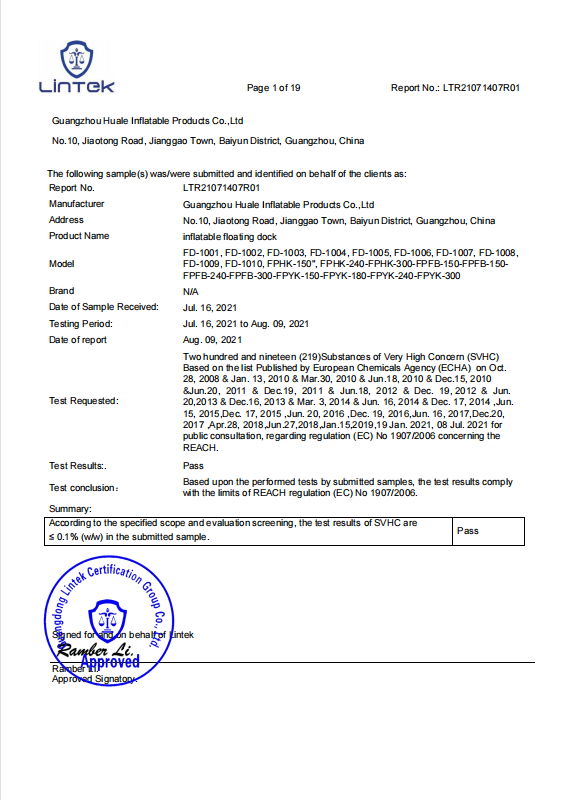
We are fully certified with ISO 9001, CE, BSCI, and REACH for global export.
New Milestone: We are proud to be a SMETA 4-Pillar Audited facility.
This ensures your brand partners with a manufacturer committed to ethical labor, safety, and transparency.

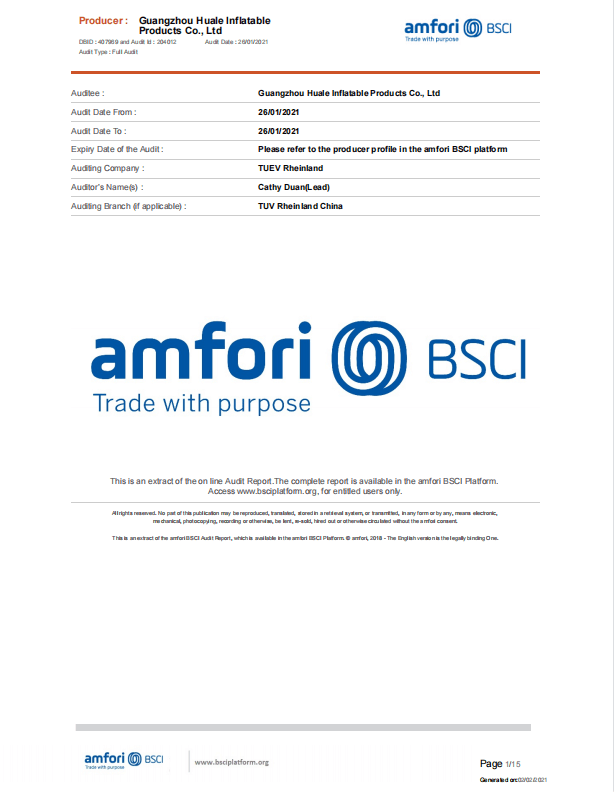
bsci
amfori BSCI Factory Social Compliance Audit — ethical manufacturing & fair labor certified ✔ Audit Passed
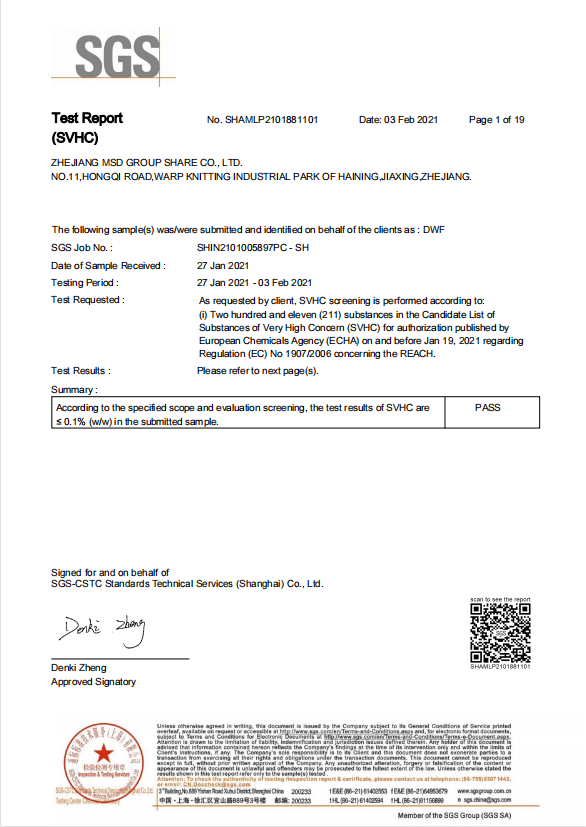
drop stitch sgs
SGS — REACH / SVHC Chemical safety tested for 211 restricted substances. EU REACH Regulation compliant. ✔ PASS
sup board ce
CE — European Conformity Certified to EN ISO 25649-1:2017. Legal sale across all 27 EU member states. ✔ EU Market Ready
inflatable dock certificate
SGT — Verification of Conformity EU Toys Directive 2009/48/EC. Covers inflatable floats up to 500kg load capacity. ✔ PASS
inflatable dock reach
REACH Compliance Certificate Full material-level declaration. Zero restricted substance violations for EU customs. ✔ Compliant
children product certificate
Children's Product Certificate CPSC & ASTM F963-17 certified. Lead, phthalates & mechanical safety for US market. ✔ US Market Ready
iso9001
ISO 9001:2015 Quality Management System certified. Covers full production cycle of all inflatable products. ✔ Certified
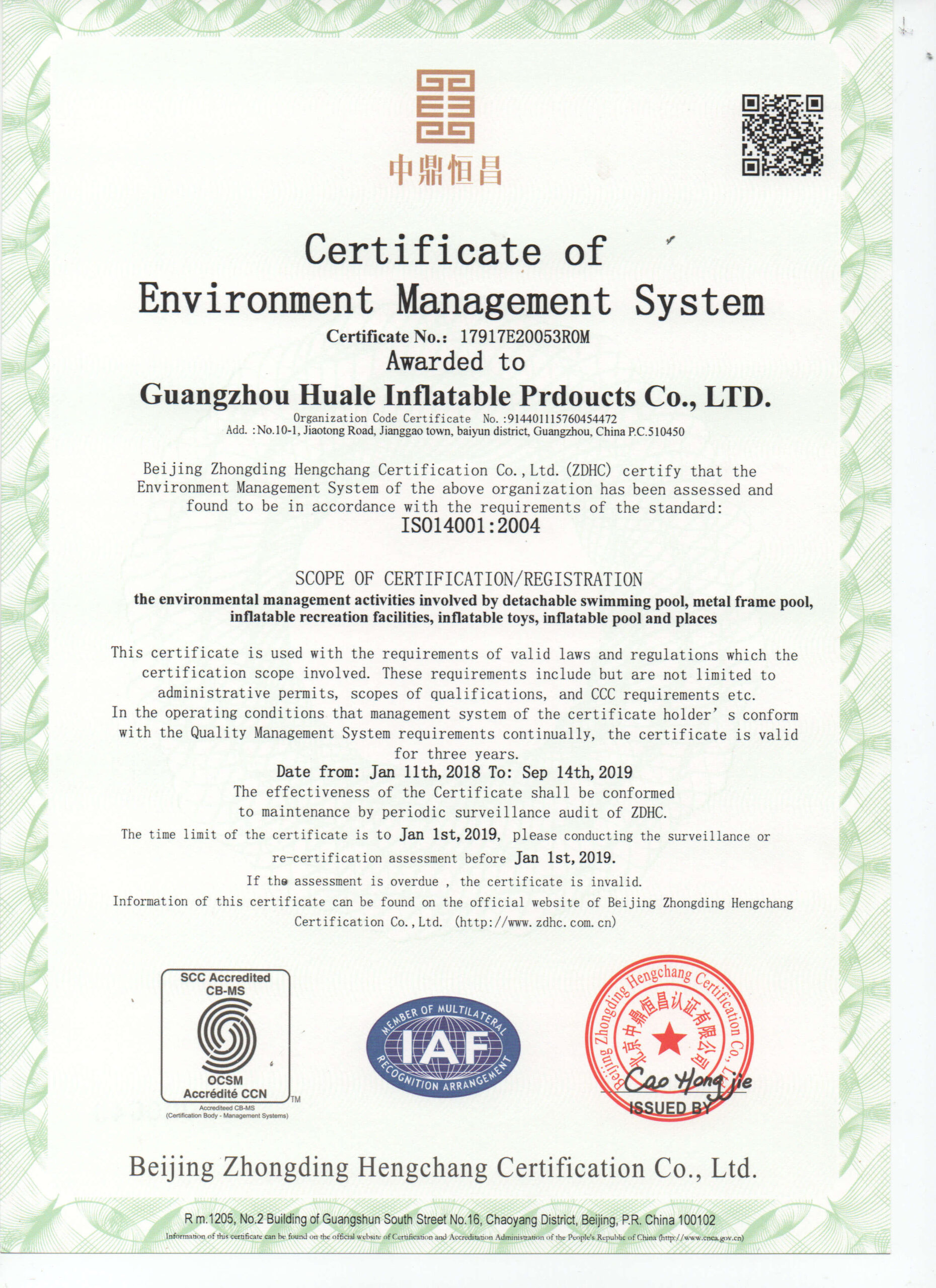
iso14001
ISO 14001 Environmental Management System certified. Sustainable manufacturing practices verified. ✔ Certified
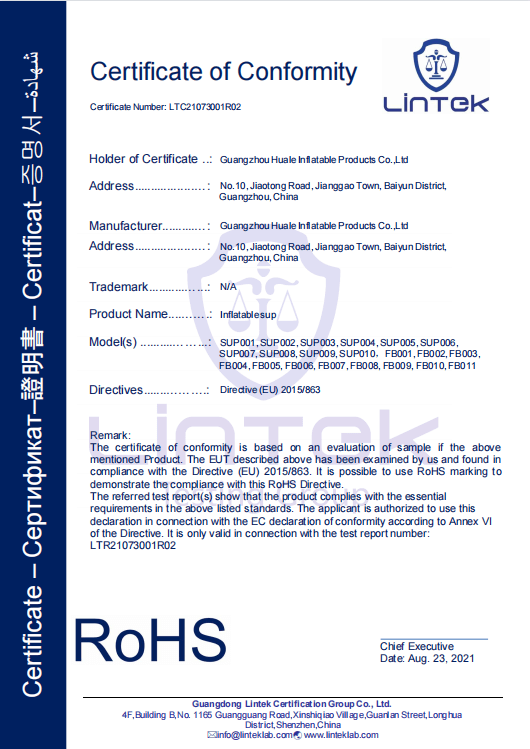
rohs sup board
RoHS — EU Directive 2015/863 Restricts lead, mercury & cadmium in all components. Full EU hazardous substance compliance. ✔ EU Compliant
Compare All Paddle Board Categories →

Planning a River SUP Range for Your Market?

Share your target use, preferred size, rider profile, quantity and customization requirements. We’ll help define the right board specification, sample and production plan.

Discuss My River SUP Project

Inflatable River SUP FAQs

Practical answers about river SUP selection, whitewater development, fins, OEM orders, samples and documentation.

What is the difference between a river SUP and a touring SUP?

Touring SUPs prioritize straight-line tracking and cruising efficiency. River SUPs place greater emphasis on maneuverability, fin depth, deck control, portage and reinforcement around selected wear areas. A river-touring model may sit between these two categories.

Is every river SUP suitable for whitewater?

No. A board marketed for recreational rivers or river touring should not automatically be presented as a technical whitewater SUP. Suitability depends on the complete shape, rocker, fins, handles, construction, rider requirements and application-specific testing.

What fin options are available for shallow-water river SUPs?

Projects can review shorter removable fins, flexible low-draft fins or other configurations according to water depth, tracking requirements, transport and spare-part availability. The final setup should be approved with the sample.

Can river SUP boards be customized for schools and rental fleets?

Yes. Projects can review additional handles, identification numbers, replacement fins, repair materials, cargo layouts, reinforced hardware areas and fleet-specific packaging.

What should buyers inspect before approving a river SUP sample?

Review the inflated dimensions, outline, rocker, flatness, rail construction, fin-box alignment, handle reinforcement, deck pad, accessories, pressure-retention method and complete packaging.

What is the MOQ and production lead time for an OEM river SUP?

MOQ and lead time depend on whether the project uses an existing model or a new shape, as well as the materials, colors, fins, accessories, graphics, packaging and required sample revisions. Final commercial terms should be confirmed after the specification is reviewed.

What information is required to develop a custom river SUP?

Provide the intended application, target users, operating environment, preferred dimensions, estimated quantity, fin requirements, handle layout, accessories, packaging and destination market. Whitewater-specific projects should also define the required sample-evaluation process.

huale sales manager charlie
Hi there, I'm Charlie, the sales manager of Huale,me and my team would be happy to meet you and learn all about your business and requirements.

Talk To Our Expert

Your information will be kept strictly confidential.
We will contact you within 1 hour. Please pay attention to the email with the info@huale-inflatable.com

huale sales manager charlie
Hi there, I'm Charlie, me and my team would be happy to meet you and learn all about your business and requirements.

What Can We Do For You?

Share the basic product details below. Our export team will review your request and reply within 24 hours.

Your information will be kept strictly confidential.
We will contact you within 24 hours. Please pay attention to the email with the info@huale-inflatable.com