
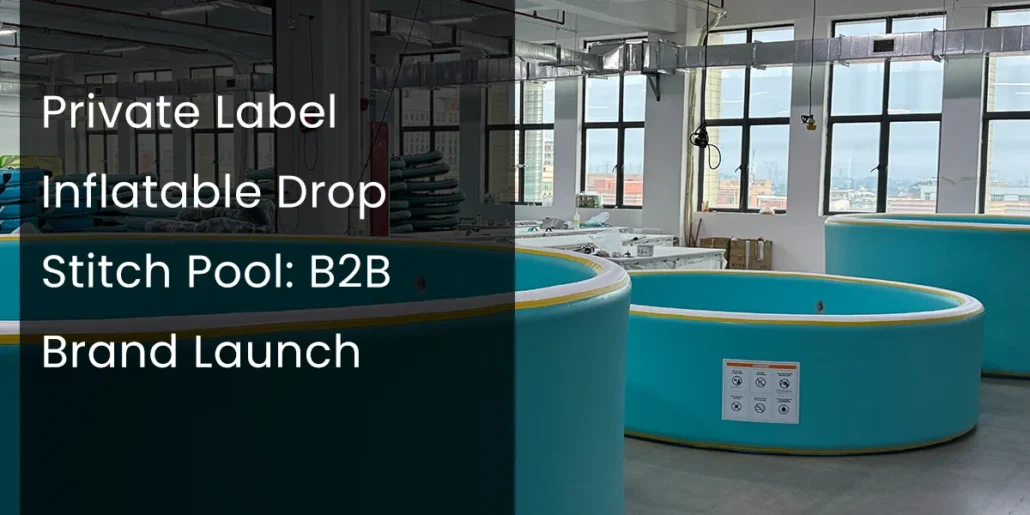
Launching a private label inflatable pool is not only a logo-printing project. The brand owner also needs to control the pool specification, intended market, colors, fittings, accessories, packaging, sample approval and bulk-production reference.
I’m Charlie from Huale. We manufacture inflatable drop-stitch products for distributors, outdoor leisure brands, e-commerce sellers and commercial buyers. When a new pool-brand project reaches our factory, the projects that move most smoothly usually start with a clear product brief rather than a request for “our logo on your pool.”
Short answer: a private label drop stitch pool project should move through a controlled sequence: define the market and launch SKU, freeze the product specification, develop branding and packaging, approve a physical sample, confirm market documentation, then release the approved version into bulk production.
The timing and order requirement depend on the selected pool structure, customization, artwork, sample revisions, packaging and production schedule. Buyers should confirm those details for the actual project instead of relying on one universal launch timeline.
If you are evaluating factory production capability rather than building the private-label program itself, review our drop stitch pool factory page.
What Does Private Label Mean for a Drop Stitch Pool?
Private label can range from adding a brand identity to an existing pool configuration to developing a deeper OEM specification.
| Private Label Level | Typical Changes | Main Approval Point |
|---|---|---|
| Branding Only | Logo, labels, manual and packaging on an existing pool configuration | Artwork and packaging approval |
| Modified Private Label | Colors, accessory kit, drain layout, packaging and selected product details | Product specification plus branding |
| OEM Development | Dimensions, shape, construction, fittings, branding and project-specific packaging | Drawing, sample and controlled production specification |
For a first launch, the deepest level of customization is not always necessary. The correct level depends on how much product differentiation the brand needs and how much development risk it is prepared to manage.
Private Label Drop Stitch Pool Development: 8 Steps From Brief to Bulk Order
| Stage | Buyer Decision | Factory Output |
|---|---|---|
| 1. Market Brief | Target country, buyer and sales channel | Initial product direction |
| 2. Launch SKU | Round, rectangular or project-specific product | Candidate configuration |
| 3. Product Specification | Dimensions, structure, drainage, fittings and accessories | Controlled product specification |
| 4. Branding | Colors, logo, labels and visual identity | Artwork proof |
| 5. Sample | Physical product review | Sample for approval |
| 6. Market Documentation | Destination and sales-channel requirements | Applicable document package confirmed by project |
| 7. Packaging & Bulk Approval | Carton, manual, barcode and final SKU details | Production reference frozen |
| 8. Production & QC | Inspection and shipment requirements | Bulk production against approved reference |
The sequence matters more than a fixed number of calendar days. A standard private-label project with approved components can move differently from a custom-size pool requiring new drawings, material sourcing and additional sample revisions.
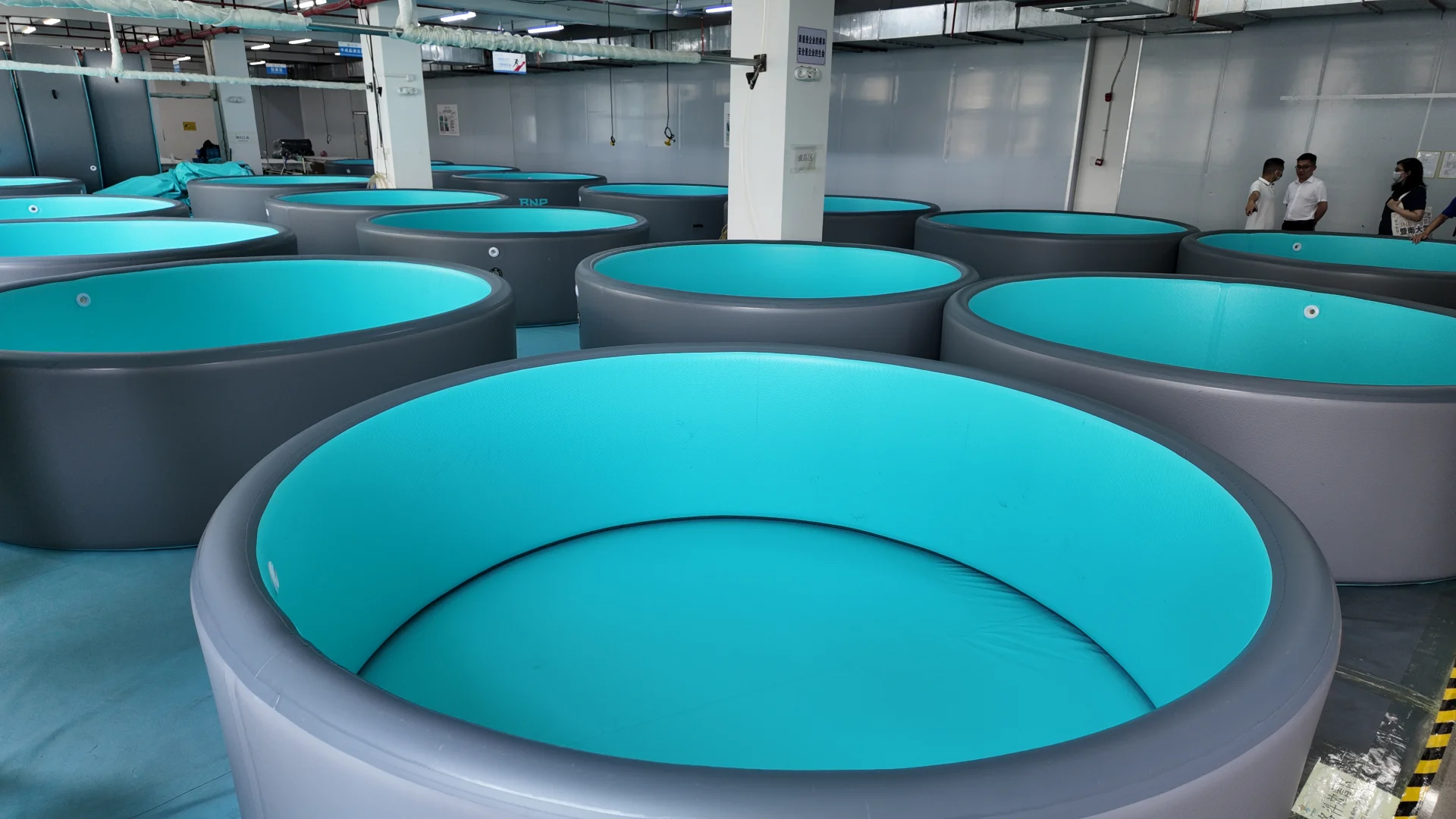
1. Define the Market Before Designing the Pool
A private-label project should start with the buyer and sales channel rather than the factory catalog.
Define:
- Target country or region
- Retail, distributor, marketplace, resort or another sales channel
- Primary customer group
- Expected selling environment
- Positioning within the buyer’s existing product range
- Expected initial order scale
- Required delivery season or launch window
The same drop stitch pool may need different packaging, instructions, accessories or product documentation depending on whether it is sold through a garden retailer, an e-commerce marketplace or a hospitality program.
This is also the point where the brand should define which decisions are commercial preferences and which are genuine product requirements.
2. Build the First Private Label Range Around a Clear Launch SKU
A new pool brand does not need to launch every size, shape and color at the same time.
For the first order, define a manageable product architecture:
- One primary pool format
- A clear target-use scenario
- A controlled color direction
- One approved accessory set
- One packaging system
A broader assortment can be added after the buyer has real sales, return and customer-feedback data.
For rectangular products, review our rectangular drop stitch pool range.
For circular product lines, compare our round drop stitch pools .
If neither format fits the project, use our pool size and shape selection guide before developing a new configuration.
3. Freeze the Product Specification Before Final Branding
The logo should not become the main project reference.
Before artwork is finalized, confirm the physical product:
- Pool shape
- Length and width or diameter
- Wall height
- Drop-stitch construction
- Drain position
- Valve layout
- Filter, pump or circulation connections where required
- Handles or other operating components
- Accessory package
- Expected packed configuration
For deeper OEM projects, the product may require drawings and sample review before final graphics can be positioned accurately.
This is particularly important when logos or printed elements are located close to drains, valves, corners or joining areas.
4. What Can Be Customized on a Private Label Inflatable Pool?
Branding can extend beyond a logo on the pool wall.
Depending on the approved project, private-label elements may include:
- Pool colors
- Logo position
- External wall graphics
- Product labels
- Model name
- Carry or storage bag branding
- User instructions
- Retail carton artwork
- Barcode and SKU labels
- Shipping marks
Keep all artwork under revision control. A file named “final-logo-v4-new” is not a useful production system if different teams are using different versions.
The factory and brand should be able to identify exactly which artwork file belongs to the approved SKU.
5. Why the Private Label Sample Should Become the Production Reference
The sample is where the brand moves from an idea to a physical product.
Review more than the logo.
A sample approval can include:
- Finished dimensions
- Shape and wall configuration
- Drain and valve positions
- Equipment fittings where applicable
- Surface and workmanship
- Colors
- Logo and graphic placement
- Accessory completeness
- Instructions and labels
- Folded and packed configuration
Operating pressure, air-retention procedure, water-load testing and other acceptance criteria should follow the approved product specification and factory procedure for the selected model. They should not be copied from another pool configuration without verification.
If the sample changes, issue a new revision before bulk production begins.
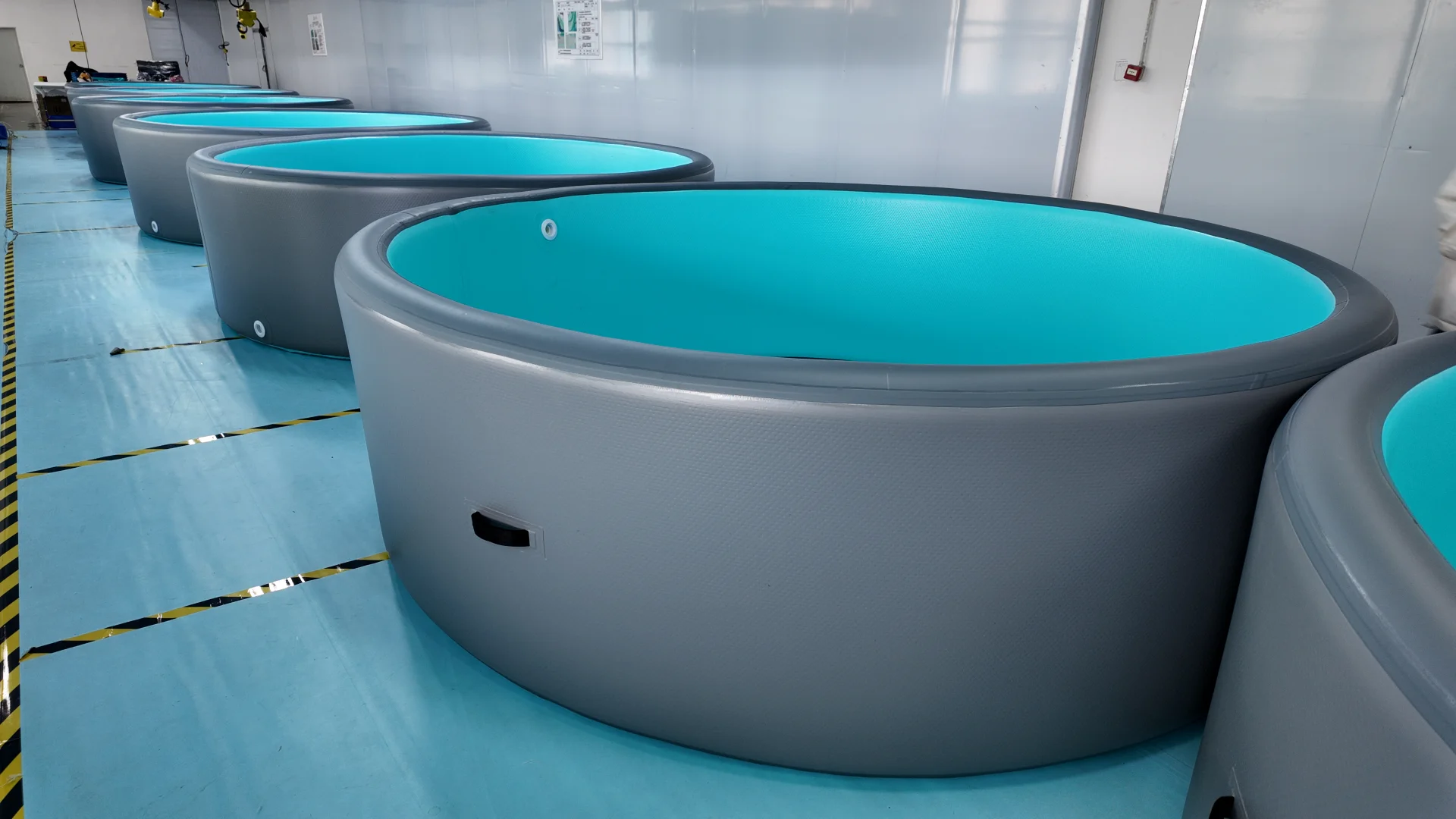
How Long Does a Private Label Pool Project Take?
There is no reliable universal launch timeline for every private-label pool project.
Timing can change with:
- Whether the buyer selects an existing or new pool structure
- Custom dimensions or shape development
- Material and color sourcing
- Artwork readiness
- Number of sample revisions
- Packaging development
- Order quantity and current production schedule
- Required product documentation
- Pre-shipment inspection
- Destination and shipping method
The useful way to manage timing is to track project gates rather than advertise one guaranteed launch date.
A practical sequence is:
- Brief approved
- Specification approved
- Artwork approved
- Sample approved
- Packaging approved
- Bulk production released
- QC completed
- Shipment released
Ask the supplier to provide the current timing for each stage after the final scope is known.
How Should a New Pool Brand Evaluate MOQ?
MOQ should be evaluated after the customization scope is defined.
The production requirement can change with:
- Existing versus custom pool structure
- Number of sizes
- Number of colors
- Custom material sourcing
- Logo or graphic method
- Accessory customization
- Printed manuals and labels
- Retail packaging
- Total order quantity
A useful supplier discussion separates:
- The sample requirement
- The order requirement for a standard configuration
- The order requirement for private-label branding
- The requirement for deeper structural customization
This is more useful than placing one generic MOQ number at the top of the page and assuming it applies to every private-label project.
What Changes the Cost of a Private Label Drop Stitch Pool?
Branding is only one part of the factory cost.
Quotation differences can come from:
- Pool dimensions and wall height
- Drop-stitch construction
- Shape complexity
- Drainage and fittings
- Logo and graphic method
- Accessories
- Custom packaging
- Sample requirements
- Order quantity
Buyers should compare suppliers against the same approved product scope.
For sample-versus-bulk pricing logic, quotation inputs and cost drivers, use our drop stitch pool price guide .
6. Plan Product Documentation Around the Target Market
A private-label brand becomes part of the product-compliance chain, so documentation should be reviewed according to the actual destination, product classification and sales channel.
Do not assume that one factory certificate package automatically covers every private-label pool.
Before bulk production, identify:
- Target country or region
- Product classification
- Intended user group
- Applicable product-safety requirements
- Material or chemical requirements where applicable
- Required warnings and instructions
- Importer or responsible-person information where required
- Requirements for included electrical accessories
- Marketplace or retailer documentation requirements
For the European Union, the General Product Safety Regulation forms part of the general product-safety framework for non-food consumer products, while additional product-specific rules may also apply.
European Commission product safety information
For US projects, buyers should review the product and intended use against current CPSC requirements and pool-safety guidance rather than assuming ASTM F963 applies to every inflatable swimming pool configuration.
US CPSC portable pool information
CE marking should only be claimed where applicable legislation requires it for the product or included equipment. REACH, electrical-product requirements and general consumer-product safety address different compliance questions and should not be presented as one interchangeable certificate stack.
For Huale’s available documentation categories, review our compliance and certification page.
7. Treat Packaging as Part of the Private Label Product
For retail and e-commerce buyers, the finished SKU is more than the pool itself.
The packaging specification may include:
- Pool folding method
- Accessory arrangement
- Pump protection
- Repair items
- User manual
- Retail carton
- Barcode and SKU labels
- Importer information where required
- Shipping marks
Do not finalize logistics calculations using an early sample package if the accessory bundle or carton structure is still changing.
The final carton dimensions and gross weight should be confirmed from the approved production package before freight planning is frozen.
8. How Should the Approved Private Label Pool Be Controlled in Bulk Production?
Bulk QC should compare production against the approved reference rather than create a different specification after manufacturing is finished.
Depending on the project, inspection can cover:
- Finished dimensions
- Shape and wall configuration
- Drain, valve and fitting installation
- Surface and workmanship
- Air-retention checks using the approved procedure
- Logo and graphic placement
- Color and SKU identification
- Accessory completeness
- Manual and labeling
- Final packaging
If a unit fails an agreed inspection item, the supplier should have a defined process for isolation, correction or replacement and reinspection before shipment release.
For buyers evaluating manufacturing systems rather than brand-development workflow, see our drop stitch pool manufacturing page.
Should a New Pool Brand Start With a Round or Rectangular Product?
A new brand should start with the format that matches its customer, sales channel and available installation space rather than choosing a shape only because it looks different.
For a specific rectangular product reference, review our custom rectangular drop stitch pool .
For a round product reference, review our round drop stitch inflatable pool .
If the brand requires a non-standard footprint, use our custom inflatable pool project guide to prepare the site, drawing, port and sample requirements.
Private Label Drop Stitch Pool Brand Brief Checklist
Before requesting a private-label quotation, prepare:
- Target country and sales channel
- Buyer and use scenario
- Preferred pool shape
- Target dimensions or reference model
- Wall height
- Expected quantity
- Standard configuration or deeper OEM requirement
- Color direction
- Logo vector file
- Drain and fitting requirements
- Accessory package
- Packaging requirements
- Required product documentation
- Sample requirement
- Destination
- Target launch or shipment window
Items that are still undecided should be marked as open questions. This helps the supplier separate confirmed specifications from assumptions during quotation and sampling.
Common Mistakes When Launching a Private Label Inflatable Pool
- Starting with packaging before the product specification is stable: changes to dimensions, fittings or accessories can force the packaging to be redesigned.
- Launching too many SKUs at once: more sizes, colors and packages create more inventory and production complexity before the brand has sales data.
- Treating private label as logo printing: a repeatable SKU also needs controlled specifications, accessories, instructions and packaging.
- Using one universal launch timeline: sample revisions, custom materials, documentation and production schedules can change project timing.
- Assuming every compliance document applies to every market: the brand should verify requirements against the actual product, destination and sales channel.
- Approving the product through chat messages only: the final sample, specification and artwork should identify one approved production version.
- Comparing supplier prices before aligning the specification: different pools, accessories and packaging can produce very different quotation totals.
FAQ: Private Label Inflatable Drop Stitch Pools
What can be customized on a private label drop stitch pool?
Depending on the selected project, customization can include pool dimensions, shape, colors, logo, graphics, drain and fitting layout, accessories, instructions, labels and retail packaging. Final options should be confirmed against the approved construction and order requirements.
How long does it take to launch a private label inflatable pool?
There is no universal launch time. Timing depends on whether the project uses an existing or custom structure, artwork readiness, material sourcing, sample revisions, packaging, order quantity, documentation and the factory’s production schedule. Buyers should manage the project by approval stages rather than rely on one fixed number of days.
What is the MOQ for a private label inflatable pool?
The order requirement depends on the selected pool, number of SKUs, colors, branding method, accessories, packaging and other customization. Buyers should ask for the MOQ of the exact approved configuration rather than relying on one generic factory number.
Should I approve a sample before bulk production?
A physical sample is particularly useful for a new private-label or OEM specification because it allows the buyer to confirm dimensions, fittings, branding, accessories and packaging. The approved sample should be connected to the current specification and artwork revision.
What should I send a factory for a private label pool quotation?
Provide the target market, sales channel, preferred pool shape and dimensions, quantity, branding requirements, fittings, accessories, packaging, destination and required timing. Identify any undecided items so the supplier can clarify them before quotation and sampling.
Build the Brand Around a Controlled Product Specification
A private label drop stitch pool becomes a repeatable product only when the brand identity and manufacturing specification are controlled together.
Start with the customer and launch SKU. Confirm the physical pool before freezing graphics. Use the sample to establish the production reference, plan documentation around the target market, and approve packaging before bulk production is released.
The launch calendar should follow those approval gates rather than force every project into the same number of days.
For pricing inputs, use our drop stitch pool price guide . For size and shape planning, use the pool size and shape guide . For OEM production capability, review our drop stitch pool factory page.