
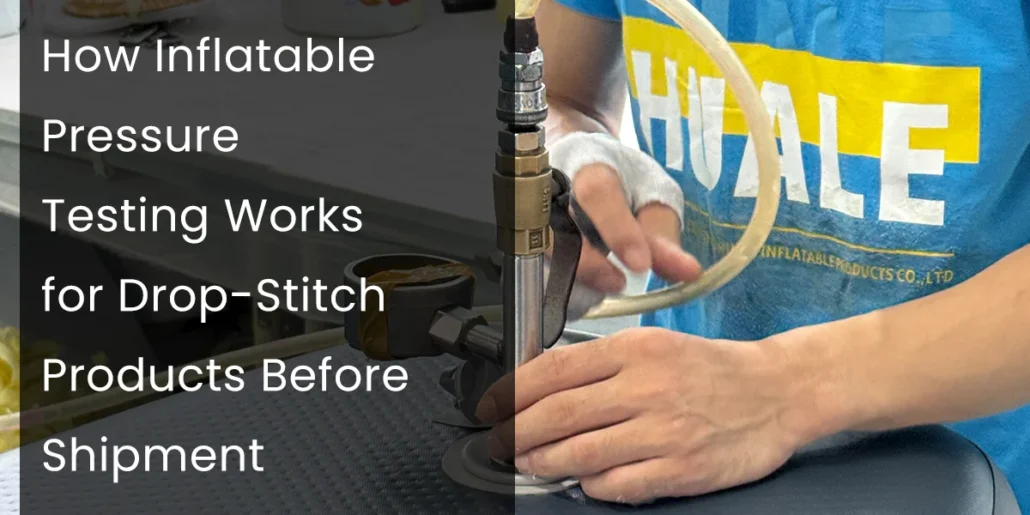
For a B2B buyer, a pressure-test pass is useful only when you know what was tested, under which conditions and against which acceptance criteria. A product can hold pressure during a test and still have defects that the test was never designed to detect.
I’m Charlie from Huale. When we discuss inflatable drop-stitch quality with OEM buyers, we separate air-retention checks from seam-strength, material and load-performance tests. Each answers a different engineering question.
This guide explains the main pressure-testing methods used for inflatable products, how to interpret pressure changes and what evidence buyers should request before shipment.
The test pressure, holding period and inspection scope must follow the approved product specification and QC plan. They are not universal across SUPs, kayaks, air tracks, pools, floating docks, ice baths and wrestling mats.
What Does a Pressure-Retention Test Measure?
A pressure-retention test checks whether a sealed inflatable chamber maintains its specified pressure over a defined period.
The product is inflated according to the approved test procedure, isolated from the air source and checked at defined measurement points. The recorded pressure change is then compared with the agreed acceptance criteria.
Four Testing Methods Buyers Should Understand
| Test Method | Main Purpose | Limitation |
|---|---|---|
| Pressure Hold Test | Checks air retention over time. | Does not identify the exact leak location. |
| Pressure Decay Measurement | Measures pressure change in an isolated test system. | Temperature and test setup can affect readings. |
| Local Leak Detection | Uses methods such as bubble inspection or immersion to locate leakage. | Requires access to the suspected leakage area. |
| Proof or Overpressure Test | Checks performance under a specified pressure above normal working conditions. | Must follow an approved product-specific procedure. |
A burst test is different again. It determines the pressure at which a specimen fails and should not be confused with a routine pressure-retention inspection.
Research published by the Japan Society of Mechanical Engineers explains why temperature variation can affect pressure-change leak detection. See the pressure-change leak detection study.
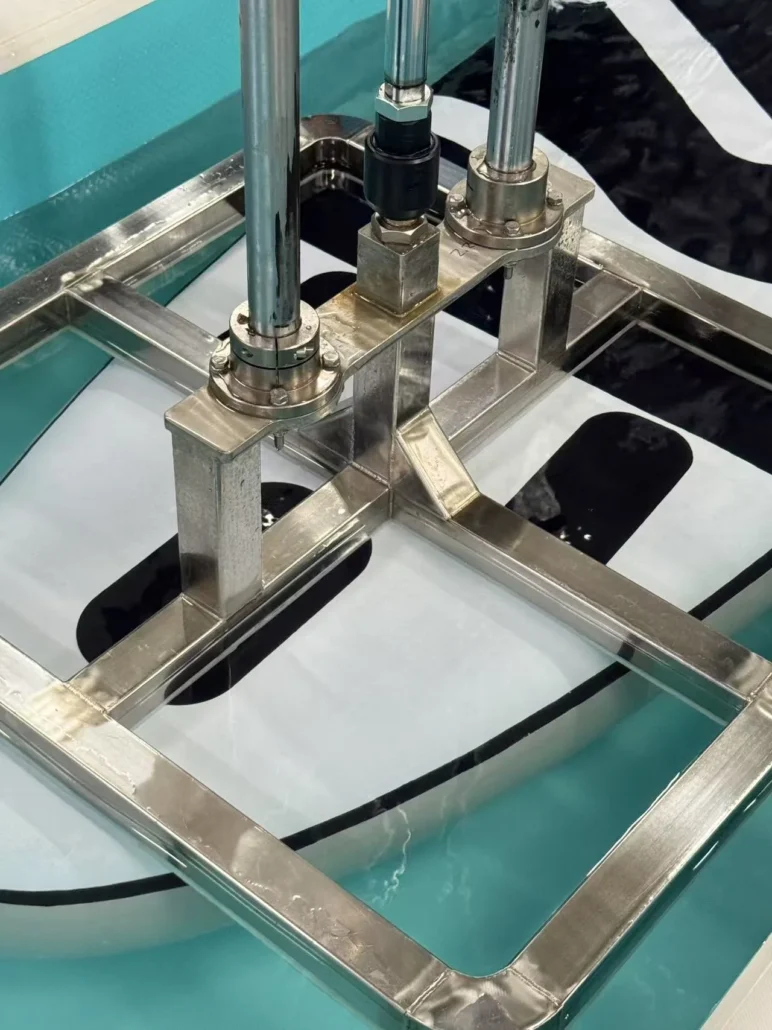
How to Interpret Pressure-Test Results Correctly
A pressure reading is meaningful only when the test conditions are controlled and recorded.
Before comparing the initial and final readings, buyers should verify five points:
- Product identification: Confirm the model, chamber and approved specification.
- Test pressure: Distinguish normal working pressure from the pressure specified for the test.
- Stabilization: Allow the product and compressed air to stabilize before recording the starting value.
- Temperature: Record relevant temperature conditions and avoid comparing readings taken under uncontrolled conditions.
- Acceptance criteria: Check the permitted pressure change and the procedure for handling failed results.
Why Can Pressure Drop Without an Actual Leak?
When air is compressed, its temperature can change. As the air and inflatable structure stabilize, the pressure reading may also change.
Changes in ambient temperature, flexible material deformation, measurement equipment and connection conditions can affect the result.
Therefore, a pressure drop should be investigated against the test procedure rather than automatically classified as a leak.
For an accurate comparison, record the test conditions, measurement method and actual results together.
What a Pressure Test Cannot Prove
A successful pressure-retention test is useful evidence of air tightness under the specified conditions. It is not a complete assessment of inflatable product durability.
Other quality characteristics require separate inspection or testing:
- Material strength: Tensile, tear and puncture resistance.
- Seam performance: Peel strength, bonding quality and joint integrity.
- Structural performance: Load capacity, deformation and impact resistance.
- Environmental durability: UV exposure, heat aging and low-temperature performance.
- Component reliability: Valve function, D-ring attachment and accessory connections.
For example, the ASTM D751 test-method series covers separate tests for coated-fabric properties, including breaking strength, puncture resistance, coating adhesion and seam strength.
A pressure-retention result should therefore be considered one part of a product-specific QC plan, not proof that every structural and material requirement has been satisfied.
How Pressure Testing Differs Across Drop-Stitch Products
The test procedure should reflect the product’s construction, chamber layout, components and intended application.
| Product | Pressure-Test Focus | Additional Checks |
|---|---|---|
| SUP Boards | Air retention, valves and rail integrity. | Dimensions, fin box and hardware bonding. |
| Inflatable Kayaks | Individual chambers, valves and seams. | Chamber separation, fittings and applicable boat requirements. |
| Air Tracks | Sidewall joints, valves and air retention. | Dimensions, surface condition and performance under use. |
| Floating Docks | Air chambers, seams and valves. | D-rings, connectors, EVA bonding and load performance. |
| Drop-Stitch Pools | Wall chambers, valves and relevant joints. | Drain fittings and water-containment checks. |
| Ice Baths | Tub structure, valves and air retention. | Drainage, water containment and chiller connections. |
| Wrestling Mats | Panel joints, valves and air retention. | Dimensions, surface condition and impact performance. |
For inflatable boats within its scope, ISO 6185-1 provides product-specific design, material, manufacturing and testing requirements. It should not be treated as a universal standard for all drop-stitch products.
Buyers can also review our custom inflatable product development and QC process to understand how specifications and inspection requirements are confirmed for individual projects.
For category-specific quality considerations, see our SUP factory quality control guide, Air Track manufacturing guide and Drop-Stitch Pool wholesale guide.
What Should a Pre-Shipment Pressure-Test Record Include?
When evaluating a supplier, do not rely on a general statement such as “All products passed QC.” Request records that allow your team to understand what was actually tested.
- Product model, SKU and batch identification.
- Test method and approved procedure.
- Required pressure and holding period.
- Stabilization and relevant temperature conditions.
- Measurement equipment and recorded readings.
- Acceptance criteria and actual pass/fail results.
- Inspection scope: individual units or selected samples.
- Failure, repair, retest and final release records.
Sample testing and finished-product inspection should be clearly distinguished. A successful prototype test does not automatically prove that every subsequent production unit has passed the same inspection.
Frequently Asked Questions
Does a pressure-hold test prove that an inflatable product is leak-free?
It shows whether the product maintained pressure within the specified test conditions and acceptance limits. It cannot guarantee that no leakage will develop under every future operating condition.
What is the difference between working pressure and test pressure?
Working pressure is the specified pressure for normal product operation. Test pressure is defined by a particular inspection or verification procedure and may be different. It must follow the approved product specification.
Why can pressure drop even when there is no leak?
Temperature changes, air stabilization, material deformation and measurement conditions can affect pressure readings. These factors should be considered before a test result is classified as a leak.
Do all inflatable drop-stitch products require a 48-hour pressure test?
No universal 48-hour requirement applies to every inflatable product. Test duration, pressure, sampling scope and acceptance criteria should be confirmed for each product and its applicable requirements.
What other tests should be combined with pressure testing?
Depending on the product, additional checks may include material tensile and tear testing, seam-strength testing, valve inspection, component pull testing, dimensional verification and load or impact testing.
Discuss Your Inflatable Product QC Requirements with Huale
For an OEM project, share your product category, technical drawings, intended application and target market. We can review the required product specifications, sample approval and available quality documentation with your team.
We will respond within 24 hours with a factory-direct quote. Sample MOQ starts from 1 piece.