
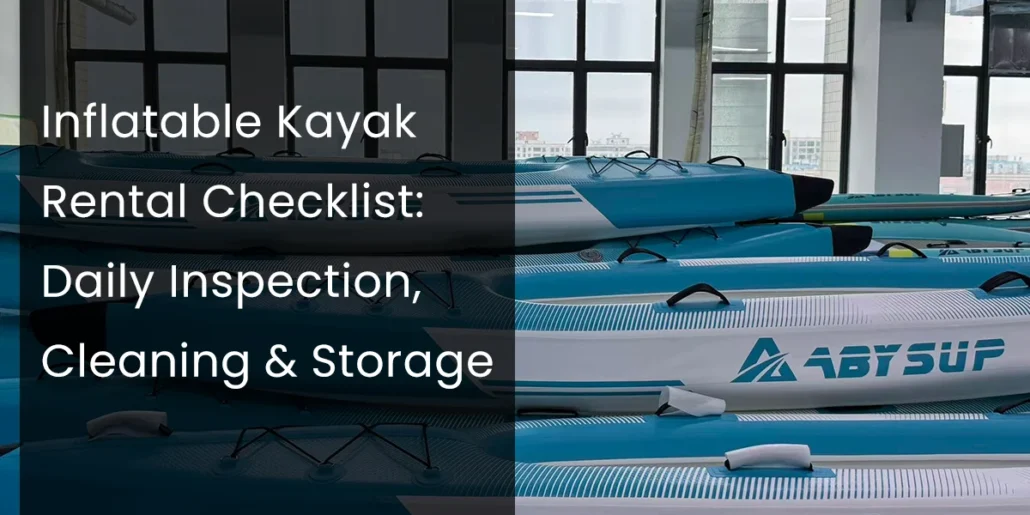
A rental kayak fleet should not rely on staff memory to decide whether a kayak is ready for the next customer. Each unit needs the same basic inspection, handover, return, cleaning and storage process every day.
I’m Charlie from Huale. From the manufacturing side, we recommend that rental operators treat every inflatable kayak as an individual fleet asset: identify it, record its condition, check the same fittings before dispatch, and remove it from service when damage or pressure loss needs further inspection.
Short answer: a daily inflatable kayak rental checklist should cover the hull and chambers, inflation condition, valves, seats, footrests, fins, handles, paddles, required rental equipment, visible damage, cleaning, drying and storage records.
This checklist focuses on equipment condition and fleet handling. It does not replace local boating rules, required personal flotation equipment, weather policies, rescue procedures, staff training, insurance requirements or the operating instructions for the specific kayak model.
Daily Inflatable Kayak Rental Workflow at a Glance
The easiest way to manage a rental fleet is to divide equipment handling into repeatable stages instead of completing one large inspection only at the beginning of the season.
| Stage | Main Task | Record |
|---|---|---|
| Pre-Opening | Confirm which kayaks are available for service | Available / inspection required / out of service |
| Before Dispatch | Inspect the assigned kayak and equipment kit | Kayak ID, renter, kit and visible existing damage |
| At Return | Check damage, missing parts and contamination | Return condition and any new issue |
| Cleaning & Drying | Remove dirt, salt, sand and retained moisture | Clean / drying / ready |
| End of Day | Store ready units and isolate damaged units | Storage location or maintenance queue |
This cycle also makes it easier to distinguish damage that existed before the rental from an issue discovered after return.
Pre-Opening Kayak Fleet Check
Before accepting the first rental of the day, staff should know exactly which kayaks are available and which units are waiting for inspection or maintenance.
For each inflatable kayak, check:
- Asset ID: confirm the kayak can be matched to its maintenance record.
- General appearance: look for visible cuts, abrasion, unusual deformation or previous repair areas that need another look.
- Inflation condition: confirm the chambers or drop stitch panels appear consistent with the model’s approved operating condition.
- Valve area: inspect the valve, cap and surrounding material for visible damage or contamination.
- Seats and footrests: confirm the installed components and attachment points are secure and usable.
- Fin or skeg: check that the required fin is present and the fin system is not visibly damaged.
- Handles and fittings: look for loose, torn or damaged attachment points.
- Paddles and accessories: confirm the assigned kit is complete and visibly serviceable.
Do not use one pressure value for every kayak in a mixed fleet. Inflation should follow the approved instructions for the exact model and chamber structure.
Pre-Rental Inspection Before Each Dispatch
A kayak that passed the morning fleet check should still receive a short inspection before it is assigned to the next renter.
This is where the former H027 pre-rental checklist belongs. It should not become a separate page because it is one stage of the daily rental workflow.
| Check | Pass Condition | If There Is a Problem |
|---|---|---|
| Hull & Chambers | No new visible damage or unexpected deformation | Hold the unit for inspection |
| Inflation | Matches the approved setup for the model | Do not compensate for unexplained pressure loss by repeatedly adding air |
| Valve | Cap and surrounding area appear intact | Remove from service if leakage or damage is suspected |
| Seat & Footrest | Secure and correctly fitted | Replace or refit before dispatch |
| Fin / Skeg | Present, correctly installed and visibly undamaged | Do not dispatch until corrected |
| Handles & Fittings | No visible tearing, detachment or loose hardware | Hold the unit if the affected fitting is required for normal use |
| Assigned Equipment | Required paddle and rental equipment are present | Complete the kit before handover |
Record Existing Damage Before the Kayak Leaves
Rental operators should distinguish normal cosmetic wear from changes that require a technical inspection.
Before handover, record visible existing marks that could otherwise create confusion after return. A simple asset record can include:
- Kayak asset ID
- Date and dispatch time
- Existing repair areas
- Visible scratches or abrasion
- Accessory count
- Optional condition photos
- Staff initials or digital inspection record
Use consistent photo angles when photos are part of the process. A bow, stern, floor, sidewall and fittings sequence makes later comparison easier than random images.
Staff should record what they can observe. Suspected structural damage, pressure loss or valve problems should be moved to a qualified inspection or repair process instead of being diagnosed from a quick rental-counter photo.
Post-Rental Inspection When the Kayak Returns
The return inspection should happen before the kayak disappears into the cleaning or storage area.
Start by checking:
- Whether all assigned accessories were returned
- Whether the paddle, seat, fin and detachable fittings are visibly intact
- Whether new cuts, abrasion or impact marks are visible
- Whether any chamber appears softer than expected
- Whether sand, mud, salt or other contamination needs removal
- Whether water is trapped in removable seats, bags or other components
- Whether new damage should be photographed and logged
If the kayak shows unexplained pressure loss or damage that may affect normal use, move it out of the ready-to-rent fleet until it has been inspected.
Do not patch or alter suspected damage before the original condition has been recorded if your rental operation uses a formal damage-management process.
How Should Rental Inflatable Kayaks Be Cleaned?
Cleaning should follow the instructions for the specific kayak material, graphics, fittings and accessory package.
For routine fleet handling, the practical sequence is:
- Remove loose sand, mud, leaves and other debris.
- Rinse saltwater residue or dirty water from exposed surfaces where appropriate.
- Use a material-compatible cleaning method when more than rinsing is required.
- Clean around seats, footrests, handles, fittings and removable components where dirt can collect.
- Rinse away any cleaning residue that should not remain on the product.
- Allow the kayak and detachable components to dry before long-term packing or closed storage.
Do not assume that a stronger chemical produces a better maintenance result. Cleaning agents should be compatible with the kayak material, printed graphics, adhesives, coatings and fittings.
If a disinfectant is required by your rental operation, confirm its compatibility with the actual product rather than applying one chemical program to every inflatable kayak.
Why Drying Matters Before Storage
A kayak can appear dry on the main outer surface while moisture remains around seats, folds, fittings, bags or other enclosed areas.
Before packing a rental unit for extended storage:
- Drain and wipe away visible water
- Remove detachable wet accessories where appropriate
- Open the kayak sufficiently for airflow
- Check folds, floor areas and fitting zones for retained moisture
- Dry the carry bag separately if it is wet
The goal is not to meet an arbitrary drying time. The kayak should reach the storage condition specified for that model without trapped moisture in the packed product.
Avoid using prolonged high heat or uncontrolled heat sources simply to speed up drying.
End-of-Day Inflatable Kayak Storage Checklist
Rental fleets may store kayaks inflated, partly inflated or packed depending on the kayak model, available space and the manufacturer’s approved storage method.
Do not assume that every inflatable kayak should always be stored in exactly the same way.
At the end of the day, confirm:
- The kayak has completed the return inspection
- Required cleaning is finished
- The kayak and storage bag are sufficiently dry
- Valves and fittings are protected from impact
- Fins and detachable components are stored in a controlled location
- The kayak is not stored against sharp objects or rough surfaces
- The storage area avoids unnecessary prolonged heat and direct UV exposure
- Units awaiting repair are physically separated from ready-to-rent units
For a growing rental fleet, use a clearly marked Ready / Drying / Inspection / Repair status system so a damaged kayak cannot return to service by mistake.
When Should an Inflatable Kayak Be Removed from Rental Service?
Rental staff do not need to diagnose every technical cause. They do need a clear rule for when a kayak should stop circulating through the rental fleet.
Remove a kayak from service pending inspection when you find conditions such as:
- Unexplained or repeated pressure loss
- Visible puncture, cut or structural material damage
- Seam or bonded area showing separation or unusual change
- Damaged valve or valve area
- Damaged fin box or fitting that affects normal setup
- Torn or detached seat, handle or required attachment point
- Previous repair showing signs that require another inspection
- A missing component required for the approved rental setup
The staff member can record the symptom and asset ID, then move the kayak into the maintenance queue.
Detailed valve diagnosis, puncture repair and seam repair should follow a separate technical procedure rather than being performed as part of the normal rental handover checklist.
Create a Maintenance Log for Every Rental Kayak
A rental fleet becomes easier to manage when staff can see each kayak’s inspection and maintenance history instead of relying on memory.
| Field | Example Entry |
|---|---|
| Asset ID | K-014 |
| Date | Record actual inspection date |
| Issue Found | Pressure loss suspected after return |
| Action | Removed from rental fleet for inspection |
| Status | Inspection required |
| Return-to-Service Approval | Record only after the required inspection or repair is completed |
The same system can be used for seats, paddles, fins and other replaceable fleet components when those items are tracked separately.
What Should Be Checked Beyond the Daily Rental Cycle?
Daily checks are designed to catch obvious operational problems. Rental managers should also schedule deeper reviews based on usage intensity, product instructions and their own maintenance policy.
A periodic review can include:
- Closer inspection of frequently handled seams, fittings and attachment zones
- Valve condition and service history
- Fin and fin-box wear
- Seat straps, buckles and attachment points
- Handles and carrying points
- Previous repair areas
- Printed graphics, labels and identification marks
- Carry bags and transport protection
- Accessory inventory and replacement stock
- Maintenance records for units with repeated problems
Do not invent one universal inspection interval for every rental fleet. A heavily used beach operation and a lightly used resort fleet may need different maintenance schedules.
Use the kayak manufacturer’s instructions, actual usage, observed wear and your operational requirements to set the inspection frequency.
What This Rental Checklist Does Not Replace
This article is an equipment-condition and fleet-handling checklist. It is not a complete water-safety or legal operating procedure.
Rental operators still need separate policies for:
- Local boating and water-access rules
- Required personal flotation devices and other safety equipment
- Weather and water-condition limits
- Customer briefing and competency requirements
- Launch and recovery procedures
- Emergency and rescue response
- Staff training and supervision
- Insurance conditions
- Age, capacity or operating restrictions
These requirements vary by location and operation, so they should be confirmed with the responsible local authorities, insurers and qualified safety personnel.
If you are still deciding which kayak types belong in your fleet, read our single vs tandem inflatable kayak guide .
FAQ: Inflatable Kayak Rental Fleet Operations
Should an inflatable kayak be inspected before every rental?
A short pre-rental check is useful even when the kayak passed the opening inspection. Confirm the assigned kayak, visible condition, inflation, valve area, seat, fin, handles and required rental equipment before dispatch.
What should rental staff check when a kayak comes back?
Check for missing equipment, new visible damage, unexpected pressure loss, contamination and the condition of seats, fins, handles and other fittings. Record any new issue before cleaning or repair work changes the returned condition.
Should rental inflatable kayaks be cleaned after every use?
Cleaning frequency should reflect the water environment, visible contamination, usage and the instructions for the specific product. Sand, salt, mud and other residue should not simply remain on a kayak before it returns to service or long-term storage.
Should inflatable kayaks be stored inflated or deflated?
Follow the approved storage method for the exact kayak model. Depending on the product and available space, a fleet may store kayaks inflated, partly inflated or packed. In every case, control moisture, heat, UV exposure, sharp objects and pressure on valves or fittings.
When should a rental kayak be taken out of service?
Remove the kayak from service when staff find unexplained pressure loss, visible structural damage, seam or valve problems, damaged required fittings or another condition that needs technical inspection before the next rental.
Planning or Expanding an Inflatable Kayak Rental Fleet?
If you are sourcing kayaks for a rental operation, resort or water-sports center, define your required paddler capacity, expected usage, accessory package, replacement-component needs, branding and storage conditions before requesting a production quotation.
Our inflatable kayak wholesale guide covers the product and sourcing decisions that come before daily fleet operations.
For manufacturing and OEM project details, visit our inflatable kayak factory page .
Sample availability, bulk MOQ and production timing depend on the selected kayak model, customization, accessory package and order quantity.
We will respond within 24 hours with a factory-direct quote.