
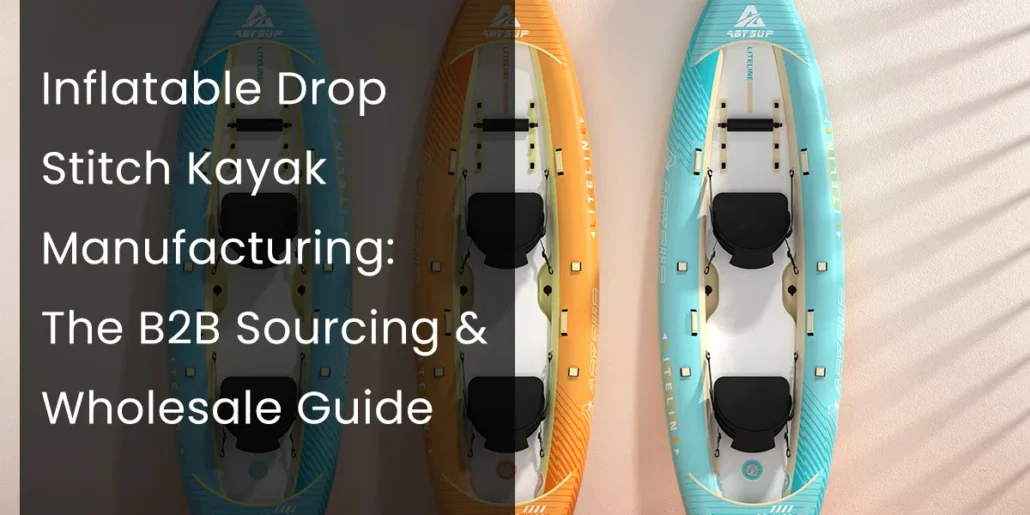
Wholesale inflatable kayak sourcing becomes difficult when buyers compare quotations before aligning the kayak structure, paddler capacity, accessory package and packaging requirements.
I’m Charlie from Huale. From the factory side, the most useful approach is to define the product specification first, approve the sample second, and compare suppliers only after they are quoting the same product.
Short answer: a B2B kayak buyer should compare the paddler capacity, hull and floor construction, seat and fin setup, accessory kit, branding, packaging, sample approval process, QC requirements and repeat-order consistency before placing a bulk order.
This guide focuses on those wholesale sourcing decisions. If your main goal is to evaluate Huale as an inflatable kayak manufacturer , use our factory page for production capability, product range and quotation information.
What Should Buyers Check Before Ordering Wholesale Inflatable Kayaks?
A wholesale kayak order should move through a clear sequence. Starting with unit price usually creates confusion because two quotations may represent different constructions, accessories or packaging.
| Step | Buyer Decision | What Should Be Confirmed |
|---|---|---|
| 1. Define the market | Who will buy or operate the kayak? | Retail, rental, resort, touring or e-commerce program |
| 2. Select the platform | Solo, tandem and construction direction | Paddler capacity, dimensions, floor and hull structure |
| 3. Align the specification | What exactly is included in the quotation? | Seats, fin, paddle, pump, bag, branding and packaging |
| 4. Approve the sample | Can the sample become the bulk-production reference? | Structure, fittings, tracking setup, artwork, accessories and packing |
| 5. Confirm bulk controls | How will production consistency be checked? | Revision control, inspection points and approved reference |
Once these points are aligned, price, MOQ, production schedule and packaging can be compared on a much more useful basis.
Match the Inflatable Kayak to Your Sales Channel
A distributor, rental operator and private-label retail brand should not automatically order the same kayak configuration.
| Buyer Type | Main Purchasing Focus | Specification Questions |
|---|---|---|
| Importers & Distributors | SKU mix, packaging, product positioning and repeat orders | How should solo and tandem models fit the range? |
| Rental Operators | Handling, replacement parts, cleaning, repair and downtime | Are seats, fins and common hardware easy to inspect and replace? |
| Outdoor Brands | Product differentiation, graphics, paddling setup and retail kit | Which product details create a clear position within the brand range? |
| E-commerce Sellers | Carton size, complete kit, instructions and listing clarity | Is everything required for the saleable SKU packed and documented? |
For model-level selection, compare our 1-person inflatable kayaks and 2-person inflatable kayaks .
If your purchasing decision is specifically about fleet capacity, use our single vs tandem inflatable kayak guide rather than using this wholesale guide as the comparison page.
How Should Wholesale Buyers Compare Inflatable Kayak Quotations?
A lower unit price does not necessarily mean a better commercial offer. Before comparing quotations, check whether each supplier is pricing the same kayak configuration.
| Quotation Item | What to Align | Why It Matters |
|---|---|---|
| Kayak Type | Solo or tandem | Changes dimensions, seating and product positioning |
| Construction | Floor and hull structure for the selected model | Different structures should not be compared as identical products |
| Dimensions | Length, width and model geometry | Affects paddler space, stability and packed product |
| Seat & Fin | Seat type, position and fin system | Changes the paddling setup and accessory cost |
| Accessory Kit | Paddle, pump, bag, repair items and other components | The saleable package may differ even when the kayak body looks similar |
| Branding | Color, logo, graphics and accessory branding | Different artwork methods may change the production plan |
| Packaging | Bag, carton, labels, barcode and instructions | Affects retail presentation and shipping volume |
The buyer should ask suppliers to identify any specification difference instead of comparing only the final quoted unit price.
Drop Stitch vs Standard Inflatable Kayak Construction
Construction choice affects product position, rigidity, packing method and customer expectations. It should be confirmed before comparing wholesale offers.
| Factor | Standard Soft Inflatable Structure | Drop Stitch Structure |
|---|---|---|
| Product Position | Often used for entry-level recreational products | Common where buyers want a firmer inflatable platform |
| Floor Feel | More flexible depending on the selected design | Flatter and firmer when designed for the required pressure |
| Quotation Review | Check chamber, floor and outer construction | Check drop stitch structure, valve setup and model-specific pressure requirement |
Pressure should be confirmed for the exact model. Do not use one PSI number as a quality shortcut across different kayak structures.
For the deeper construction decision, read our drop stitch kayak vs PVC kayak guide .
How Should B2B Buyers Evaluate an Inflatable Kayak Supplier?
A supplier review should focus on whether the selected kayak can be reproduced consistently from sample to bulk production.
Before approving a supplier, confirm:
- Relevant product capability: the supplier should be able to show kayak models and construction methods relevant to the requested project.
- Specification control: dimensions, floor structure, valves, seats, fins, hardware and accessories should be documented clearly.
- Sample revision control: buyer comments should become an updated specification, drawing, artwork file or packing instruction before bulk production.
- Component consistency: seat, fin, valve, paddle, pump and other agreed components should remain tied to the approved project version.
- Inspection process: buyers should understand how finished kayaks, fittings, inflation condition, accessories and packaging are checked for the selected model.
- Repeat-order control: the supplier should be able to identify which approved specification and component version should be reproduced on future orders.
If you are evaluating our manufacturing capability rather than comparing wholesale product configurations, review our drop stitch kayak factory page .
Why Sample Approval Matters Before a Bulk Kayak Order
For an OEM or private-label kayak project, the sample should become a controlled production reference rather than only a product demonstration.
The approved sample should connect to the current:
- Kayak dimensions and construction
- Valve configuration
- Seat and footrest layout where applicable
- Fin or skeg system
- Handle and fitting positions
- Artwork and branding files
- Accessory package
- Bag and carton specification
- Labels, barcode and instructions
Pressure-retention conditions, inspection duration and acceptance criteria should follow the specification and QC procedure for the selected kayak model. They should not be copied from another product without confirmation.
Use our inflatable kayak sample approval checklist for the detailed sample-to-bulk review process.
What Can Be Customized for a Wholesale Inflatable Kayak Program?
Customization should begin with a stable kayak platform and then add changes that support the target market and brand program.
| Area | Typical Project Decision |
|---|---|
| Model | Solo, tandem or selected existing platform |
| Colors & Graphics | Hull colors, logo position and artwork |
| Seat & Hardware | Seat setup, footrest, handles, D-rings and model-specific fittings |
| Accessories | Paddle, pump, carry bag, fin, repair items and other agreed components |
| Private-Label Package | Bag branding, carton artwork, labels, barcode and instructions |
MOQ, sample requirements and production timing should be confirmed after the kayak model, customization level, accessories and packaging are defined.
Avoid selecting an OEM program from a fixed MOQ table before the actual project scope is known.
What Compliance and Supplier Documents Should Buyers Review?
Documentation should be reviewed against the actual kayak model, intended use and destination market. A factory audit, material report and product test report serve different purposes and should not be presented as interchangeable certifications.
For EU projects, buyers should confirm the legal route for the specific kayak rather than assuming that one generic CE document covers every human-powered inflatable kayak.
The EU General Product Safety Regulation sets general product-safety and importer obligations for products within its scope.
Buyers working with watercraft should also check whether the selected product falls within or outside the relevant requirements of the EU Recreational Craft Directive and confirm any applicable standards with a qualified compliance specialist.
Before bulk production, ask the supplier to identify exactly which factory, material and product documents relate to the kayak being ordered. Do not rely on certificates from unrelated inflatable product categories.
How Should Wholesale Buyers Plan Kayak Packaging and Order Data?
An inflatable kayak is normally sold and shipped as a complete package, so the buyer should approve the packed SKU rather than only the inflatable body.
Confirm the final package includes the agreed:
- Kayak body
- Seat or seats
- Fin or skeg
- Paddle or paddles
- Pump and compatible hose fitting
- Carry bag
- Repair items
- Manuals and labels
- Retail or export carton
After the package is frozen, record the final carton dimensions, carton quantity, net weight and gross weight for logistics planning.
Do not publish or quote a universal container-loading quantity for inflatable kayaks. Loading results depend on the model, accessory kit, carton design, SKU mix and loading arrangement.
The same principle applies to freight and landed cost: use the actual production-equivalent packing data rather than generic per-kayak shipping estimates.
Common Mistakes in Inflatable Kayak Wholesale Sourcing
- Comparing unit prices before aligning specifications. A cheaper quote may represent different construction, accessories or packaging.
- Letting this guide replace product-specific comparison pages. Solo vs tandem and drop stitch vs standard inflatable construction should be evaluated separately.
- Approving appearance instead of the full sample. Seats, fins, valves, fittings, accessories and packaging all belong to the commercial SKU.
- Using one certification statement for every market. Product and importer requirements should be confirmed for the actual destination and intended use.
- Using fixed MOQ or lead-time assumptions. Order requirements depend on the selected model, customization, packaging and quantity.
- Ignoring revision control after sample approval. Bulk production should follow the approved product version rather than scattered messages from earlier project stages.
A useful wholesale sourcing process makes the product specification easier to compare, approve and reproduce. It does not depend on adding more unsupported numbers to the quotation.
FAQ: Inflatable Kayak Wholesale & OEM Sourcing
What should I compare when buying inflatable kayaks wholesale?
Compare the kayak type, construction, dimensions, floor structure, seat and fin setup, accessory package, branding, packaging and bulk QC requirements. Supplier quotations should be compared only after these items have been aligned.
Should a distributor buy single or tandem inflatable kayaks?
The right mix depends on the sales channel and target customer. Solo models support individual recreational and touring use, while tandem models serve shared paddling, family and rental applications. Review each model as a separate SKU rather than assuming one fixed inventory ratio works for every market.
Is a drop stitch kayak better for wholesale buyers?
A drop stitch structure can provide a firmer platform and support a different product position from basic soft inflatable models. The better choice depends on the target price point, customer expectation and selected kayak design rather than construction name alone.
What should be approved before bulk kayak production?
Approve the product construction, dimensions, valves, seats, fin system, hardware, artwork, accessories and packaging. Any revision after sample approval should be documented before bulk production continues.
What is the MOQ for custom inflatable kayaks?
MOQ should be confirmed against the selected kayak model, customization method, accessory package, packaging and total order structure. Sample and bulk quantities should therefore be quoted from the final project specification rather than one fixed MOQ for every kayak.
Request a Wholesale Inflatable Kayak Quote
Send us your target market, solo or tandem requirement, preferred construction, branding, accessory package, packaging requirements, estimated quantity and delivery schedule.
We can review the specification and confirm which product, sample and bulk-production details still need to be finalized before quotation.
We will respond within 24 hours with a factory-direct quote.