
Inflatable, framed and hard-shell cold plunge tubs can all support a cold-water immersion setup, but they use different structural systems and create different requirements for shipping, storage, installation, maintenance and product development.
I’m Charlie from Huale. We manufacture inflatable drop-stitch ice bath tubs for brands, distributors, gyms and recovery businesses. When B2B buyers compare cold plunge formats, the first question should not be which construction “wins.” It should be which format matches the buyer’s operating model.
Short answer: inflatable cold plunges are relevant when compact shipping, storage, portability and private-label development matter. Framed tubs use an external support structure around a flexible tub body and can offer a different balance between portability and rigidity. Hard-shell tubs use a rigid basin and are more closely associated with permanent installations where compact packing is not a priority.
The final decision should also consider the chiller system, water volume, installation space, maintenance workflow and intended sales channel.
This guide compares the equipment formats and sourcing considerations. It does not compare medical outcomes, immersion protocols or recovery claims.
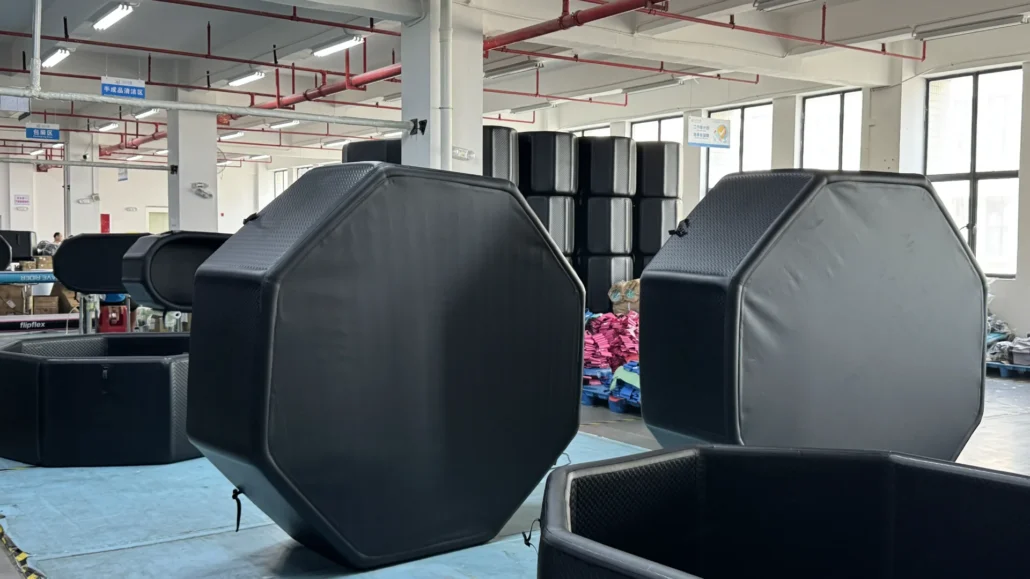
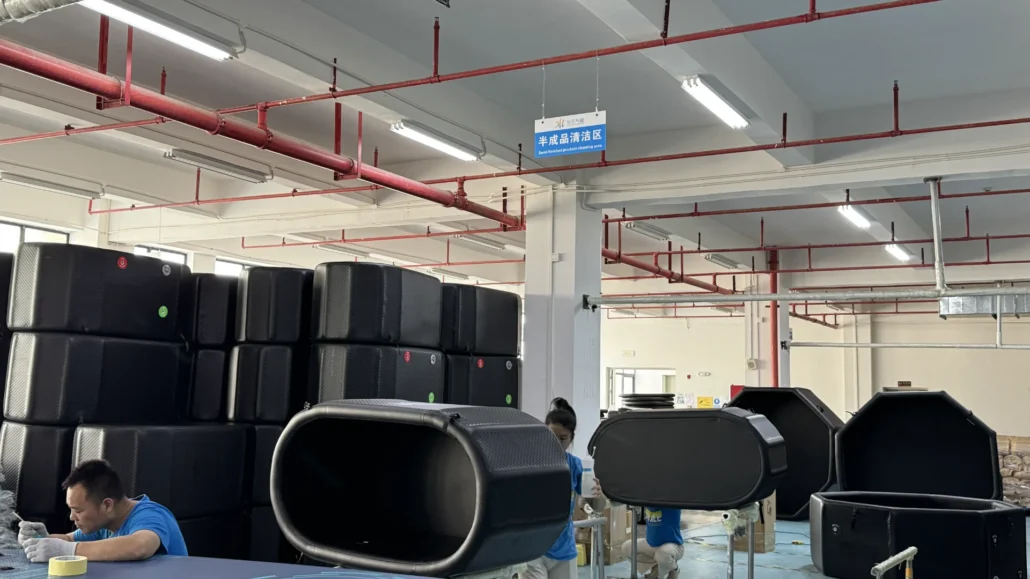
What Is the Difference Between Inflatable, Framed and Hard-Shell Cold Plunges?
The clearest way to compare cold plunge tubs is to begin with the structure that holds the water.
| Cold Plunge Type | Structural Principle | Main B2B Characteristic |
|---|---|---|
| Inflatable | Pressurized inflatable walls; drop-stitch construction may be used to create a more defined wall structure | Can be deflated for storage, transport and compact shipping |
| Framed | Flexible tub body or liner supported by a separate external frame | Frame provides structural support; storage format depends on whether the frame can be disassembled |
| Hard Shell | Rigid basin made from a molded, composite, acrylic, metal or other fixed structure | Usually transported and installed close to its finished physical size |
A framed cold plunge should therefore not automatically be grouped with a hard-shell tub. The support frame and flexible liner form a different product architecture from a rigid basin.
Inflatable vs Framed vs Hard Shell: B2B Comparison
| Buying Factor | Inflatable | Framed | Hard Shell |
|---|---|---|---|
| Packed Storage | Deflates for compact storage | Depends on frame and liner design | Rigid body remains full size |
| Shipping Volume | Often lower because the tub ships deflated | Frame components and liner still require packing space | Usually higher because the basin does not collapse |
| Installation | Inflation, positioning, filling and system connection | Frame assembly, liner positioning, filling and system connection | Positioning plus any required plumbing, electrical or equipment installation |
| Relocation | Suitable for projects that require periodic removal or relocation | Depends on how easily the frame can be dismantled | Normally selected for a more permanent position |
| Private Label | Colors, graphics, fittings and packaging can be reviewed during OEM development | Branding scope depends on liner and frame supplier | Customization depends on shell material, finish and manufacturing process |
| Typical Purchasing Context | Brands, e-commerce, gyms, mobile programs and wholesale ranges | Buyers balancing collapsibility and external structural support | Permanent spa, hospitality or fixed facility installations |
These are sourcing tendencies rather than fixed rules. The actual product specification can change the comparison considerably.
How Does Cold Plunge Construction Affect Shipping and Inventory?
For distributors and e-commerce businesses, the difference between inflated size and packed size matters commercially.
An inflatable tub can be deflated before packing, which can reduce storage and freight volume compared with a similarly sized rigid basin.
A framed tub may also be packed in separate components if its frame is designed for disassembly. The buyer should confirm the actual carton dimensions rather than assume that every framed design packs the same way.
A hard-shell tub generally retains its structural volume during shipping and warehousing. This makes dimensional planning more important for container loading, warehouse layout and final-mile handling.
B2B buyers should request:
- Final carton dimensions
- Gross packed weight
- Units per carton where applicable
- Accessories packed with the tub
- Separate chiller packaging
- Container-loading information based on the approved package
Do not calculate freight from an early sample package if the lid, chiller fittings, accessories or retail carton are still changing.
Which Cold Plunge Format Is Easier to Install?
Installation should be evaluated from the complete system rather than the tub body alone.
An inflatable cold plunge requires the tub to be unfolded, inflated to the approved specification, positioned and filled. If a chiller or circulation system is used, hoses and fittings also need to be connected and checked.
A framed tub adds the frame-assembly stage before filling.
A hard-shell system does not require inflation or frame assembly, but its weight, final dimensions, access route, supporting surface, plumbing and electrical requirements may need more planning before delivery.
For facilities, the useful questions are:
- Can the tub reach the installation area through the available doors and corridors?
- Can the supporting surface carry the filled system?
- Where will the drain route go?
- Where will the chiller or circulation equipment sit?
- Is there enough service access around the tub?
- Will the unit need to be moved later?
Can Inflatable, Framed and Hard-Shell Cold Plunges All Use a Chiller?
All three formats can potentially be used with an external cooling or circulation system when the tub and equipment are designed to work together.
Compatibility should be checked using the actual system specification rather than the phrase “chiller ready.”
Confirm:
- Chiller model
- Required inlet and return connections
- Hose dimensions
- Connector or thread specification
- Port quantity and location
- Drain layout
- Water volume
- Required flow conditions
- Space around the equipment
Hard-shell installations may use more permanent plumbing, while inflatable and framed tubs are often paired with external hoses and equipment. This is an installation difference, not proof that one format cools water better than another.
For equipment sizing, review our cold plunge chiller sizing guide .
Does a Hard-Shell Cold Plunge Hold Temperature Better Than an Inflatable Tub?
The tub category alone is not enough to answer this question.
Temperature performance can depend on:
- Wall and floor insulation
- Cover design
- Water volume
- Ambient temperature
- Direct sunlight
- Chiller capacity
- Circulation rate
- How frequently users enter the tub
A rigid shell can be built with substantial insulation, but not every hard-shell product uses the same insulation system. Inflatable tubs also vary in wall construction and thermal design.
For a B2B product comparison, request the actual construction and system specification instead of assuming the shell material alone determines cooling efficiency.
How Do Cleaning and Maintenance Differ?
Cold plunge maintenance involves more than the tub surface. Buyers also need to consider water treatment, drainage, hoses, fittings, filters and the cooling or circulation equipment.
For the tub itself:
Inflatable Tub
Check the surface, valve, seams, fittings and any areas that are repeatedly folded or handled. Cleaning products should be compatible with the approved tub material.
Framed Tub
In addition to the liner, inspect the supporting frame, joints and connection points. Frame material and the operating environment can affect maintenance requirements.
Hard-Shell Tub
Inspect the rigid surface, plumbing interfaces and any integrated components according to the manufacturer’s maintenance instructions.
There is no responsible universal water-change schedule that applies to every cold plunge installation. Water-management requirements depend on usage, treatment, filtration, circulation and local operating practices.
Which Cold Plunge Construction Lasts Longer?
A universal lifespan cannot be assigned to a construction category without defining the product and operating conditions.
For an inflatable tub, service life can be affected by:
- Drop-stitch and outer material specification
- Rail and seam construction
- Valve and fitting quality
- Operating pressure
- Repeated folding and transport
- Cleaning chemicals
- UV and weather exposure
- Storage conditions
For a framed tub, buyers should also evaluate the liner, frame material, joints and corrosion exposure where relevant.
For a hard-shell tub, the rigid body may remove inflation-related failure points, but surface finish, plumbing, seals, insulation and cooling equipment still require maintenance.
Instead of asking which category “lasts longer,” ask each supplier for the expected maintenance points, repair method and warranty process for the exact model.
Which Cold Plunge Format Fits Different B2B Use Cases?
The operating model usually gives a better answer than a simple material comparison.
DTC and E-Commerce Brands
Packed volume, fulfillment, customer installation and private-label packaging may make an inflatable format worth evaluating. The final choice should still consider return handling, accessories and the target retail position.
Gyms and Recovery Studios
Compare available floor space, user turnover, cleaning workflow, chiller layout and whether the tubs will remain installed permanently.
Hotels and Wellness Facilities
Permanent appearance, room design and fixed system integration may make hard-shell products relevant, while other spaces may value removable equipment.
Sports Teams and Mobile Programs
Transport and temporary setup can make packed dimensions and portability more important than permanent installation aesthetics.
Distributors
Warehouse volume, product mix, packaging, spare parts and repeat-order control should be evaluated alongside the tub itself.
Which Format Is Easier to Develop as a Private Label Cold Plunge?
Private-label flexibility depends on the manufacturer, but the customization process differs by construction.
For an inflatable cold plunge, OEM development may include:
- Shape and dimensions
- Exterior colors and graphics
- Logo placement
- Drain position
- Chiller inlet and return ports
- Handles and fittings
- Cover or lid
- Accessories
- Retail packaging
Framed products may allow customization of the liner, frame finish, accessories and packaging, depending on the supplier.
Hard-shell customization can involve shell color, surface finish, cabinetry, fittings or integrated equipment, but the development process depends strongly on the manufacturing method.
For buyers developing an inflatable private-label product, our cold plunge OEM guide covers the specification, sample, branding and bulk-production process separately.
What Should a B2B Buyer Check on a Cold Plunge Sample?
A comparison article can narrow the construction choice, but a commercial order should still be evaluated using the actual sample and specification.
For an inflatable cold plunge sample, consider checking:
- Finished dimensions
- Wall and floor structure
- Valve installation
- Drain position
- Chiller-port compatibility
- Handles and fittings
- Surface workmanship
- Logo and graphics
- Accessories
- Packaging
Where an air-retention test is part of the approved QC process, the pressure, duration and acceptance criteria should be defined for the selected model instead of copied from another inflatable product.
For framed and hard-shell products, the inspection list should be adjusted to the liner, frame, shell, plumbing and equipment configuration being purchased.
How Should B2B Buyers Compare Total Cost?
Unit price alone is not enough to compare cold plunge formats, but a fixed ten-year cost model is also unreliable unless all assumptions are documented.
A more useful purchasing framework is:
Landed Equipment Cost = Product + Packaging + Freight + Import Costs + Installation + Required Accessories
Then evaluate ongoing ownership separately:
Operating Cost Factors = Maintenance + Water Treatment + Chiller Service + Repairs + Storage + Replacement + After-Sales Handling
The comparison changes by buyer.
An e-commerce seller may place more weight on carton size and return handling. A hotel may place more weight on permanent installation and appearance. A distributor may care more about warehouse density and replacement stock.
Ask suppliers to identify which costs are included in each quotation before comparing formats.
Cold Plunge Format Selection Checklist
Before choosing inflatable, framed or hard-shell construction, answer these questions:
- Will the tub stay in one location permanently?
- Does it need to be stored or transported between uses?
- How much warehouse or fulfillment space is available?
- Will the product be sold through e-commerce, retail or facility projects?
- Is private-label branding required?
- Which chiller or circulation system will be used?
- What floor space and service access are available?
- Does the site require fixed plumbing?
- Who will handle maintenance and after-sales service?
- What packed dimensions can the logistics model support?
- Is the buyer testing a new category or building a permanent facility?
These answers usually narrow the suitable construction more effectively than asking which tub type is “better.”
Where Should B2B Buyers Go After Choosing the Cold Plunge Format?
If an inflatable format matches the project, the next decision is the tub type, usable space and equipment configuration.
Compare round, oval, slanted-side and team-size formats in our inflatable ice bath tub collection .
For manufacturer capability, chiller-port integration, sample review and OEM development, use our ice bath tub factory page.
For MOQ, product mix, private-label packaging and bulk-order planning, continue to wholesale ice bath tubs .
Common Mistakes When Comparing Cold Plunge Tub Types
- Treating framed and hard-shell tubs as the same construction: a flexible liner supported by a frame is different from a rigid basin.
- Comparing only the factory unit price: packed volume, installation, service and replacement handling can change the commercial result.
- Assuming hard shell always insulates better: thermal performance depends on the actual insulation and complete cooling system.
- Assuming inflatable automatically means portable: large tubs, chillers and accessories can still require significant handling and storage planning.
- Using a universal product lifespan: materials, usage, maintenance and environment differ between products.
- Calling a tub “chiller ready” without checking fittings: compatibility should be confirmed against the actual equipment.
- Making medical or safety claims from the tub construction alone: equipment format does not establish clinical outcome or user suitability.
FAQ: Inflatable vs Hard-Shell Cold Plunge Tubs
What is the difference between an inflatable and a hard-shell cold plunge?
An inflatable cold plunge uses pressurized walls and can be deflated for storage and shipping. A hard-shell cold plunge uses a rigid basin that retains its physical shape. This affects freight, installation, storage, customization and maintenance, but the better fit depends on the buyer’s operating model.
Is a framed ice bath the same as a hard-shell cold plunge?
No. A framed ice bath generally uses a flexible tub body or liner supported by an external frame. A hard-shell tub uses a rigid basin. The two formats have different packing, assembly and maintenance requirements.
Can an inflatable cold plunge connect to a chiller?
Yes, when the tub and cooling system are configured for each other. Buyers should confirm the chiller model, inlet and return connections, hose dimensions, port positions, water volume and required flow conditions before approving the tub specification.
Which cold plunge format is better for a gym or recovery studio?
It depends on whether the equipment will remain permanently installed, how much floor and service space is available, the user workflow, chiller layout, maintenance plan and whether the tubs need to be moved or stored. Construction type alone does not determine the correct choice.
What should a distributor compare before choosing a cold plunge supplier?
Compare the exact tub construction, packed dimensions, fittings, chiller compatibility, sample process, QC requirements, branding options, packaging, after-sales process and commercial terms. Supplier quotations should be based on the same product scope before cost is compared.
Choose the Cold Plunge Format Around the Operating Model
Inflatable, framed and hard-shell cold plunges solve different equipment and sourcing problems.
Inflatable construction offers a deflatable product format that can be useful for shipping, storage, mobile programs and private-label ranges. Framed tubs use a separate support structure and sit between inflatable and rigid products in some operating models. Hard-shell tubs are built around a fixed basin and are commonly considered when permanent installation is part of the project.
The purchasing decision should therefore begin with the facility, sales channel and operating requirements rather than a claim that one construction is universally superior.
Confirm the installation space, logistics, chiller system, maintenance workflow and customization requirement, then compare actual product specifications and samples.


