
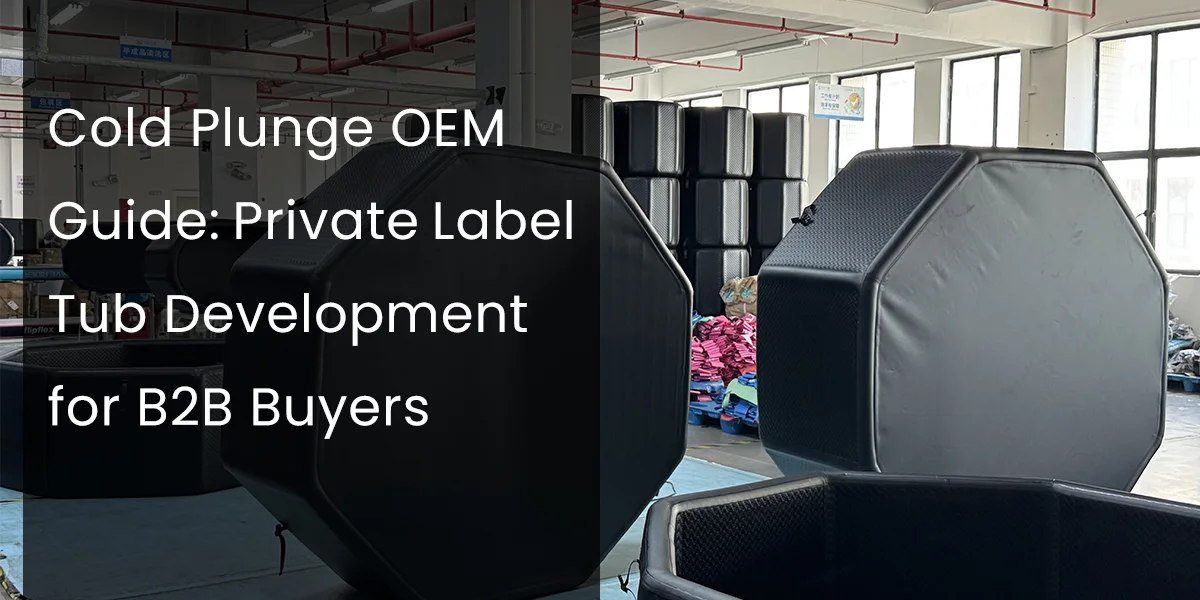
Launching a private-label cold plunge is not just a logo project. Before bulk production, the buyer and factory need to agree on the tub structure, dimensions, water capacity, chiller connections, branding, accessories, packaging and quality requirements.
I’m Charlie from Huale. We work with wellness brands, distributors, gyms and e-commerce sellers on inflatable cold plunge and ice bath projects. In our experience, OEM projects run more smoothly when the commercial idea is converted into a controlled product specification before sampling begins.
Short answer: a cold plunge OEM project should move through seven stages: product brief, technical specification, branding, sample development, sample approval, bulk production and final QC. Skipping one of these stages usually creates more revisions later.
This guide focuses on the OEM development process. If your main requirement is bulk purchasing of existing configurations, see our wholesale ice bath tubs page instead.
What Does Cold Plunge OEM Actually Include?
In B2B sourcing, OEM should mean more than placing a buyer’s logo on an existing tub.
Depending on the project, OEM development may involve changes to:
- Tub dimensions and shape
- Inflatable wall or drop-stitch structure
- Color combinations
- Logo and graphic placement
- Chiller inlet and return ports
- Drainage configuration
- Lid or cover
- Carry handles and fittings
- Accessory package
- Retail packaging and labels
The more items that change from an existing production configuration, the more important the sample and revision-control process becomes.
A private-label project can therefore range from branding an established model to developing a substantially different product specification. Buyers should define that scope before asking for MOQ or pricing.
Cold Plunge OEM Development: 7 Steps From Brief to Bulk Order
We recommend treating an OEM cold plunge project as a controlled development sequence rather than a series of separate chat messages.
| Stage | Buyer Decision | Factory Output |
|---|---|---|
| 1. Product Brief | Target customer, market, use case and product position | Initial feasibility review |
| 2. Technical Specification | Dimensions, structure, ports, accessories and operating requirements | Confirmed product specification |
| 3. Branding | Colors, logo, labels and packaging identity | Artwork and placement review |
| 4. Sample Development | Approve the configuration to be sampled | Physical OEM sample |
| 5. Sample Approval | Confirm or revise product details | Approved reference specification |
| 6. Bulk Production | Freeze the purchase-order specification | Production against approved references |
| 7. QC & Packing | Confirm inspection and shipment requirements | Inspection, packing and shipment preparation |
The exact MOQ, sample schedule and production timing depend on the final structure, customization level, packaging and order quantity. These should be confirmed after the technical brief is reviewed rather than assumed from a generic product listing.
What Should a Brand Put in a Cold Plunge OEM Brief?
The first document does not need to be a finished engineering drawing. It does need enough information for the factory to understand what business problem the product is meant to solve.
We recommend starting with:
- Target market or country
- Buyer type: home user, gym, recovery studio, spa or commercial facility
- Expected retail positioning
- Preferred tub dimensions
- One-person, two-person or other capacity requirement
- Indoor or outdoor use
- Chiller requirement
- Preferred branding level
- Accessory requirements
- Packaging channel: retail, e-commerce or commercial distribution
- Initial order quantity estimate
Reference photos can help explain the concept, but they should not replace written specifications. A factory cannot reliably reproduce dimensions, material structure or fittings from a lifestyle photo alone.
Choose the Cold Plunge Structure Before Finalizing the Logo
One of the most common OEM mistakes is starting with graphics before the physical product is frozen.
Branding should come after the buyer has confirmed the basic structure because dimensions, seams, valves, handles and ports all affect usable graphic areas.
The technical review should cover:
- Inflatable wall construction
- Floor structure
- Tub height and internal dimensions
- Top-edge geometry
- Valve location
- Drain position
- Chiller ports where required
- Handle positions
- Cover or lid interface
If you are still comparing product sizes, our ice bath size guide for wholesale buyers covers the size decision separately.
How Should Chiller Compatibility Be Handled in an OEM Project?
A cold plunge tub should not be described as “chiller compatible” without defining what equipment it is expected to connect to.
Before the sample is produced, the buyer should provide available information about:
- Chiller brand and model
- Required inlet and return connections
- Hose dimensions
- Thread or connector specification
- Port quantity
- Preferred port location
- External pump or filtration components
- Installation space around the tub
Do not assume that two chillers use interchangeable fittings just because their hose connections look similar.
For buyers still selecting cooling capacity, see our cold plunge chiller sizing guide . Port and hose compatibility should then be confirmed against the actual equipment specification.
What Can Be Customized for a Private Label Cold Plunge?
Private labeling can involve the tub, accessories and packaging rather than one logo printed on the front wall.
Typical branding decisions include:
- Main tub color
- Logo size and position
- Graphic artwork
- Model name
- Product labels
- Carry bag branding
- Pump or accessory branding where applicable
- Instruction manual
- Retail carton artwork
Each approved graphic should have a controlled artwork file and revision number. Color should also be confirmed using an agreed reference rather than a screenshot viewed on different displays.
If your main project is centered on visual branding rather than the full OEM workflow, our custom print ice bath guide covers the branding side in more detail.
Why the OEM Sample Should Become the Production Reference
A physical sample is useful only when both sides know exactly what it is approving.
Before sign-off, check:
- Finished dimensions
- Tub shape and symmetry
- Inflatable structure
- Valve and drain configuration
- Chiller ports and mating fittings
- Handle and accessory positions
- Logo and color
- Cover or lid
- Accessories
- Packaging
Any requested change should be consolidated into one current revision. Avoid approving structural changes through scattered messages while the physical sample still represents an older version.
Where practical, retain an approved sample or a detailed reference record containing measurements, photos, artwork and component specifications. That gives production and QC teams the same target during bulk manufacturing.
How Should Buyers Evaluate MOQ for a Cold Plunge OEM Order?
MOQ should not be evaluated as an isolated number. A standard model with an existing production configuration can have a different order requirement from a project involving new dimensions, fittings, graphics and custom packaging.
The factors that can affect order planning include:
- Whether an existing tub structure is used
- Custom dimensions
- Custom color requirements
- Printing method
- New port or fitting configuration
- Accessory customization
- Retail packaging
- Number of SKUs or colorways
For a new brand, it is usually more useful to ask, “What is the minimum practical order for this exact configuration?” than to ask for the lowest possible MOQ before the specification is defined.
For standard or mixed bulk purchasing, refer to our wholesale ice bath tub page.
What Changes the Factory Cost of an OEM Cold Plunge Tub?
OEM pricing should be built from the product specification rather than treated as one fixed price for every branded tub.
Common cost drivers include:
- Tub dimensions and material usage
- Construction complexity
- Custom fittings or ports
- Printing coverage and logo method
- Accessories
- Cover or lid configuration
- Retail packaging
- Order quantity
- Number of separate SKUs
Buyers comparing quotations should confirm whether each supplier is quoting the same product specification. A cheaper quotation is not directly comparable if the material structure, accessory package, fittings or packaging are different.
For import planning, also separate the factory product cost from freight, duties, local delivery and any third-party inspection costs. This gives a more useful landed-cost view than comparing EXW or FOB unit prices alone.
What Should Be Checked During Cold Plunge Bulk QC?
The purpose of bulk QC is to verify that production matches the approved specification rather than to redesign the product after manufacturing.
Inspection requirements should be agreed for the project and may include:
- Dimensions and shape
- Valve installation
- Drain and chiller-port configuration
- Inflation and air-retention checks using the approved method
- Seam and bonding appearance
- Logo placement
- Color and visual finish
- Accessory completeness
- Packaging and labels
The pressure, inspection duration and acceptance criteria should follow the approved product specification. We do not recommend copying a test value from a different cold plunge model without engineering confirmation.
Any failed inspection item should have a defined handling process: isolate the affected unit, identify the cause, complete the required correction or replacement, and recheck it before shipment approval.
How Should E-Commerce and Distributor Buyers Plan Packaging?
A tub can pass product inspection and still create a poor commercial result if the packaging was never treated as part of the OEM specification.
Buyers should confirm:
- How the deflated tub is folded
- Carry bag requirement
- Protection for valves and hard fittings
- Location of accessories inside the package
- Retail carton artwork
- Barcode and SKU labels
- Instruction manual
- Shipping marks
- Carton dimensions and gross weight after the final pack is confirmed
For e-commerce sellers, packed dimensions can affect warehousing and fulfillment economics. For distributors, carton efficiency affects container planning and downstream handling.
Do not freeze shipping calculations using an early sample carton if the final accessories or retail packaging have not yet been approved.
How Should a Brand Evaluate a Cold Plunge OEM Supplier?
A supplier should be evaluated on whether it can control the OEM project from specification through repeat production, not only whether it can make one attractive sample.
| Supplier Check | Evidence to Ask For | Buyer Risk It Helps Control |
|---|---|---|
| Specification control | Product sheet, drawings and revision records | Buyer and factory working from different versions |
| Sample process | Sample checklist and approval workflow | Changes not carried into bulk production |
| Port & fitting review | Compatibility drawings or physical fitting checks | Chiller connection problems after delivery |
| Bulk QC | Inspection records and defined handling of failed units | Inconsistent finished products |
| Packaging control | Approved carton, labels and packing list | Missing items or incorrect retail presentation |
If the project is still at the supplier-screening stage, ask for evidence tied to the product you plan to order rather than relying only on general factory photos.
Common Cold Plunge OEM Mistakes Before Bulk Production
- Starting with the logo instead of the product brief: branding cannot correct an unsuitable tub structure or fitting layout.
- Using “chiller compatible” as a complete specification: the exact ports, hoses and fittings still need to be confirmed.
- Requesting MOQ before defining customization: the order requirement can change when new colors, structures, fittings or packaging are introduced.
- Approving the sample through scattered messages: production needs one current specification and revision record.
- Changing the chiller after approving the tub ports: new equipment may use a different connection system.
- Approving the tub but not the package: missing accessories, labels or carton errors still affect the delivered SKU.
- Comparing supplier prices without matching specifications: different structures and accessory packages can make two quotations look comparable when they are not.
Cold Plunge OEM Inquiry Checklist
A useful RFQ should tell the supplier enough to review the product before giving a final quotation.
Send:
- Target market and buyer type
- Tub size or reference dimensions
- Expected application
- Preferred structure
- Chiller brand or connection specification if required
- Port and drain requirements
- Color and logo files
- Accessory list
- Packaging requirements
- Estimated order quantity
- Number of SKUs or colorways
- Delivery destination
- Required project timing
If some items are still undecided, identify them as open questions. That is more useful than allowing the supplier to make assumptions that later become product revisions.
FAQ: Cold Plunge OEM & Private Label Projects
What is the difference between a private label cold plunge and a full OEM project?
A private-label project may use an existing tub configuration with customized branding and packaging. A deeper OEM project can also change dimensions, structure, ports, fittings, accessories and other product specifications. The final scope should be defined before sampling.
Can I connect my own chiller to an OEM cold plunge tub?
Potentially, but compatibility should be checked using the exact chiller, hose and fitting specifications. Do not assume that standard-looking connections are interchangeable between different equipment systems.
Do I need a physical sample before a private-label cold plunge bulk order?
For a new specification, a physical sample gives the buyer a reference for dimensions, structure, fittings, graphics, accessories and packaging. Whether another sample is needed after revisions depends on the type and commercial risk of the change.
What determines the MOQ for a custom cold plunge tub?
MOQ depends on the final product structure, customization level, printing method, packaging, number of SKUs and production requirements. The exact quantity should be confirmed after the project specification is reviewed.