
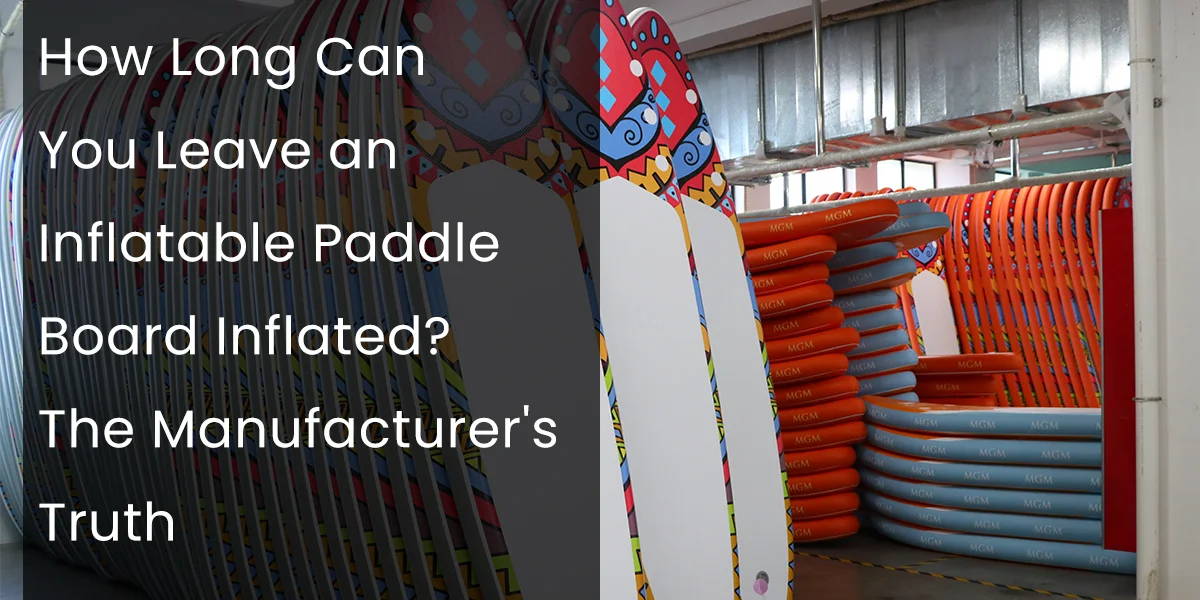
Rental fleets, schools and paddle board distributors do not ask about inflatable paddle board storage just for convenience. They ask because poor storage can lead to valve leaks, PVC aging, EVA edge lifting, fin box damage, soft boards, warranty claims and higher replacement cost.
I’m Charlie, and I work on the factory side of inflatable drop-stitch products. When buyers ask us, “How long can you leave an inflatable SUP inflated?”, my answer is not one fixed number. It depends on pressure, temperature, UV exposure, daily handling, storage area, valve condition and how often the board is used.
This guide combines the key questions buyers search for: how to store inflatable paddle board, how to store inflatable SUP, inflatable SUP care, and stand up paddle board maintenance and proper storage. The goal is to help rental operators, schools, clubs and distributors build a practical maintenance SOP before the next busy season.
How Long Can You Leave an Inflatable SUP Inflated?
For short-term rental operation, an inflatable SUP can often stay inflated between use days if it is stored in shade, kept away from high heat and checked for pressure changes. For long-term storage, especially during winter or off-season inventory, we recommend cleaning, drying and reducing pressure before packing or rack storage.
The main risk is not inflation itself. The risk is leaving the board under high pressure in direct sun, inside a hot vehicle, on rough ground, or in a wet bag for too long.
| Storage Situation | Can It Stay Inflated? | Factory Recommendation |
|---|---|---|
| Same-day rental use | Yes, if pressure and temperature are checked | Keep boards in shade when not on water and avoid dragging them on rough ground. |
| Overnight between rental days | Usually acceptable with lower risk when stored indoors or under cover | Rinse, dry, check valve caps and release some air if the storage area gets hot. |
| Several days in hot sun | Not recommended | Heat can increase internal pressure and speed up PVC, glue or deck-pad stress. |
| Winter or off-season storage | Better stored deflated or lightly inflated | Clean, dry, inspect, reduce pressure and store away from moisture, heat and sharp objects. |
If your team asks, “Is it ok to leave an inflatable SUP inflated?”, the practical answer is this: it can be acceptable for short operating windows, but it should not be treated as a no-maintenance storage method.
How to Store Inflatable SUP Boards Between Rental Days
For rental operators, daily storage should be fast, repeatable and easy for staff to follow. The goal is to avoid pressure damage, UV exposure, fin box stress, valve contamination and wet-bag storage.
If boards will be used again within a short time, rack storage can be more efficient than fully deflating every board. The rack should support the board evenly, avoid pressure on the fin box and keep the board out of direct sun.
Short-term inflated storage
- Store boards under shade, indoors or under a covered rack.
- Release some air if the board will sit in a hot storage area.
- Keep valve caps closed to prevent sand, water and dirt entering the valve area.
- Do not stack heavy boards or equipment on top of inflated boards.
- Check pressure before the next rental session.
Short-term deflated storage
- Dry the board before rolling it into the bag.
- Fold loosely around the fin box and valve area.
- Keep the pump, fin, leash and repair kit in the same rental set.
- Label boards by size, model, batch or condition grade for staff tracking.
For operators building a bigger fleet, our paddle board rental fleet buying guide can help connect storage planning with board size, accessory package and replacement planning.
Daily Cleaning SOP After Rental or School Use
Inflatable SUP care starts before the board enters storage. If sand, salt, mud and water stay on the board, they can affect valves, fins, deck pads, seams, bags and customer experience.
Schools and rental teams should use a simple end-of-day cleaning process. The SOP does not need to be complicated, but it must be followed every day during peak season.
| Cleaning Step | What Staff Should Do | Why It Matters |
|---|---|---|
| Rinse | Use fresh water after saltwater, lake mud or sandy beach use | Reduces salt, sand and dirt around valves, seams and deck pads. |
| Clean deck pad | Remove sunscreen, mud and shoe marks with mild cleaning method | Helps protect EVA surface appearance and grip. |
| Check valve area | Remove sand and confirm the cap closes correctly | Sand near the valve can cause slow leakage or poor sealing. |
| Dry | Let the board dry before bag storage | Wet storage can create smell, stains and deck-pad edge issues. |
| Record damage | Note leaks, fin damage, cuts, soft feel or missing accessories | Helps staff repair small issues before the next rental day. |
Avoid harsh chemicals unless your supplier confirms compatibility with the board material and deck pad. For B2B fleets, cleaning damage can become a warranty dispute if the wrong cleaner is used repeatedly.
Inflation Pressure, Sun Exposure and Heat Expansion
Pressure control is one of the most common mistakes in inflatable paddle board storage. A board that feels correct in the morning can become over-pressured after sitting under direct sun or inside a hot vehicle.
We recommend confirming the rated PSI for each board model before fleet operation. Do not copy the pressure from another model, because board thickness, drop-stitch structure, valve system and target use may be different.
Why heat matters
Air expands when temperature rises. If a fully inflated board is left in direct sun for a long period, internal pressure can increase and stress the seams, deck pad, valve area and board shape.
What rental staff should do
- Check pressure before opening rental service each day.
- Release some air when boards sit on shore for long periods in hot weather.
- Never leave fully inflated boards inside hot cars, vans or closed containers.
- Use shaded racks or covered storage areas during peak summer.
- Train staff to check soft boards and over-firm boards before handing them to customers.
For a deeper pressure discussion, link your staff training to our guide on the ideal PSI for inflatable paddle boards.
How to Store Inflatable SUP for Winter and Off-Season Inventory
The query “how to store inflatable SUP for winter” is very relevant for rental fleets, schools and distributors. Off-season storage is when small problems either get fixed early or become next season’s customer complaints.
Before winter storage, every board should go through cleaning, drying, inspection, repair planning and packing. Do not put wet boards straight into bags or cartons and expect them to be ready for the next season.
Off-season storage process
- Clean and rinse the full board, especially valve area, fin box, D-rings and deck pad edges.
- Dry fully before bag or carton storage.
- Inspect seams and sidewalls for cuts, abrasion, deformation or soft areas.
- Check accessories such as fins, leash, pump hose, valve adaptor, repair kit and bag.
- Store away from heat, moisture and sharp objects in a clean warehouse area.
- Keep cartons off wet floors and avoid heavy stacking on valves or fin boxes.
If your market has strong sun exposure during the season, keep a separate care guide for UV and PVC surface issues. Our PVC fading prevention for inflatable paddle boards article can support staff training and customer education.
Valve, Fin Box, D-rings and Deck Pad Inspection
For a private user, a small issue may be ignored for weeks. For a rental fleet, the same issue can become a refund request, a bad review or a damaged board during the next busy weekend.
Commercial operators should inspect the parts that receive the most daily stress: valve, fin box, D-rings, handles, deck pad, rails and accessory set.
| Part | What to Check | Risk if Ignored |
|---|---|---|
| Valve | Cap, seal, sand, air loss, valve tightness | Slow leak, poor pressure retention and customer complaints. |
| Fin Box | Cracks, deformation, sand, missing fin, tightness | Poor tracking, missing accessories and repair delays. |
| D-rings | Pulling point, base patch, rust, edge lifting | Leash or cargo attachment failure during rental use. |
| Deck Pad | Edge lifting, cuts, stains, glue line, surface wear | Lower grip, poor appearance and more customer complaints. |
| Handles | Base strength, stitching or welded area, grip comfort | Difficult staff handling and faster wear. |
For rental fleets, inspection records should include photos and notes by board number. This makes repair planning, warranty communication and replacement decisions much easier.
Repair Kit and Spare Parts Planning for Commercial Operators
Rental fleets should not wait until a board fails to think about repair support. A small leak, missing fin or damaged valve part can take a board out of service during the busiest week of the season.
When buying inflatable SUP boards for rental or school use, ask your supplier what repair kit and spare parts are available. The accessory package should match the way your staff will maintain the fleet.
Recommended repair and spare-part planning
- PVC patches matched to the board material and color when possible.
- Valve tool for basic valve tightening or replacement support.
- Spare fins for the fin system used in your fleet.
- Pump hose and adaptor because these parts are often lost or damaged.
- Leash and D-ring checks for rental safety and customer handling.
- Photo records for warranty and supplier communication.
If your fleet has repeated warranty questions, connect maintenance records with product selection. Our reduce SUP return rate guide explains how factory specs, QC checks and buyer handling all affect after-sales results.
Storage Mistakes That Increase Return Rate
Many SUP return cases are not caused by one single failure. They often come from repeated storage and handling mistakes across a season.
Rental teams should train staff to avoid these common problems:
- Storing wet boards inside bags, which can cause smell, stains and deck-pad edge issues.
- Leaving boards fully inflated under direct sun, which can increase internal pressure and stress seams.
- Folding tightly around the fin box, which can deform or damage the fin area.
- Dragging boards on rough ground, which damages rails, bottom skin and handles.
- Using harsh cleaners without confirming material compatibility.
- Stacking heavy items on valves, fin boxes or deck pads during warehouse storage.
- Ignoring missing accessories, such as fins, valve caps, pump adaptors and repair kits.
A good storage SOP protects both the board and your business. It reduces staff confusion, shortens repair time and helps purchasing teams plan replacement stock before peak season.
Maintenance Checklist for Rental Fleets, Schools and Distributors
This checklist is the part your staff can copy into a daily SOP. It turns inflatable SUP care from a general idea into a repeatable process.
| Check Frequency | What to Check | Why It Matters |
|---|---|---|
| After each use | Rinse, dry, valve cap, fin box, visible cuts, missing accessories | Prevents small problems from entering the next rental session. |
| Weekly | Seams, rails, handles, D-rings, deck pad, pressure behavior | Helps catch repeated-use wear before it causes downtime. |
| Monthly | Valve sealing, board shape, soft areas, pump condition, repair kit stock | Supports maintenance planning and warranty communication. |
| Off-season | Full cleaning, drying, repair, accessory count, storage label, replacement list | Prepares the fleet for next season and avoids last-minute purchasing. |
When should a commercial operator repair or replace a board?
Repair may be enough for small surface cuts, missing fins, valve service or minor accessory issues. Replacement should be considered when a board has repeated leakage, twisted shape, severe seam damage, unsafe deck-pad failure, damaged fin box structure or repeated customer complaints.
There is no fixed replacement year for every rental SUP. The decision depends on use frequency, staff handling, storage method, cleaning routine, repair history and buyer expectations in your market.
FAQ
How long can you leave an inflatable SUP inflated?
You can usually leave an inflatable SUP inflated for short operating windows if it is stored in shade, checked for pressure changes and kept away from high heat. For long-term storage, clean and dry the board, release pressure and store it away from UV, moisture and sharp objects.
Should rental fleets store inflatable paddle boards inflated or deflated?
For daily rental use, shaded rack storage while lightly inflated can save staff time. For winter, off-season inventory or long warehouse storage, deflated or lightly inflated storage is usually safer, subject to board condition and storage space.
How should schools clean inflatable SUP boards after use?
Schools should rinse boards with fresh water, remove sand and mud, clean the deck pad with a mild method, check valve caps and fin boxes, then dry boards before bag storage. Staff should record any cuts, missing fins, soft boards or valve issues.
What parts should be checked before the next rental season?
Check valves, seams, rails, fin boxes, D-rings, handles, deck pads, pumps, fins, leashes, repair kits and storage bags. Also review board labels, repair history and replacement needs before peak season purchasing starts.
When should a commercial operator replace an inflatable SUP?
Replacement should be considered when a board has repeated air loss, seam failure, twisted shape, unsafe fin box damage, serious deck-pad failure or recurring customer complaints. The final decision depends on repair cost, rental demand and brand positioning.
Request OEM SUP Boards for Rental Fleets and Distributors
If you operate a rental fleet, school program, resort water-sports center or SUP distribution business, send us your board size, target users, storage method, accessory package, branding request, quantity and destination port.
Use the Bricks native Form element here for the quote request form. Recommended fields: name, company, country, email, product use case, board size, quantity, branding request, accessory package, destination port and message.
Request an OEM SUP quote and our factory team will review your project details.
We will respond within 24 hours with a factory-direct quote.
MOQ starts from 1 piece.