
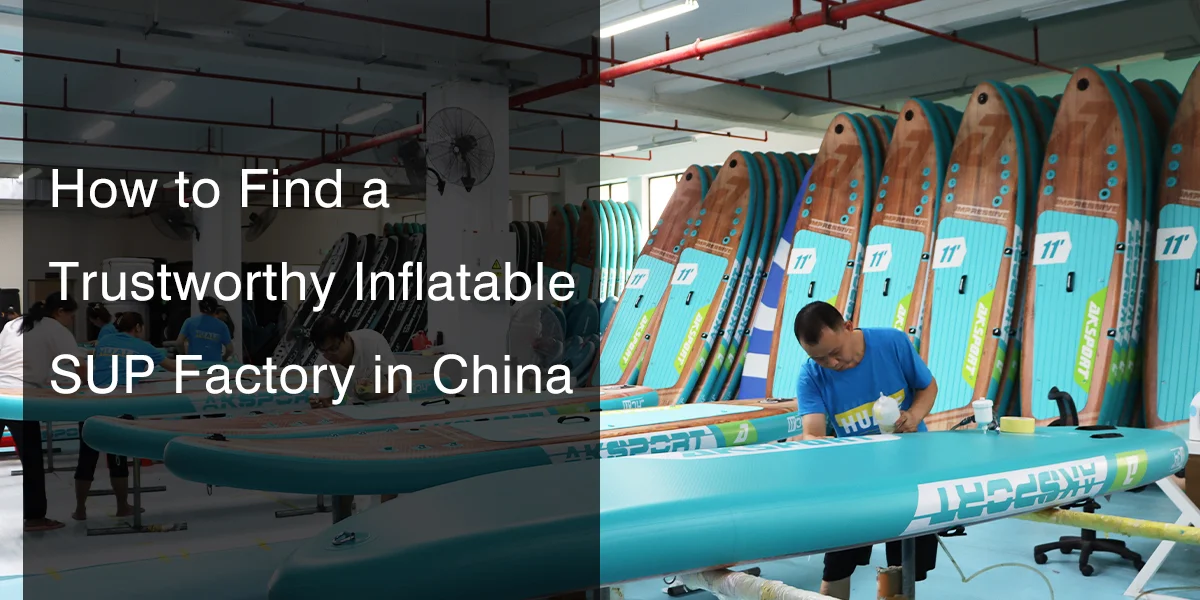
Finding a trustworthy inflatable SUP factory in China requires more than checking a supplier’s website, certificates or quoted price. For distributors and private-label brands, the real question is whether the factory can prove who it is, manufacture the board specification you need, control samples and bulk production, and support repeat orders consistently.
I’m Charlie from Huale. We manufacture inflatable paddle boards for distributors, brands, rental operators and e-commerce sellers. From the factory side, one of the biggest sourcing mistakes we see is buyers trying to judge suppliers from marketing claims before verifying the actual production process behind their quotation.
Short answer: verify a SUP supplier in seven areas: legal identity, real production capability, product specification control, sample approval, quality control, documentation and commercial terms. No single certificate, factory photo or low quotation can replace that complete check.
This guide gives B2B buyers a practical SUP factory verification process that can be used before paying for a sample or committing to a bulk order.
If you are already looking for production specifications and OEM options rather than supplier-verification guidance, review our inflatable paddle board factory page.
How Do You Verify a SUP Factory in China?
A trustworthy supplier should be able to provide evidence at each stage of the purchasing process. The table below is a useful first screening checklist.
| Verification Area | Evidence to Request | What You Are Trying to Confirm |
|---|---|---|
| Company Identity | Legal company name, registration information, factory address and quotation entity | You know which company will actually receive and execute the order |
| Production | Live factory video, in-process boards, equipment and production records | The supplier can control the relevant manufacturing processes |
| SUP Specification | Construction sheet, dimensions, rails, valve, fin system, EVA and accessories | Different quotations are being compared on the same product basis |
| Sample Process | Sample specification, artwork revision and approval record | Bulk production has a controlled reference |
| Quality Control | Product-specific inspection items and records | The factory can explain what is checked before packing |
| Documentation | Relevant management, material or product documents | Claims match the exact certificate scope and target-market requirement |
| Commercial Terms | MOQ, payment, packaging, lead-time basis, claims process and shipping terms | The commercial offer is clear enough to execute |
A supplier does not need to send every document before the first conversation. But as the project becomes more serious, the evidence should become more specific.
1. Verify the Supplier’s Legal Identity Before Evaluating the Factory
Start with the company behind the quotation.
A professional supplier should be able to provide its full legal company name, registered address and the entity that will appear on the commercial documents.
Compare that information across:
- Quotation or proforma invoice
- Business registration information
- Bank beneficiary details
- Supplier website and email domain
- Factory or office address
- Available audit or certification documents
Differences do not automatically mean fraud. Some manufacturers use related export companies, group companies or separate trading entities for international business.
What matters is whether the supplier can clearly explain the relationship between the company receiving payment and the site manufacturing the paddle boards.
If the explanation remains unclear, resolve it before paying a sample or production deposit.
2. Confirm Who Actually Manufactures the Inflatable Paddle Boards
“Factory” and “trading company” are often treated as simple opposites, but the more useful B2B question is:
Which production processes does this supplier control directly, and which processes are subcontracted?
A trading company is not automatically unreliable, and a factory is not automatically the better supplier. The purchasing risk appears when the buyer does not know who is actually responsible for production, specifications and quality control.
Ask the supplier to show:
- Inflatable SUP boards currently in production
- Material storage relevant to the boards being quoted
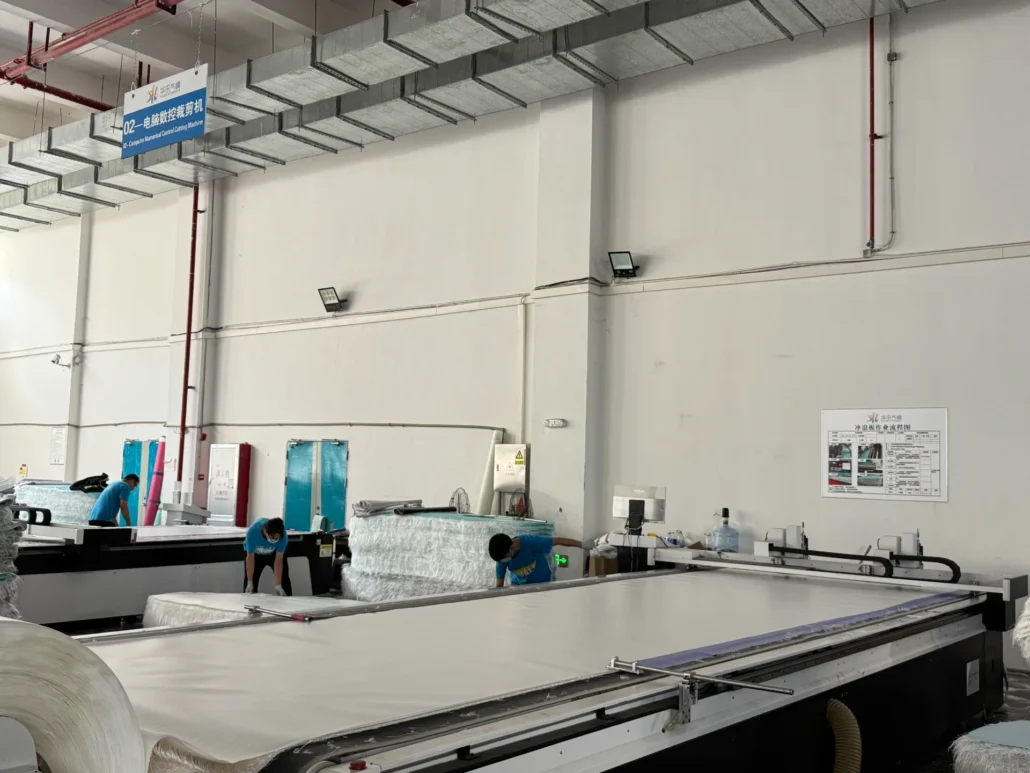
- Cutting and component-preparation areas
- Printing or graphic-production processes where applicable
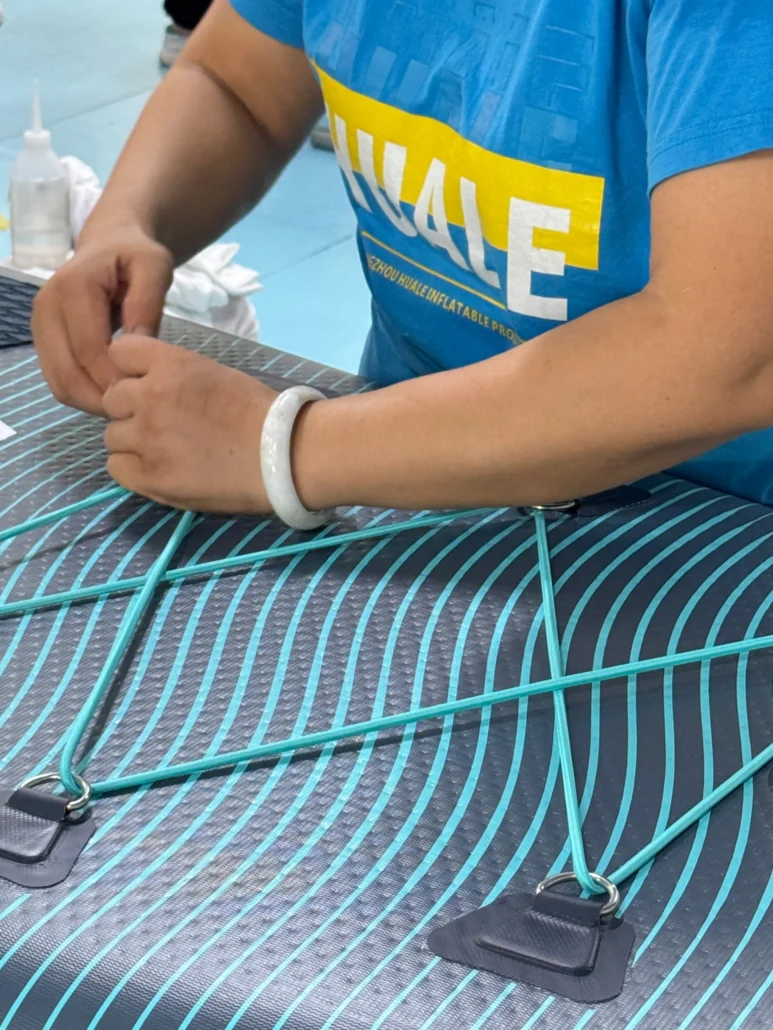
- Rail, valve and accessory assembly stages
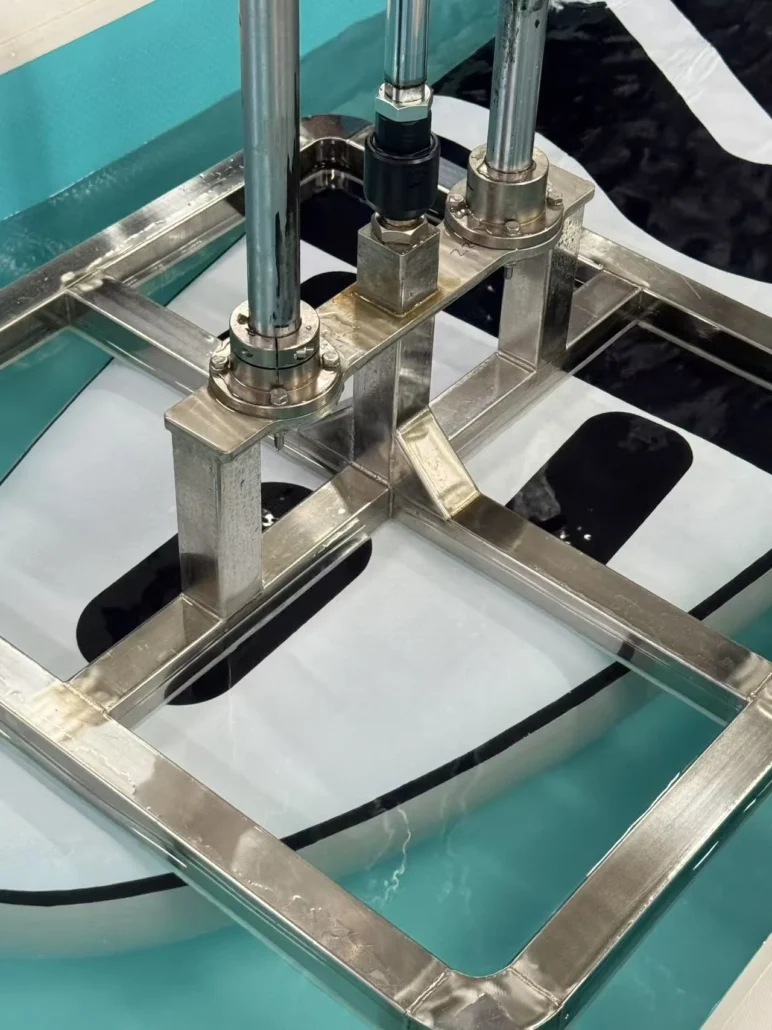
- Inflation and inspection areas
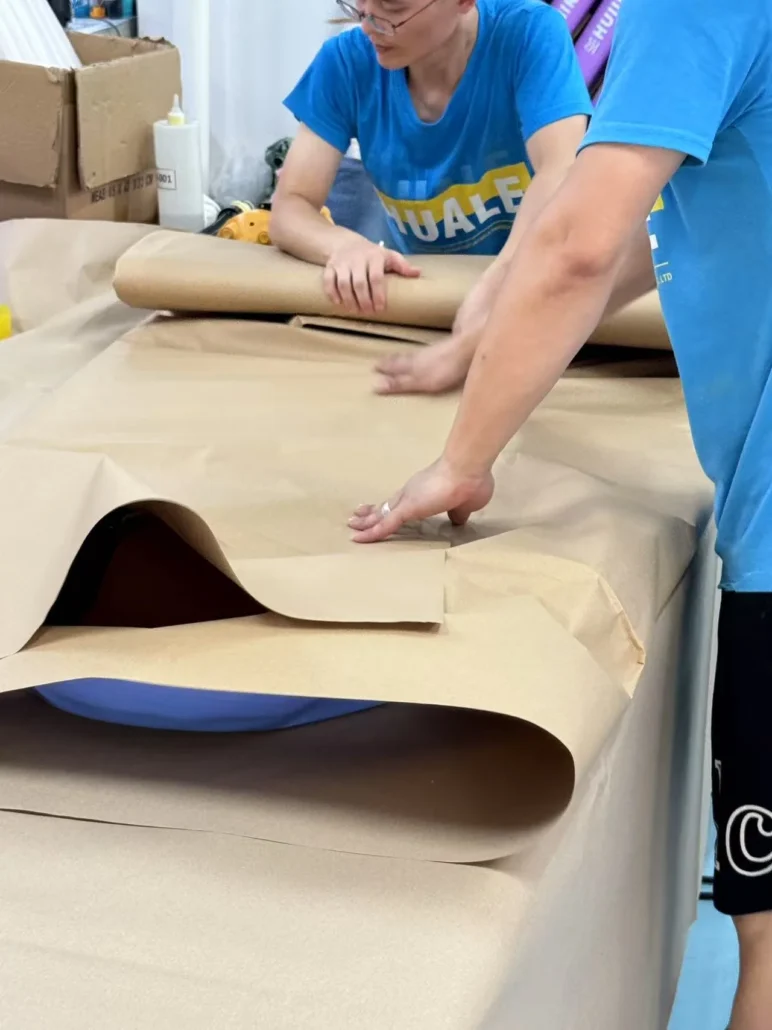
- Packing and finished-goods areas
A live video call can be more useful than a polished corporate video because you can ask the supplier to move between specific production areas and show the processes relevant to your project.
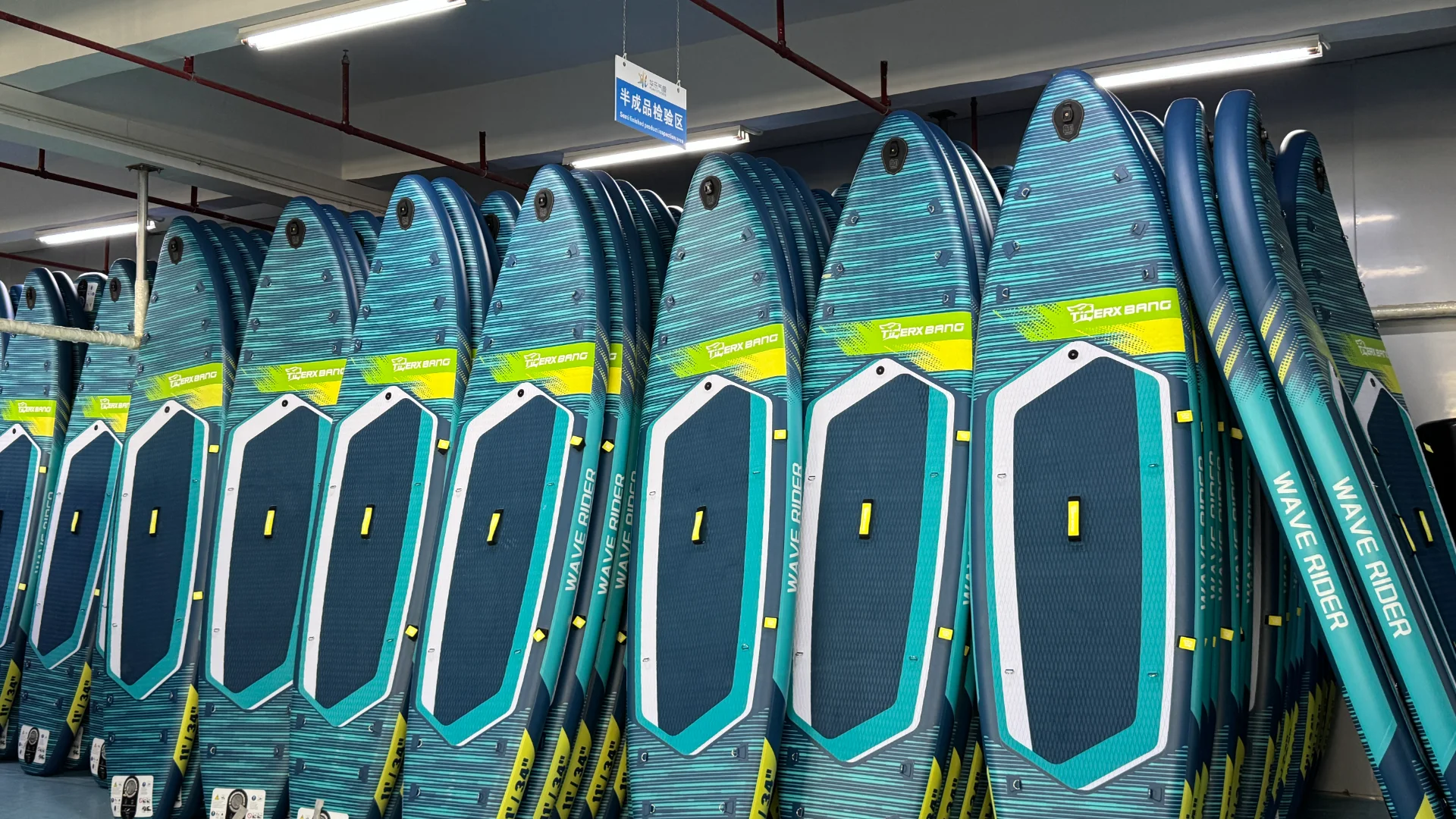
3. Do Not Judge a SUP Factory by Machines Alone
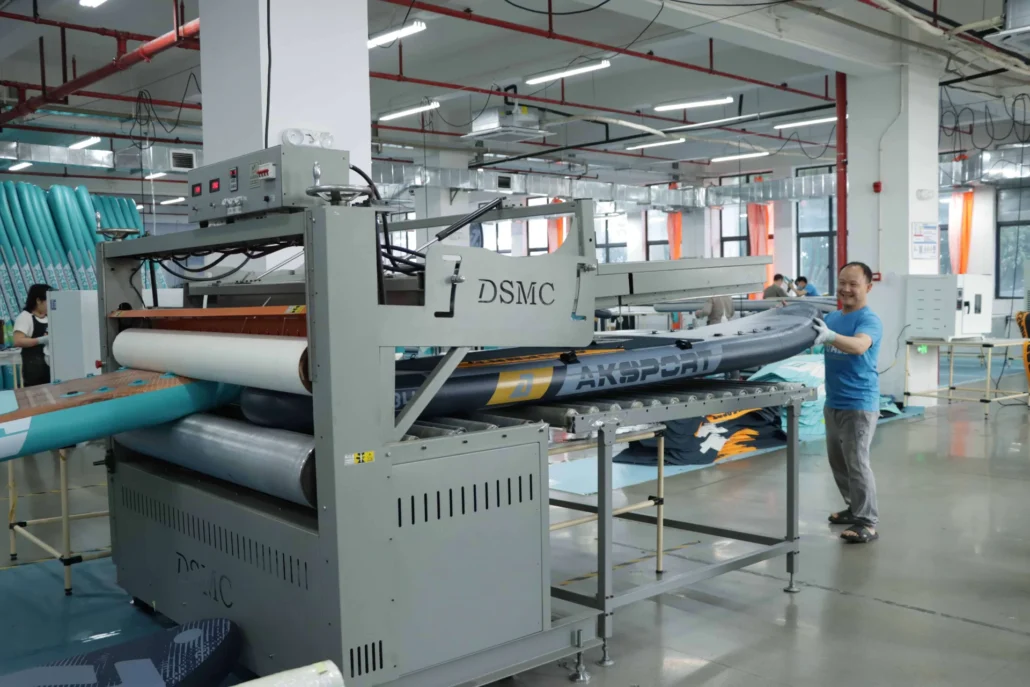
Production equipment can help a manufacturer improve repeatability and efficiency, but the existence of a machine does not prove that every finished SUP board will meet your requirements.
For example, digital cutting equipment can help control component dimensions, while printing equipment can support custom graphics. But buyers should still ask how approved files, tolerances and inspection requirements are transferred into production.
The more useful questions are:
- Which steps are performed with this equipment?
- Is the equipment used for the paddle board model in my quotation?
- How is the approved drawing or artwork transferred to production?
- What happens if the production result does not match the approved reference?
- How are changes controlled between the first order and repeat orders?
In other words, process control matters more than a machine list.
For a deeper look at drop-stitch production and construction considerations, see our drop-stitch engineering resource.
4. Compare SUP Factories Using the Same Product Specification
One of the fastest ways to make a poor supplier decision is to send several factories a board photo and compare the prices they return.
Two inflatable SUPs can look similar in a quotation while using different constructions, fittings, accessories and packaging.
Before comparing prices, align the specification for:
- Board length, width and thickness
- Intended board type and target user
- Drop-stitch construction
- Outer PVC and rail construction
- EVA deck configuration
- Valve specification
- Fin and fin-box system
- Handle and D-ring positions
- Cargo arrangement
- Paddle, pump, leash, backpack and repair kit
- Logo and graphic requirements
- Retail or export packaging
A quotation is only commercially useful when the buyer understands what product the price represents.
5. How Do You Verify a SUP Factory’s OEM and ODM Capability?
Many suppliers advertise OEM and ODM services, but those terms can describe very different levels of customization.
Ask the factory what it can actually change and control repeatedly.
For a private-label project, this may include:
- Colors and graphic artwork
- Logo placement
- EVA design
- Handle and D-ring configuration
- Accessory package
- Carry bag and retail carton
A deeper OEM project may also require evaluation of dimensions, construction, fitting layout or other structural details.
Do not judge OEM capability from a graphic mockup alone. Ask to see examples of how the supplier converts approved drawings, specifications and artwork into a physical sample and then controls that version in bulk production.
6. Use the SUP Sample as a Production-Control Tool
A sample is not only for deciding whether you like the product.
For B2B buyers, the sample should help establish the reference that bulk production is expected to follow.
Before approval, review:
- Finished dimensions
- Board shape and symmetry
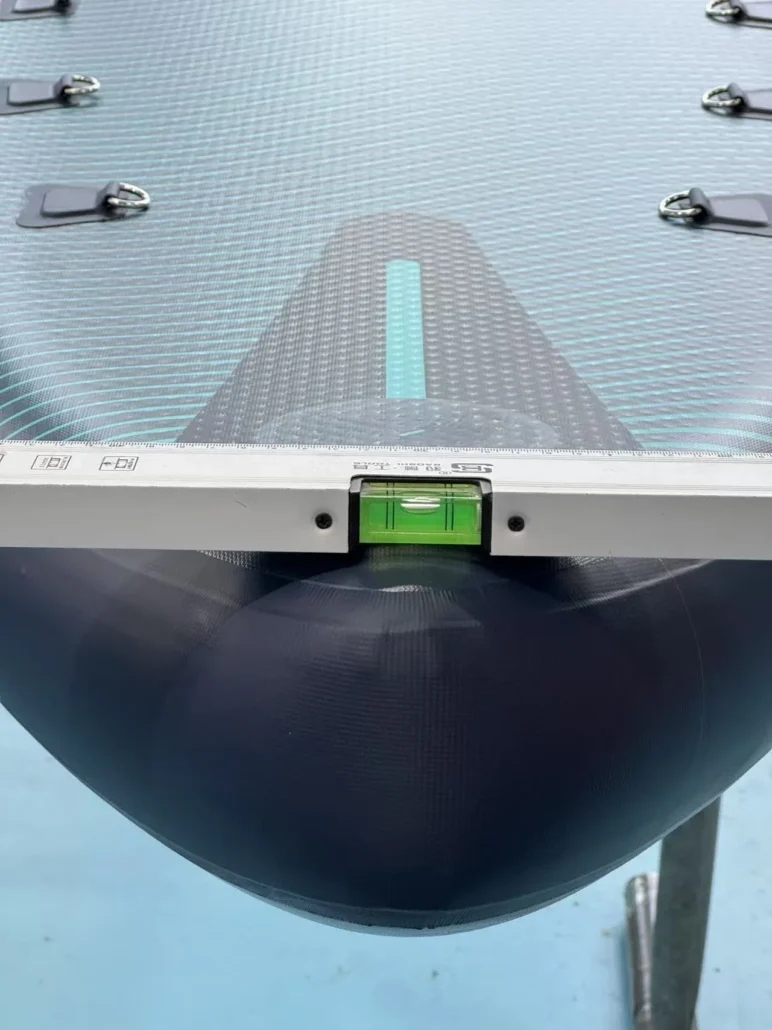
- Rail and seam appearance
- Valve installation
- Fin-box position and fin fit
- EVA alignment and finish
- Handles, D-rings and cargo points
- Graphics and logo placement
- Accessories
- Final packaging
If changes are requested, consolidate them into a current revision rather than approving different details across scattered email or chat messages.
A strong supplier should be able to identify which specification and artwork version the bulk order will follow.
7. Ask How the Factory Controls SUP Quality Before Shipment
“Strict QC” is not a useful answer by itself.
Ask the supplier to explain which product characteristics are checked, when they are checked and what happens when a unit does not meet the approved requirement.
| QC Area | Possible Evidence | Buyer Question |
|---|---|---|
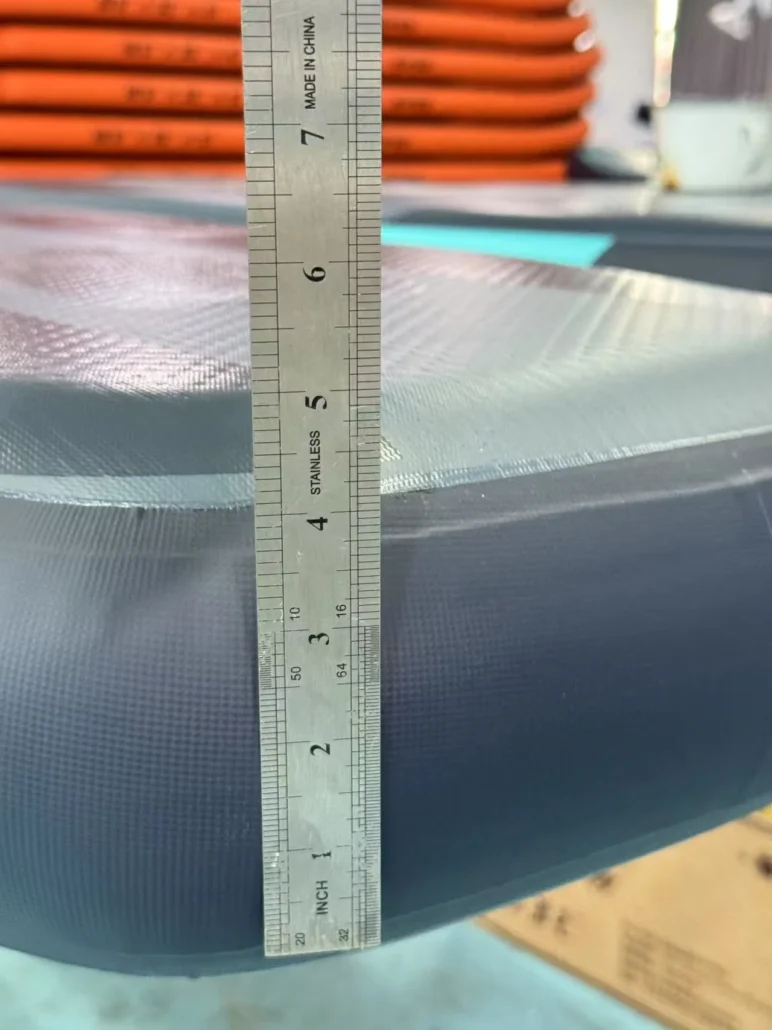
| Dimensions | Measurement record or inspection photo | How do you confirm the finished board matches the approved size? |
| Inflation / Air Retention | Model-specific test procedure | What pressure, duration and acceptance criteria apply to this exact model? |
| Visual Workmanship | Inspection standards or sample photos | What defects trigger rework or rejection? |
| Fittings | Valve, fin-box, D-ring and handle checks | How are installed components checked before packing? |
| Branding | Approved artwork comparison | How do you control logo position, graphics and SKU differences? |
| Accessories & Packing | Packing checklist | How do you confirm the correct accessory set is packed with each SKU? |
There is no responsible universal inflation-test duration that should be copied across every SUP model and factory. Pressure, duration and acceptance criteria should follow the approved product specification and the supplier’s validated process.
8. How Do You Verify SUP Production Capacity and Lead Time?
A factory’s capacity should not be judged from the number of workers in one photograph or from a large production-capacity number in a sales presentation.
Before a seasonal or high-volume order, ask:
- Which production processes are the main capacity constraints?
- What is the current production schedule around my requested delivery period?
- Does my order require new materials, custom printing or new packaging?
- How many SKUs and artwork versions will be included?
- When must artwork and samples be approved to protect the requested shipping window?
- Which production stages are handled internally and which are outsourced?
For seasonal SUP orders, the practical question is not simply “How many boards can you make per month?” It is whether the supplier has enough available capacity for your approved configuration during your required production window.
A trustworthy supplier should also tell you when a requested schedule is unrealistic rather than confirming a deadline that production cannot support.
9. How Should Buyers Verify SUP Factory Certifications and Test Documents?
Certificates can support supplier verification, but different documents prove different things.
For example, a quality-management certification relates to the manufacturer’s management system. A social-compliance audit evaluates a different part of the business. A material or product test report applies to the samples and test scope identified in that report.
Do not treat them as interchangeable.
When reviewing a document, check:
- Legal company name
- Factory or certified site where relevant
- Standard or audit program referenced
- Certificate or report scope
- Issue and expiry dates where applicable
- Issuing or testing organization
- Product model or material covered by a test report
- Whether the document is relevant to your destination market and sales channel
Requirements also differ by market. Do not assume that CE marking, REACH documentation, RoHS reports or another compliance document automatically applies to every inflatable SUP and accessory package.
If electrical accessories are supplied with the board, such as certain pumps, their regulatory requirements can differ from those of the inflatable board itself.
For an overview of Huale’s available compliance and factory documentation, see our global compliance and certification page.
10. Verify the Commercial Terms Before You Call a Supplier “Reliable”
A technically capable factory can still create purchasing problems if the commercial terms are unclear.
Before placing a bulk order, put the important terms in writing:
- MOQ for the approved configuration
- Sample cost and sample scope
- Unit-price basis
- Included accessories
- Packaging specification
- Payment terms
- Production timing and what starts the lead-time calculation
- Incoterm or shipping basis
- Inspection arrangement
- Process for handling confirmed defects or shortages
- Spare parts or replacement arrangements where applicable
Be especially careful when comparing quotations based on different Incoterms or different accessory packages. A lower unit price does not necessarily mean a lower landed cost.
For buyers purchasing standard or private-label boards in volume, review our wholesale paddle board options after the supplier-verification stage.
How Can You Audit a SUP Factory Remotely?
An on-site audit provides the most direct view of a supplier, but overseas buyers can still perform useful verification before traveling to China.
During a live factory call, ask the supplier to show:
- The entrance or company identification at the manufacturing site
- Raw materials relevant to inflatable SUP production
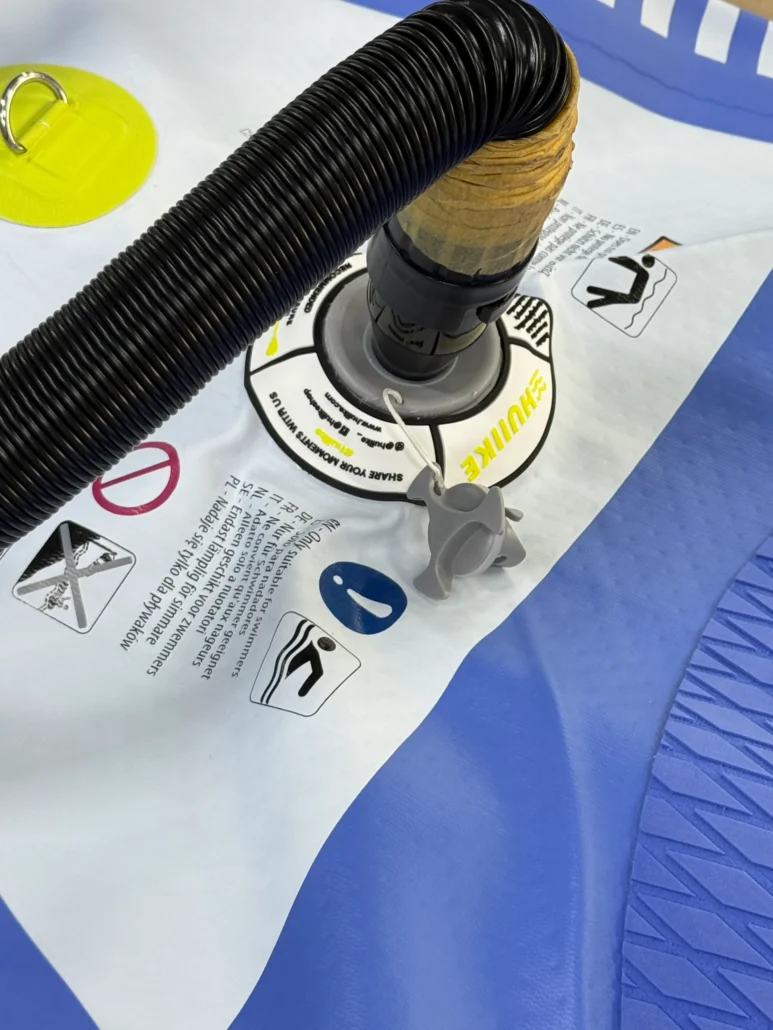
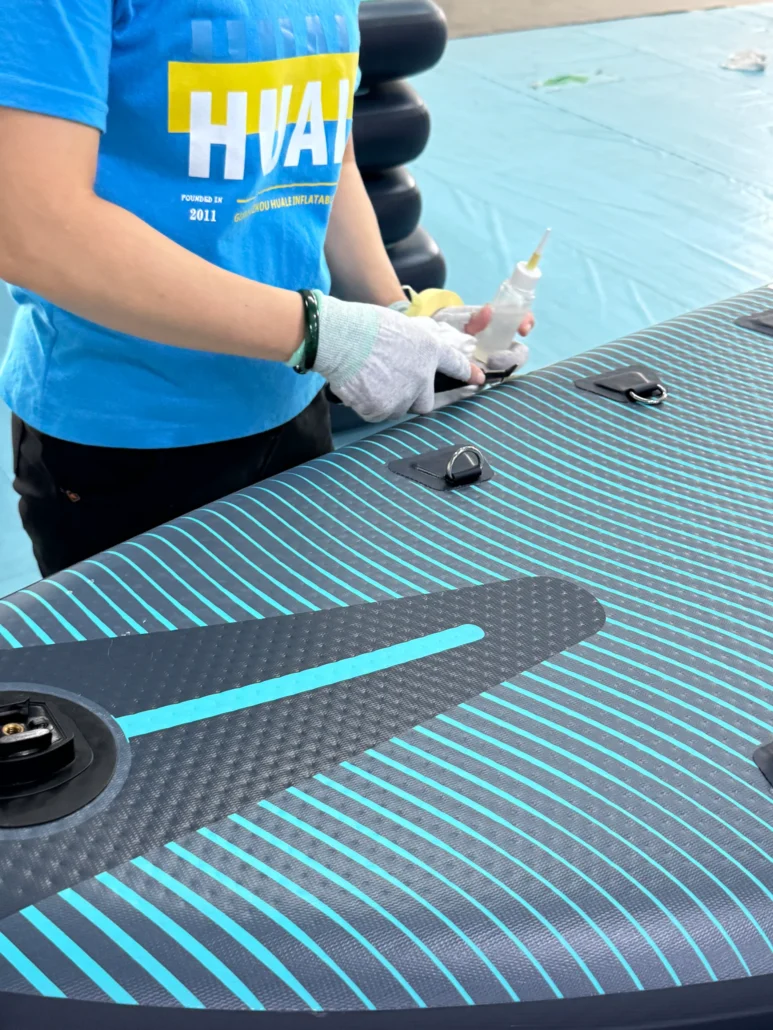
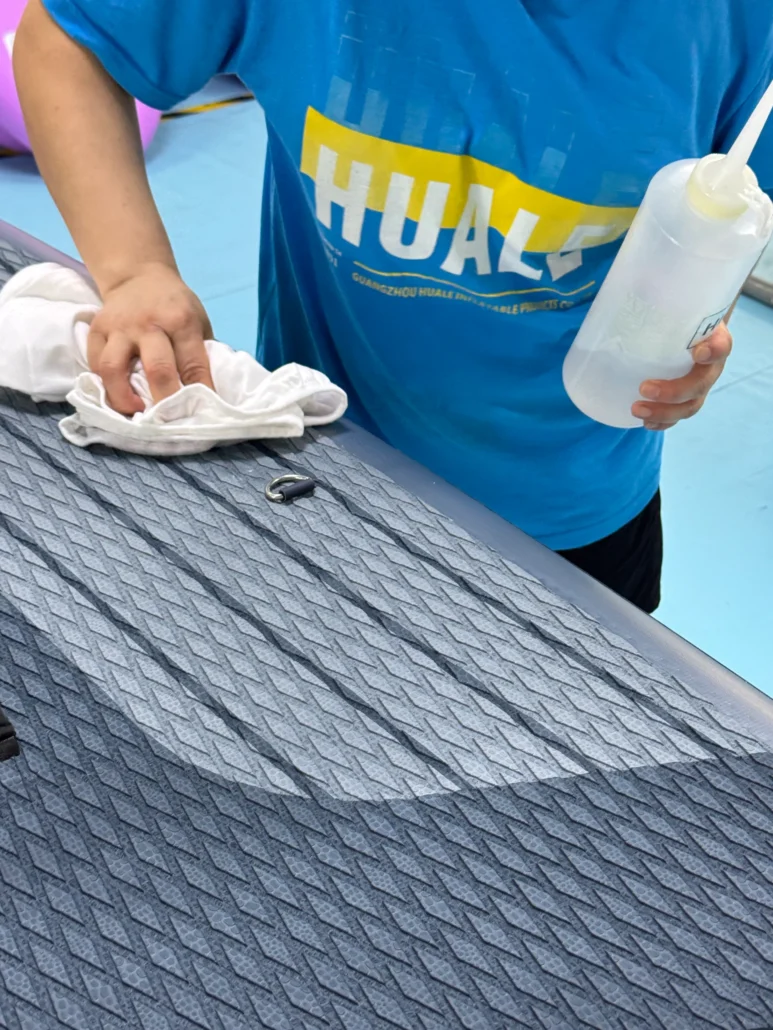
- Boards currently being manufactured rather than only finished samples
- The production stages used for your product type
- Printing or branding processes if your order is private label
- Inflation and inspection areas
- Examples of QC records with confidential customer information hidden
- Finished boards awaiting packing or shipment
- Packaging and accessory preparation
- The staff member responsible for technical or quality questions about your project
The purpose is not to “catch” the supplier. It is to see whether the people, production activity and documents form a consistent picture of the company you are considering.
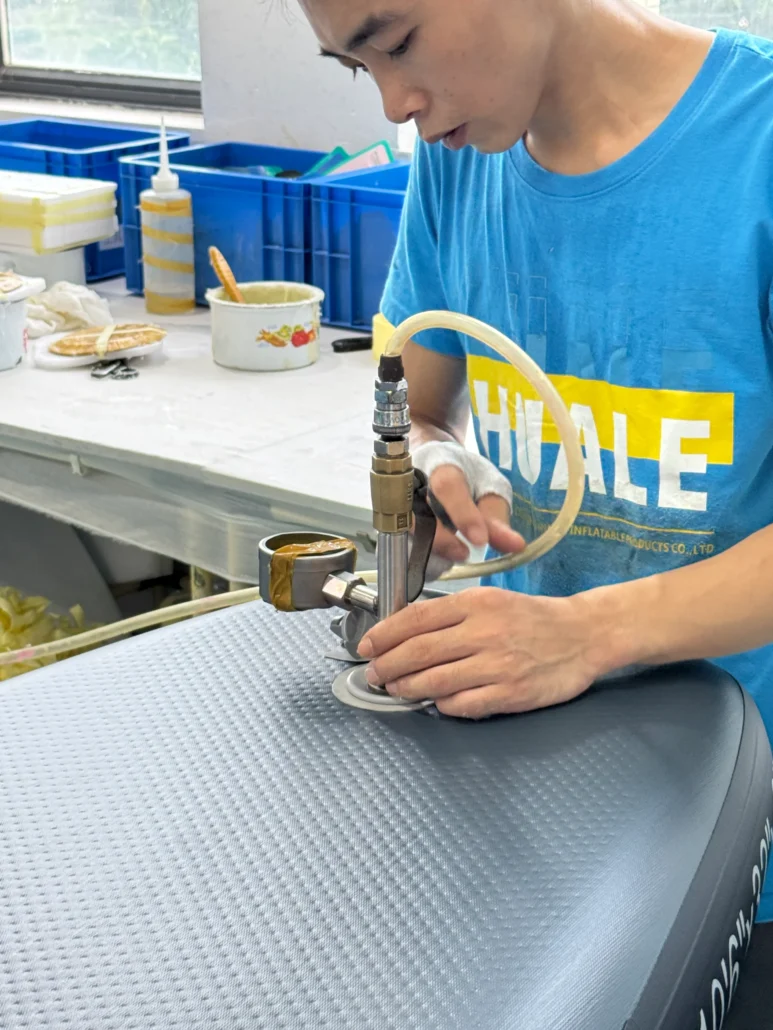
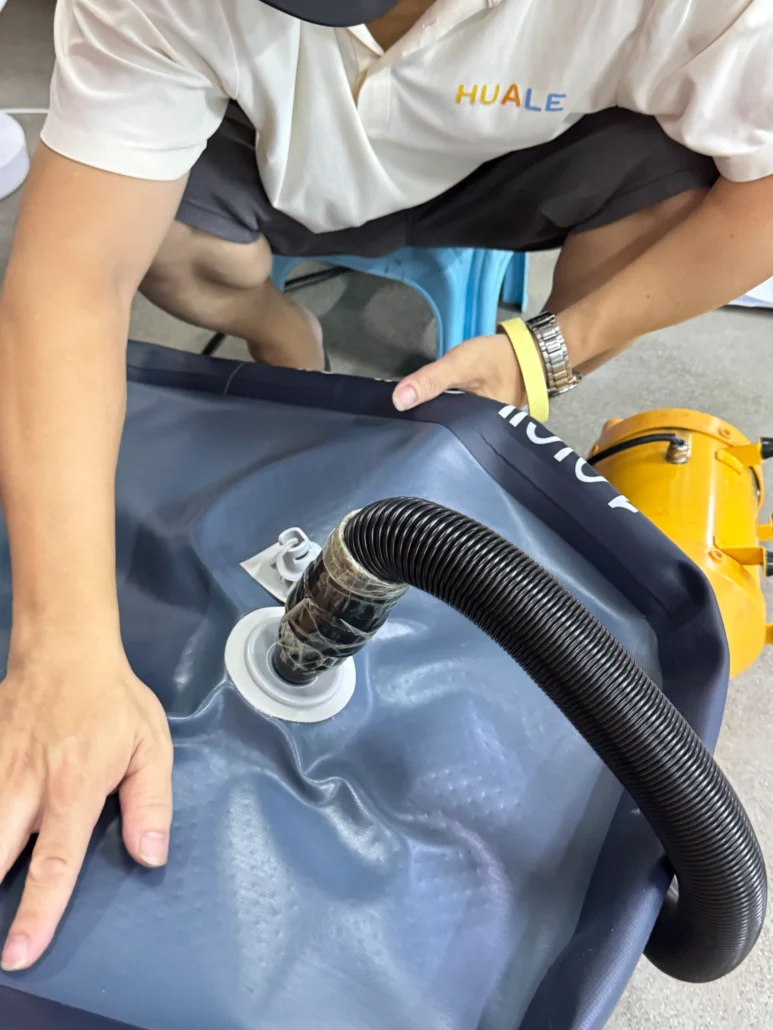
Red Flags When Evaluating an Inflatable SUP Supplier in China
No single warning sign proves that a supplier is unsuitable, but several unresolved inconsistencies should slow the purchasing process.
- The company receiving payment cannot explain its relationship with the factory.
- The supplier repeatedly avoids showing live production relevant to the quoted product.
- The quotation lists almost no construction or accessory specifications.
- The supplier claims to have “all certifications” but cannot identify the exact certificate or test scope.
- MOQ, materials or construction change repeatedly without a technical explanation.
- The supplier cannot explain how sample revisions are transferred into production.
- The QC answer consists only of “100% quality check” without product-specific inspection details.
- A very aggressive production schedule is confirmed before artwork, materials or packaging requirements have been reviewed.
- The factory discourages reasonable sample or third-party inspection requests without explaining why.
The objective is not to find a supplier with perfect marketing materials. It is to find one whose commercial claims can be supported by consistent evidence.
What Should You Do After a SUP Factory Passes the Initial Verification?
Once a supplier passes the initial company and production checks, move away from general factory evaluation and start validating the exact product you intend to buy.
The next sequence should be:
- Freeze the target board specification
- Confirm the accessory package
- Approve graphics and branding files
- Request or approve the required sample
- Document sample revisions
- Confirm the bulk QC requirements
- Approve the final packaging specification
- Place the production order against the approved version
For B2B buyers moving into this stage, our paddle board factory page covers OEM manufacturing capability, while our wholesale SUP board page is intended for bulk purchasing and assortment planning.
SUP Factory Verification & RFQ Checklist
A strong supplier evaluation becomes much easier when all factories receive the same project information.
Prepare:
- Target country and sales channel
- Required board type
- Board dimensions or reference model
- Construction requirements already known
- Estimated quantity by SKU
- Standard, private-label or OEM requirement
- Logo and artwork files if available
- Accessory package
- Packaging requirements
- Sample requirement
- Required documentation for your market or customer
- Target delivery destination
- Requested trade term if already known
- Required shipment window
Then ask each shortlisted supplier to identify any assumptions in its quotation. This makes later price comparison much more reliable.
FAQ: Finding a Trustworthy SUP Factory in China
How can I tell if a SUP supplier in China is a real factory?
Check the legal company information and factory address, then request live production evidence showing inflatable paddle boards at relevant manufacturing stages. Also ask which processes are performed internally and which are subcontracted. A website or factory photo alone is not enough to confirm manufacturing control.
What documents should I ask a paddle board factory for?
The required documents depend on your market and project, but useful supplier-verification evidence can include company registration information, relevant quality-management or social-audit documents, product or material test reports, specification sheets and QC records. Always check the company name, scope, dates and product coverage rather than judging the document by its logo alone.
Should I always choose a SUP factory instead of a trading company?
Not necessarily. The important question is who controls the product specification, production, quality and commercial responsibility for your order. A trading company may provide value in some sourcing models, while a direct factory may provide stronger production access in others. Buyers should understand the actual supply chain before deciding.
How should I check SUP quality before placing a bulk order?
Start with a defined product specification and approve a sample where appropriate. Check dimensions, construction, fittings, graphics, accessories and packaging, then agree on model-specific QC requirements for bulk production. Pressure and air-retention criteria should follow the approved model rather than a generic industry number.
What information should I send when requesting a quote from a SUP factory?
Provide the target market, board type, dimensions, construction requirements, quantity by SKU, customization level, accessories, packaging, destination and required timing. A clear RFQ makes it easier to compare suppliers against the same product specification.
Conclusion: Trust a SUP Factory Based on Evidence, Not Claims
A trustworthy inflatable SUP factory should be able to connect its sales claims with verifiable evidence.
The company identity should match the commercial relationship. The production site should be able to show how the relevant boards are made. The quotation should define the product clearly. The sample should create a controlled production reference, and the factory should be able to explain how it checks that specification before shipment.
Certificates, machines and years in business can provide useful context, but none of them should replace product-specific verification.
For B2B buyers, the strongest supplier relationship begins when both sides can answer the same question clearly: What exactly are we producing, how will it be checked, and which approved version will the bulk order follow?
If you have completed the supplier-screening stage and are ready to evaluate an OEM project, review Huale’s inflatable SUP factory and OEM capabilities .