
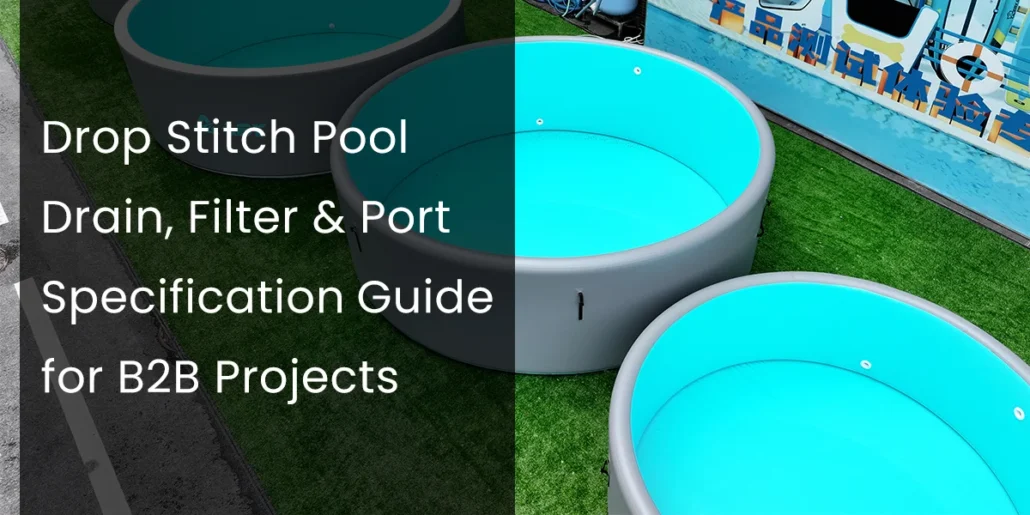
Drain and filtration ports should be specified before a custom drop stitch pool enters production. Port position, fitting type, hose compatibility and external equipment requirements can affect the pool layout, reinforcement and final installation.
I’m Charlie from Huale. When we work on custom drop stitch pool projects, one of the most important early questions is not only the pool size or shape, but what needs to connect to the pool after it is installed.
Short answer: before approving a pool specification, confirm the purpose of each port, its location, the connected pump or filtration equipment, hose or pipe dimensions, connection standard, sealing method and operating conditions. A drain port and a filtration connection may look similar on a drawing, but they do not necessarily serve the same engineering requirement.
This guide explains the main port functions B2B buyers should define before sampling or bulk production, and the project information a manufacturer needs to review compatibility.
Why Should Pool Ports Be Specified Before Production?
A port is not simply an accessory added after the pool body is finished. The opening needs to work with the pool structure, external fitting, sealing system and connected equipment.
This becomes especially important with drop stitch construction because an opening cannot simply be added anywhere in an inflatable structural panel without reviewing how that area will be manufactured and reinforced.
For a B2B project, port planning should normally be completed together with:
- Pool dimensions and shape
- Expected water depth
- Drainage method
- Filtration or circulation equipment
- Pump location
- Hose or pipe specification
- External heating or cooling equipment if applicable
- Installation environment
- Water temperature and water-treatment conditions
The earlier these details are confirmed, the easier it is to keep the physical pool, equipment specification and installation drawing consistent.
Drain, Filter, Return and Equipment Ports: What Is the Difference?
Different buyers sometimes use the word “port” to describe several different connections. Defining the function first helps avoid misunderstandings during product development.
Drain Port
A drain port is used to remove water from the pool. The specification needs to consider drainage method, outlet position, connected hose or pipe and how the fitting is closed when the pool is in use.
Filtration or Pump Suction Port
This connection sends water from the pool toward an external pump or filtration system. Its specification should be reviewed together with the pump, hose and filtration equipment rather than selected independently.
Return or Inlet Port
A return port sends filtered, heated, cooled or circulated water back into the pool. Port position may influence how water moves inside the pool, so the return location should be considered together with the suction connection.
Equipment Connection Port
Some commercial projects connect the pool to external equipment such as a filtration unit, circulation pump, heater or cooling system. In these projects, the pool-side fitting must be compatible with the equipment-side connection or with an approved adapter.
Bulkhead Fitting and Adapter
The pool wall connection and the external hose connection are not always the same component. A project may use a sealed bulkhead fitting together with a separate threaded, hose-tail or other approved adapter. The complete interface should be confirmed rather than specifying only the visible outer connector.
Which Port Configuration Does Your Drop Stitch Pool Project Need?
The correct configuration depends on what the buyer needs the pool to do after installation. The following table can be used as an early project-planning reference.
| Project Requirement | Port Function to Confirm | Buyer Information Needed | Common Compatibility Risk |
|---|---|---|---|
| Simple water drainage | Drain outlet | Drain method, hose requirement, outlet location | Outlet position or connector does not match the installation setup |
| External filtration | Suction + return | Pump/filter model, connection drawing, hose dimensions, flow requirement | Pool port and filtration equipment use incompatible fittings |
| External circulation system | Outlet + return | Pump specification, hose routing and intended circulation setup | Incorrect port quantity or placement |
| Heater or cooling equipment | Equipment inlet + return | Equipment model, fitting specification, temperature range and hose layout | Connector or sealing material is not reviewed for the operating conditions |
| Multi-equipment installation | Project-specific port layout | System diagram showing every external connection | Separate components are approved without checking the complete system |
This table is a planning guide rather than a universal port specification. The final fitting type and port layout should be confirmed against the actual equipment and pool construction used for the project.
How Should a Drain Port Be Specified for a Drop Stitch Pool?
A buyer should not specify a drain only as “one outlet at the bottom.” The manufacturer needs enough information to understand how the pool will actually be emptied.
1. Define the drainage method
Confirm whether the project relies on gravity drainage, an external pump or another site-specific drainage method. This changes how the outlet and external connection need to be considered.
2. Confirm the outlet location
The preferred drainage location should be shown on the pool drawing. However, the final position also needs to be reviewed against the drop stitch structure, reinforcement area and installation access.
The visually lowest point is not automatically the correct structural position for a port.
3. Define the external connection
If a hose will be connected to the drain, provide its relevant dimensions and the intended connection method. Do not assume that two fittings described by the same nominal size will automatically connect.
4. Confirm how the outlet is closed during use
The project specification should also identify the closure or sealing arrangement used while the pool is filled.
5. Consider service access
A fitting that is difficult to reach after installation may create unnecessary maintenance or setup problems. Port accessibility should therefore be considered together with the final site layout.
How Should Filter and Pump Connections Be Planned?
For pools using external filtration, the most important principle is to treat the pool and filtration equipment as one connected system.
Before the pool port is finalized, provide the manufacturer with the filtration or pump information available for the project.
Useful inputs include:
- Pump or filtration unit brand and model
- Manufacturer connection drawing
- Inlet and outlet fitting specification
- Hose or pipe inside and outside dimensions where relevant
- Thread or connector standard if specified by the equipment supplier
- Required number of pool connections
- Proposed equipment location
- Required hose routing
A product name such as “pool filter pump” is not enough for final interface approval. Two systems designed for a similar application can still use different connector standards.
Confirm suction and return separately
The line taking water out of the pool and the line returning water should be identified separately on the project drawing. This reduces the risk of reversed fittings, incorrect positioning or incomplete component packing.
Check the complete interface
The buyer should confirm not only the pool-side port but also every adapter required between the pool and external equipment.
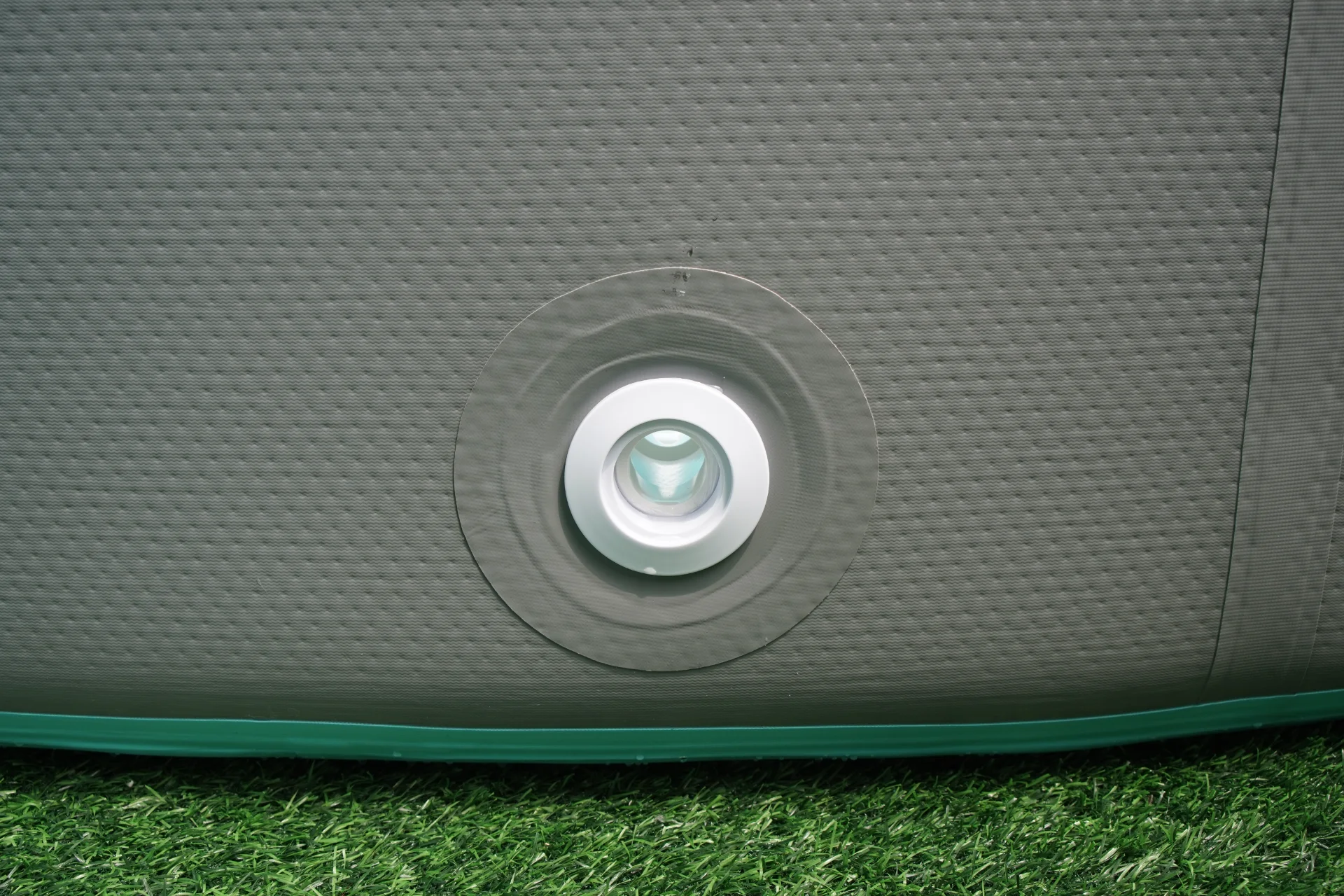
Why Nominal Port Size Alone Is Not Enough
One of the easiest mistakes in a custom pool project is approving a connection based only on a nominal size.
Compatibility can depend on several details:
- Thread standard
- Male or female connection
- Actual hose inside diameter
- Actual hose outside diameter
- Sealing surface
- Gasket or O-ring arrangement
- Adapter geometry
- Clamp requirement
For example, two components may both be described using a similar nominal diameter but still fail to connect because the thread, sealing method or actual dimensions differ.
For B2B projects, the safest approval method is to provide a technical drawing, equipment manual or physical mating component whenever the external interface is critical.
If a buyer already has the pump, filter or hose system, sending the exact connection specification before the pool sample is produced is usually more reliable than trying to adapt the pool after production.
Does Pool Shape Affect Drain and Filter Port Placement?
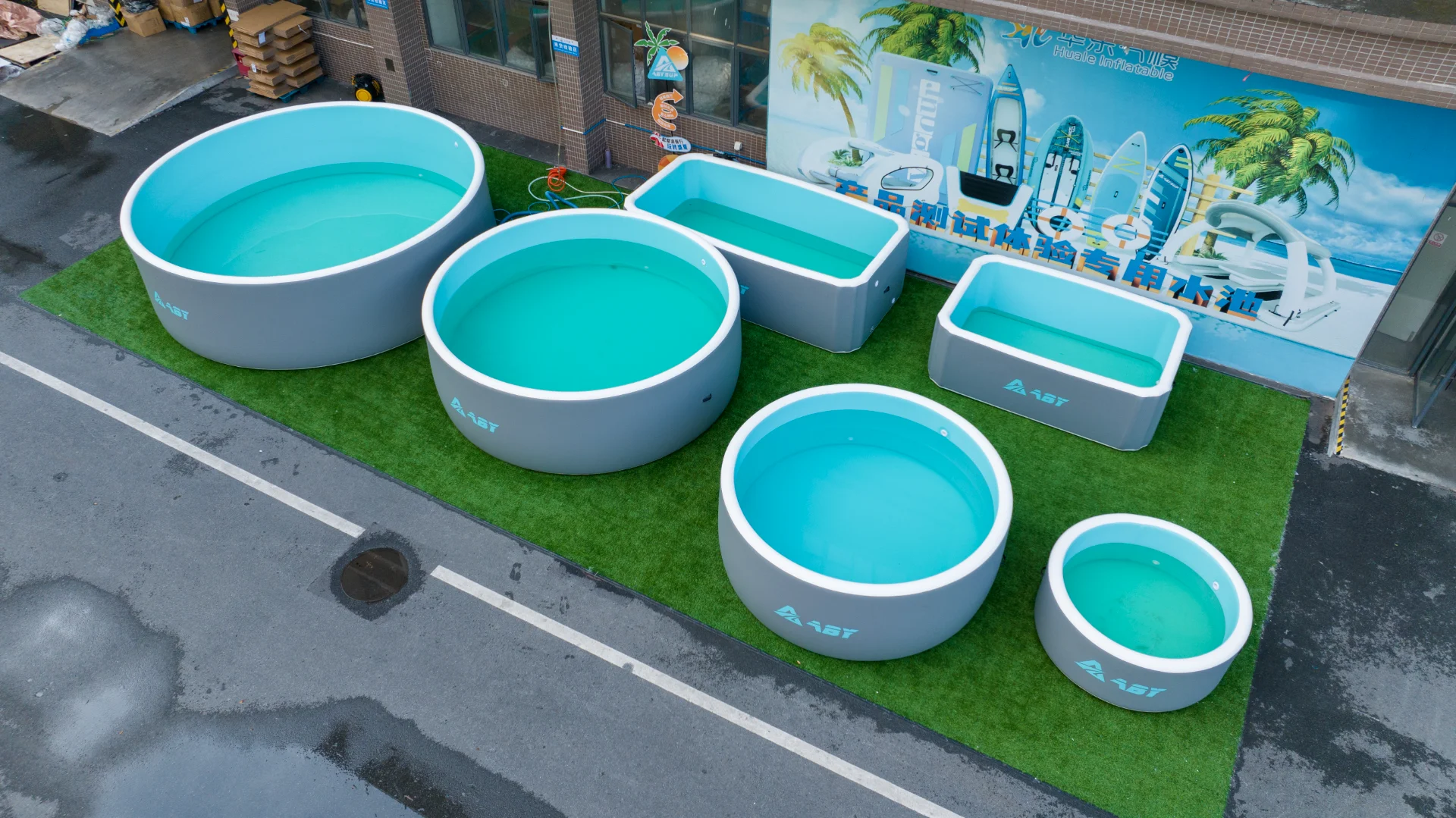
Yes. Port position should be reviewed together with the pool shape, internal water volume, equipment location and how users access the pool.
Rectangular pools
A rectangular layout gives the project team clear wall sections for planning equipment connections, but port position should still be coordinated with reinforcement, access and the external system layout.
Buyers working on this format can review our rectangular drop stitch pool options before finalizing the project drawing.
Round pools
For a round pool, the equipment side and user access side should be identified before port positions are frozen. The circular layout may also change how the buyer wants suction and return connections distributed.
See our round drop stitch pool category for the corresponding shape format.
In both cases, shape selection should come before final port placement. The port layout should support the selected pool rather than force the pool design to work around a connector chosen too early.
What Operating Conditions Should Be Confirmed Before Selecting Pool Fittings?
The same fitting should not automatically be assumed suitable for every pool application.
Before approving the port system, tell the manufacturer about operating conditions that may affect the pool, fitting or seal selection.
These may include:
- Expected water temperature range
- Indoor or outdoor installation
- Fresh water, treated water or other intended water conditions
- Cleaning or sanitation process
- Frequency of filling and draining
- Whether external heating or cooling equipment is connected
- Whether the installation is temporary or long-term
Material compatibility should be reviewed for the actual project rather than assumed from another buyer’s pool specification.
What Information Should Buyers Provide Before a Custom Pool Port Is Designed?
A clearer project brief usually reduces revisions during sampling. Before the fitting layout is finalized, prepare the following information where applicable.
Pool specification
- Pool shape
- Length, width or diameter
- Wall height
- Expected water depth
- Indoor or outdoor use
Drainage requirement
- Gravity or pump-assisted drainage
- Preferred drain direction
- Connected hose or pipe
- Drain destination and installation constraints
Filtration and circulation requirement
- Filter or pump brand and model
- Equipment connection specification
- Required suction and return lines
- Hose or pipe dimensions
- Proposed equipment position
Port requirement
- Quantity of ports
- Preferred location
- Connection drawing or sample fitting
- Thread or adapter requirement if already specified
- Closure or cap requirement
Operating conditions
- Expected water temperature
- Water-treatment conditions
- Fill and drain frequency
- Connected heater, chiller or other equipment
If some of these details are not yet known, identify them as open project questions rather than selecting a port by assumption.
How Should Drain and Filter Ports Be Checked on the Pool Sample?
The sample stage should verify the interface itself, not only whether a fitting is present.
Before approval, check:
- Port quantity matches the drawing
- Port locations match the approved layout
- Fittings are installed in the intended orientation
- Caps, plugs or closure components operate correctly
- External adapters match the approved component list
- The supplied hose or equipment connector can be physically fitted
- No visible leakage appears around the installed port during the agreed test
- The complete filtration or circulation setup works as intended where system testing is required
Where possible, test the actual mating equipment rather than verifying compatibility only from photographs.
The approved sample, port drawing and external fitting specification should then be retained as part of the production reference.
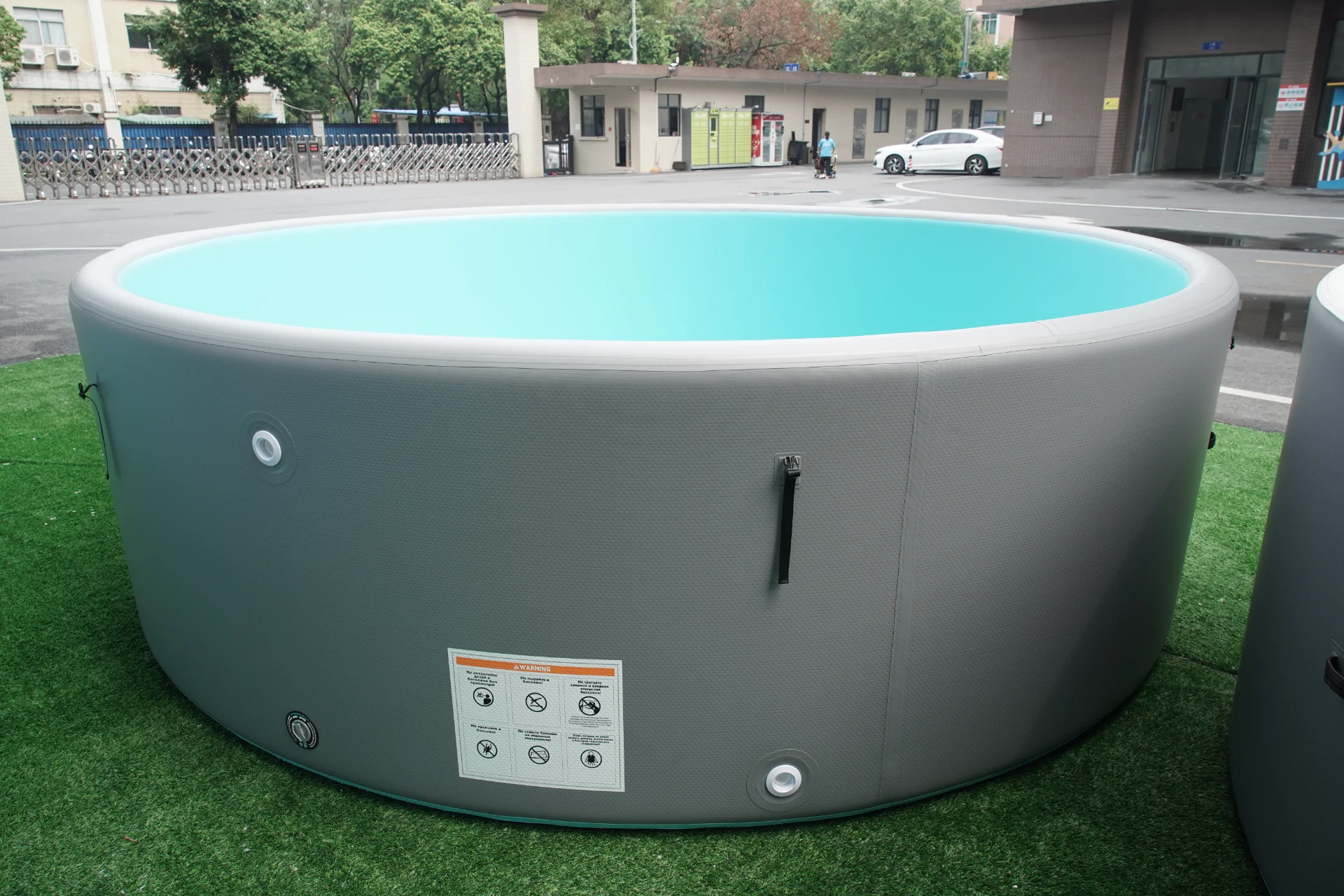
Common Pool Port Specification Mistakes in B2B Projects
- Specifying only “one drain hole”: the factory still needs to know the connection, location and drainage method.
- Using nominal diameter as the full specification: thread and sealing systems can still be incompatible.
- Selecting the pool fitting before selecting external equipment: this can create an adapter problem later.
- Assuming a port can be added anywhere: drop stitch construction and reinforcement need to be reviewed before an opening is finalized.
- Not distinguishing suction and return ports: the two connections serve different roles in a circulation system.
- Approving equipment from photos only: physical connection dimensions may still differ.
- Changing the pump or filter after the pool sample is approved: the new equipment may use a different interface.
- Ignoring service access: a technically compatible connection can still be inconvenient if it cannot be reached after installation.
The goal is not to make the pool specification more complicated. It is to resolve interface questions while changes are still easy to make.
From Port Specification to Custom Drop Stitch Pool Production
Once the drain, filtration and external equipment interfaces are approved, they should become part of the same controlled project specification as the pool dimensions, shape and construction.
The production reference should identify the current port layout, fitting configuration, adapters and any project-specific installation requirements.
Buyers still planning the overall pool construction can review our drop stitch pool manufacturing page for the broader OEM production process.
For shape-specific projects, compare the rectangular pool range and round pool range before the final port drawing is frozen.
The key principle is simple: design the port around the complete installation system, not around a connector selected in isolation.
FAQ: Drop Stitch Pool Drain, Filter and Port Specifications
What information is needed to specify a drain port for a drop stitch pool?
Buyers should provide the drainage method, preferred outlet location, connected hose or pipe information and installation constraints. The manufacturer should then review the port position together with the pool structure and fitting system.
Can I connect any pool filter pump to a custom drop stitch pool?
Not automatically. Pump and filter systems can use different hose dimensions, threads, adapters and sealing methods. Confirm the exact equipment connection before the pool-side fitting is finalized.
Do a filter inlet and return port use the same specification?
They may use related components, but they serve different functions and should be identified separately on the project drawing. Final fitting selection depends on the filtration system and pool layout.
Can a drain or filter port be added anywhere on a drop stitch pool?
No location should be assumed suitable without structural review. Port placement needs to consider the drop stitch panel, reinforcement, sealing method, installation access and the surrounding pool structure.
Should I send my pump or filter specifications before ordering a pool sample?
Yes, when the pool needs to connect to external equipment. A technical drawing, equipment manual or physical connector sample can help the manufacturer review compatibility before the pool interface is produced.