
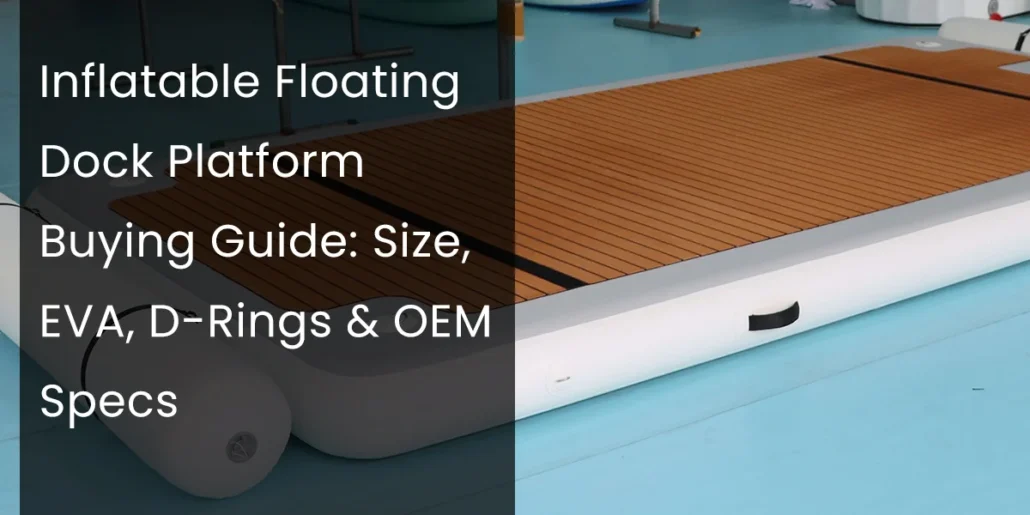
Choosing an inflatable floating dock platform should not start with price. It should start with the product specification. Size, thickness, EVA deck, D-ring layout, connection method, accessories, and packing all affect how the dock performs, how it ships, and how it fits your sales channel.
I’m Charlie from Huale. We manufacture OEM inflatable floating dock platforms for marine brands, dock distributors, yacht accessory sellers, resorts, rental operators, and water sports companies. This guide focuses on one job: helping buyers choose the right dock specification before requesting a quote.
If you already know your size and need a direct price, visit our inflatable dock quote page. If you want to verify factory capability, visit our inflatable dock factory page. This article is the specification selection guide.
Quick Selection Table: Which Inflatable Dock Spec Fits Your Use Case?
The right dock platform depends on where it will be used and who will handle it. A retail swim platform, yacht dock, rental dock, and modular resort platform should not use the same specification.
| Use Case | Suggested Size Range | Thickness | EVA Deck | D-Ring Focus |
|---|---|---|---|---|
| Retail swim platform | 2.4m-3m length | 15cm common | Partial or full EVA | Corner tie-off points |
| Yacht or boat dock | 3m-4m length | 15cm or 20cm | Teak-look or full EVA | Side and vessel connection points |
| SUP or kayak launch | 2m-3.6m length | 15cm often enough | Anti-slip EVA | Stable anchoring and easy handling |
| Rental or resort platform | 3.6m-6m length | 20cm often preferred | Full EVA | More tie-off and connection points |
| Modular dock system | Multiple custom modules | 20cm common reference | Full EVA or project-specific | Matched connection layout |
These are reference ranges. Final specifications should be confirmed by dock size, user load, water condition, packing target, branding method, and order quantity.
Inflatable Floating Dock Size Guide
Size affects more than deck space. It also changes packed volume, shipping cost, handling, storage, and the type of buyer who can sell or use the product.
2m to 2.4m: Compact Dock for Easy Handling
A 2m to 2.4m dock platform is suitable for small swim areas, kayak support, compact yacht storage, and retail channels where packed size matters. It is easier for one person to move, but it gives less working space on the water.
3m to 3.6m: Common Mid-Range Platform
A 3m to 3.6m platform is a common choice for marine retail, yacht accessories, SUP and kayak launch use, and small resort programs. It gives better deck space while still staying manageable for storage and shipping.
4m to 6m: Commercial and Project-Based Use
A 4m to 6m platform is better suited for resorts, rental operators, water sports centers, and modular layouts. It provides more usable space, but the buyer should check packing volume, carton size, handling method, and connection layout before ordering.
If the dock will be sold through e-commerce or retail, packing size can be as important as platform size. If it will be used by a resort or marina, deck area and handling points may matter more than carton compactness.
15cm vs 20cm Inflatable Dock Thickness: How to Choose
Thickness changes the deck feel, freeboard, packed weight, and target cost. Most inflatable dock buyers compare 15cm and 20cm drop-stitch structures.
| Thickness | Best For | Main Advantage | Buyer Should Check |
|---|---|---|---|
| 15cm | Retail swim platforms, SUP launch docks, compact boat use | Lower packed weight and easier handling | Whether the platform still feels stable under expected use |
| 20cm | Yacht docks, resort platforms, rental use, modular systems | Higher deck feel and stronger commercial positioning | Packed size, freight cost, and target price point |
Working PSI is often discussed around 6-10 PSI for many dock projects, but it should be confirmed by structure, size, valve, and intended use. Do not choose thickness only from a product photo. Ask for a specification sheet before sampling.
Material and Drop-Stitch Structure
A floating dock platform usually uses a drop-stitch core with reinforced PVC layers. The exact material choice should match the buyer’s target channel, use intensity, and expected price point.
What Buyers Should Confirm
- Drop-stitch structure and finished thickness
- PVC layer and reinforcement plan
- Valve type and inflation method
- Seam process and pressure retention test
- EVA bonding method if EVA is included
- Repair kit and after-sales replacement parts
For B2B orders, the material decision should be written into the approved spec sheet. That way the sample, bulk order, QC record, and repeat order all follow the same standard.
How to Choose EVA Deck for an Inflatable Dock Platform
The EVA deck affects grip, appearance, product photos, user comfort, and brand positioning. For many buyers, EVA is the most visible part of the dock after inflation.
| EVA Option | Best For | Buyer Note |
|---|---|---|
| No EVA | Cost-sensitive or special-use projects | Lower cost, but weaker visual and barefoot comfort |
| Partial EVA | Retail and compact docks | Balances grip, appearance, and cost |
| Full EVA | Resorts, rental use, yacht platforms, premium retail | Better deck feel and higher visual value |
| Teak-look EVA | Yacht accessory brands and marine retail | Good for premium product photos and yacht-style positioning |
| Custom color EVA | OEM and private label product lines | Check MOQ, material availability, and color consistency |
If the dock is part of a branded product line, EVA color, texture, and logo position should be confirmed before sample production. For more private label details, see our private label inflatable dock platform guide.
D-Ring and Handle Layout: What Buyers Should Decide Early
D-rings and handles are small parts, but they control how the dock is tied, connected, carried, stored, and used on the water. Poor placement can make a good dock difficult to use.
D-Ring Layout
A simple swim platform may only need corner tie-off points. A yacht dock may need side connection points. A modular platform may need matched D-rings on multiple sides so sections can connect cleanly. Rental and resort docks often need more flexible tie-off options.
Handle Placement
Handles should match how the product will be moved. A compact retail dock may only need standard side handles. A larger commercial platform may need more handles for staff movement, storage, and seasonal setup.
| Part | Common Reference | Decision Point |
|---|---|---|
| D-rings | 4-12 pieces or custom layout | Anchor, vessel tie-off, modular connection, accessory fixing |
| Handles | 4-12 pieces or custom layout | Carrying, boarding, storage, staff handling |
D-ring and handle positions should be shown on the production drawing before sampling. Changing placement after bulk production is slow and costly.
Connection Methods for Modular Inflatable Dock Platforms
If the dock will be used alone, connection hardware can stay simple. If the buyer wants a larger dock system, the connection method should be planned before production.
D-Rings with Webbing Straps
This is a practical choice for temporary setups, rental operators, and modular product lines. It is easy to understand and easy to replace if a strap is lost or damaged.
Buckle or Strap Systems
Buckle systems can make setup faster when the same platform layout is assembled many times. The buyer should confirm whether the buckle system can be replaced easily after field use.
Custom Connection Layout
For resort, marina, or event projects, a custom connection layout may be better. The factory should know the planned platform layout, number of modules, expected gap between sections, and how often the system will be assembled and removed.
For modular yacht dock or resort projects, send a simple layout drawing before asking for a final quote. This helps the factory place D-rings, handles, and straps correctly.
Accessories to Confirm Before Quotation
Accessories affect user experience, carton size, landed cost, and after-sales support. Do not leave them until the end of the quote process.
- Pump: manual pump, electric pump, or buyer-supplied pump.
- Carry bag: standard bag, reinforced bag, wheeled bag, or branded bag.
- Repair kit: PVC patch, glue option, valve tool, and instruction card.
- Connection straps: needed for modular dock systems.
- Anchor or tie-off accessories: depends on use case and local buyer preference.
- Valve adaptor: useful when buyers use different inflation equipment.
- Manual and warning label: important for retail, rental, and private label products.
If the dock is sold as a complete SKU, the accessory list should be fixed before bulk order. If accessories are optional, create separate SKU codes so purchasing, packing, and sales teams do not mix them.
Packing Choices for Inflatable Dock Platforms
Packing is part of the product specification. A dock that looks good inflated can still create problems if the carton is too large, the bag is weak, or the label does not match the sales channel.
| Packing Item | Options | Buyer Should Check |
|---|---|---|
| Carry bag | Standard, reinforced, wheeled, branded | Weight, zipper, handle strength, logo need |
| Carton | Export carton, branded carton, carton label | Carton size, gross weight, stacking strength |
| Label | SKU label, barcode, warning label, shipping mark | Retail, warehouse, or marketplace requirement |
| Manual | Standard manual or private label manual | Language, safety notes, inflation instructions |
FOB Guangzhou is a common export reference for Huale. For landed cost review, ask for packed size, gross weight, carton quantity, and accessory list together with the unit quote.
OEM Inflatable Dock Spec Sheet Checklist
Before asking for a final price, prepare a clear spec sheet. This helps the factory quote accurately and reduces changes after sampling.
| Spec Item | Buyer Input |
|---|---|
| Use case | Retail, yacht, resort, rental, SUP launch, marina, modular system |
| Size | Length, width, and quantity per size |
| Thickness | 15cm, 20cm, or project-specific request |
| EVA | No EVA, partial EVA, full EVA, color, texture, logo position |
| D-rings and handles | Quantity, position, and use purpose |
| Connection method | None, straps, buckles, or custom modular layout |
| Accessories | Pump, repair kit, carry bag, straps, valve adaptor, manual |
| Packing | Bag, carton, label, barcode, manual, shipping mark |
| Market | Destination country, sales channel, and any compliance needs |
Where to Go Next Based on Your Buying Stage
This page helps you choose the specification. If your next question is price, factory capability, private label, or commercial use case, use the pages below.
| Buyer Question | Recommended Page |
|---|---|
| I know the spec and need a price. | Inflatable dock quote page |
| I want to check factory capability. | Inflatable dock factory page |
| I want to launch a branded dock line. | Private label inflatable dock guide |
| I need to match a commercial use case. | Commercial dock use case guide |
FAQ: Inflatable Floating Dock Platform Buying Guide
What size inflatable floating dock platform should I choose?
For compact retail or light use, 2m to 3m is often easier to handle and pack. For yacht, resort, rental, or modular use, 3.6m to 6m may fit better. The best size depends on your use case, storage plan, packing limit, and target buyer.
Is 15cm or 20cm thickness better for an inflatable dock?
15cm is often used for compact and retail-friendly dock platforms. 20cm is often preferred for yacht, resort, rental, and modular applications where a higher deck feel and stronger commercial positioning are needed. Final choice should match size, target cost, and packed volume.
Do I need full EVA on the dock platform?
Full EVA is useful for resort, yacht, rental, and premium retail products because it improves deck feel and product appearance. Partial EVA may be enough for cost-sensitive or compact dock products. No EVA may fit special-use or budget projects.
How many D-rings should an inflatable dock have?
Many dock projects use 4-12 D-rings, but the correct number depends on anchoring, vessel tie-off, modular connection, and accessory needs. D-ring positions should be confirmed on the production drawing before sampling.
What should I prepare before requesting an OEM dock quote?
Prepare the use case, size, thickness, EVA option, D-ring and handle layout, connection method, accessory list, packing requirement, destination country, and expected order quantity. A simple sketch or reference photo is also helpful.