
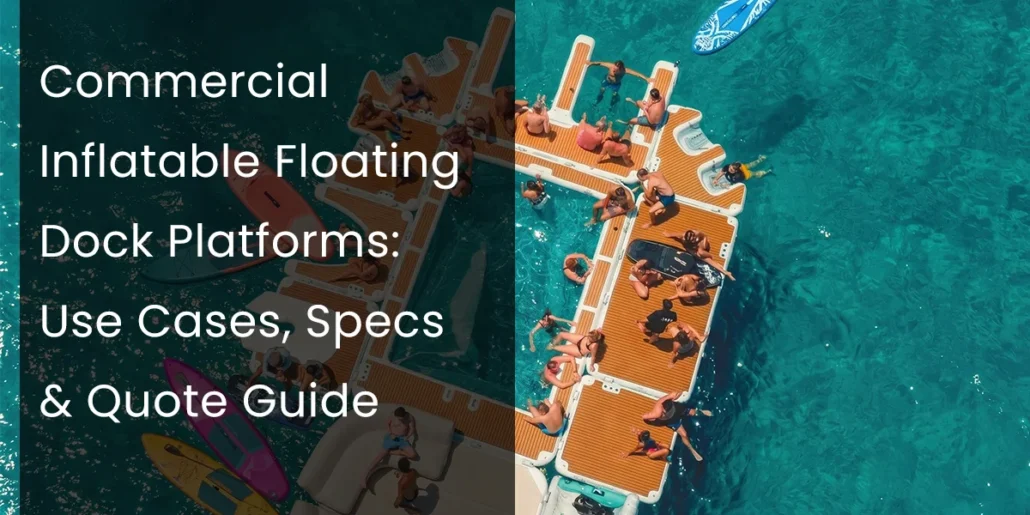
Commercial inflatable floating dock platforms are not all specified in the same way. A platform used beside a yacht does not need the same D-ring layout as a jet ski rental dock. A resort swim platform does not need the same packing plan as a distributor’s private label product. If the use case is unclear, the quote will look simple on paper but fail when the product reaches the water.
I’m Charlie from Huale. We manufacture OEM and ODM inflatable floating dock platforms for distributors, resorts, yacht clubs, marinas, rental operators, and water sports companies. In this guide, I will explain how to match each commercial use case with the right size, thickness, EVA surface, valve, D-ring layout, connection method, packing plan, and factory quote information.
If you are preparing an inflatable dock quote, do not start with only length and width. Start with the business use case. That is what decides whether the platform should be a light swim deck, a reinforced yacht dock, a modular marina system, or a private label retail product.
Which Commercial Inflatable Floating Dock Use Case Are You Quoting?
Most quote mistakes happen because buyers ask for “an inflatable dock” before defining how the dock will be used. The table below gives a practical starting point for commercial buyers.
| Use Case | Typical Buyer | Main Spec Focus | Quote Risk If Missed |
|---|---|---|---|
| Yacht or boat swim platform | Yacht clubs, boat accessory distributors, charter operators | EVA deck, D-ring position, compact packing, premium finish | Poor fit beside the vessel or weak tie-off points |
| Resort swim platform | Hotels, lake resorts, beach clubs, water parks | Deck grip, guest capacity, anchor points, seasonal storage | Low guest comfort or unstable platform layout |
| Jet ski or PWC dock | Marinas, jet ski rental operators, water sports centers | Reinforced edges, D-ring count, modular connection, repairability | Edge wear, mooring stress, difficult service handling |
| SUP, kayak, and water sports launch platform | SUP schools, kayak centers, outdoor activity operators | Low boarding height, anti-slip EVA, handles, easy daily setup | Slow guest flow and surface wear from repeated use |
| Modular event or work platform | Event companies, resorts, maintenance teams, distributors | Connection system, modular layout, logo position, packing volume | Unclear layout, high shipping volume, weak section connection |
For a direct product quote, you can also review our inflatable floating dock platform page or our inflatable dock factory page before sending your project details.
What Information Should You Send for an Inflatable Dock Quote?
When a buyer asks only for a size and quantity, the first quote can be too vague. A better inflatable dock quote should include the working environment, user load, connection method, branding needs, packing method, and target shipping plan.
Basic Quote Checklist
| Quote Item | What to Confirm | Why It Matters |
|---|---|---|
| Use case | Yacht, resort, marina, rental, event, work platform, or retail | Decides structure, accessories, and QC focus |
| Size and thickness | Common production range: 2m-6m length and 15-20cm thickness | Affects stability, packing volume, and FOB cost |
| Working pressure | Typical reference range: 6-10 PSI, subject to structure | Affects rigidity, valve choice, and user feel |
| EVA coverage | No EVA, partial EVA, full EVA, color, texture, logo position | Affects deck grip, appearance, and private label value |
| D-rings and handles | Common range: 4-12 pieces, adjusted by use case | Affects anchoring, connection, carrying, and modular layout |
| Accessories | Pump, repair kit, carry bag, straps, valve adaptor, carton | Affects landed cost and retail readiness |
| Trade term | FOB Guangzhou is a common export reference | Helps importers estimate landed cost with freight and duties |
These ranges are reference points, not fixed promises. Final specifications should be confirmed according to dock size, construction, logo method, order quantity, and your local compliance requirements.
Use Case 1: Inflatable Yacht Dock and Boat Swim Platform
For yacht clubs, charter operators, and boat accessory distributors, an inflatable dock is often sold as a yacht swim platform, transom extension, or portable deck. The buyer usually cares about appearance as much as structure. A rough surface, poor logo position, or weak D-ring layout can make the product feel low-value even when the material is acceptable.
Recommended Quote Focus
For yacht and boat use, we usually confirm the vessel size, deck height, preferred connection direction, EVA style, packed size, and whether the platform will be sold under a private label. A 15-20cm drop-stitch core is a common reference range for stable deck feel, while EVA color and texture often need to match the buyer’s brand or yacht accessory line.
For B2B distributors, the most important details are repeatable finish, carton design, accessory set, barcode or label requirements, and after-sales replacement parts. If your customer sells through marine retail, the dock should be designed as a product system, not only a bare platform.
Use Case 2: Resort, Hotel, and Beach Club Floating Platform
Resort buyers need a different answer. They are not only asking whether the dock floats. They are asking whether guests can use it daily, whether staff can move and store it, and whether the platform looks clean in a public waterfront area.
What Resort Buyers Should Confirm
For resort use, the quote should confirm guest capacity assumptions, anchor points, EVA grip, repair kit, seasonal storage method, and how many platforms may be connected. A resort may prefer a larger platform or modular layout so guests can enter and exit without crowding one small deck.
Full EVA coverage is often preferred for guest-facing applications because the surface is more comfortable for barefoot users and gives the product a higher-grade visual finish. Color choice also matters. Resorts often request blue, grey, teak, black, or custom deck colors to match the waterfront environment.
For commercial operators, we recommend confirming pressure-retention QC before shipment. A 48-hour pressure retention test is a practical quality control step for inflatable dock platforms before bulk delivery.
Use Case 3: Marina, Jet Ski, and Rental Dock Platform
Jet ski and rental applications place more stress on the platform than casual swimming. The platform may be pulled, bumped, tied, moved, and cleaned many times during a season. For this use case, the factory should not quote only a standard swim platform.
Where the Spec Needs More Attention
The main points are edge reinforcement, D-ring count, connection method, handle placement, repairability, and modular replacement. Rental operators often prefer multiple smaller sections because one damaged section can be repaired or replaced without stopping the whole system.
For a jet ski rental operator, D-ring placement is especially important. The platform may need side tie-off points, end tie-off points, and connection points for a larger layout. The correct layout should be drawn before sample production, not adjusted after bulk goods arrive.
If the buyer is comparing inflatable dock platforms with HDPE modular dock systems, the inflatable option usually wins on packing, portability, seasonal storage, and branding flexibility. HDPE may still fit longer-term marina infrastructure. That is why the quote should state the operating season, water condition, anchoring plan, and storage plan.
Use Case 4: SUP, Kayak, and Water Sports Launch Platform
SUP schools, kayak centers, and outdoor activity operators need a launch platform that helps guests enter the water safely and keeps traffic moving during busy sessions. For this use case, the dock should be easy to carry, quick to inflate, and comfortable for kneeling, sitting, and stepping from board to dock.
Important Design Details
Low boarding height, anti-slip EVA, reinforced handles, and flexible anchoring points are more important than oversized platform dimensions. A smaller dock can work well if it is placed correctly and has enough tie-off options. For schools or rental centers, several mid-size platforms may be easier to manage than one large dock.
Accessories matter here. A practical package may include a pump, repair kit, carry bag, straps, and clear instructions for inflation and storage. For private-label buyers, this is also where branded bags, cartons, labels, and instruction sheets can improve the product’s retail value.
Use Case 5: Modular Floating Platform for Events, Work, and Brand Activations
Some buyers do not need only one dock. They need a modular floating platform system for events, brand activations, temporary work access, water sports shows, or resort activity zones. In this case, the connection method becomes the center of the quote.
Connection Methods to Discuss
Common connection choices include D-rings with webbing straps, buckle systems, and custom connection layouts. The best method depends on whether the system will be assembled daily, kept in place for a season, or moved between different event locations.
Before production, the buyer should confirm total layout size, number of modules, gap tolerance between platforms, carrying plan, packing volume, and whether each section needs an individual logo. For event companies and distributors, modular consistency is important because future repeat orders should match the first batch.
If the system will be used in a public venue, confirm local safety, insurance, and documentation needs before placing the order. A factory can support product documents and QC records, but the final requirement depends on the project location and use scenario.
Commercial Inflatable Floating Dock Specification Reference
The table below can help buyers prepare a clearer request before asking for a quote. These are common factory reference ranges. Final details should be checked against your project size, water condition, target market, and order quantity.
| Specification | Common Reference Range | Buyer Note |
|---|---|---|
| Length | 2m-6m, custom sizes available | Longer docks improve space but increase packing volume |
| Thickness | 15cm or 20cm are common choices | 20cm gives a higher deck feel for many commercial uses |
| Material | Drop-stitch core with reinforced PVC layer | Material choice should match target price and use intensity |
| Working PSI | Often discussed around 6-10 PSI | Confirm by structure, size, and valve specification |
| EVA deck | Optional, partial, or full coverage | Full EVA is common for premium and guest-facing products |
| D-rings | 4-12 pieces or custom layout | Confirm position before sample production |
| Handles | 4-12 pieces or custom layout | Important for rental staff and seasonal storage |
| QC | 48-hour pressure retention test recommended | Useful for commercial and private label orders |
| MOQ | Sample can start from 1 piece | Bulk MOQ depends on size, branding, and packing |
OEM and Private Label Options for Commercial Dock Buyers
For distributors and marine accessory brands, an inflatable floating dock is not only a platform. It is a product line. OEM details should be discussed early because logo method, deck color, carton size, accessory set, and instruction sheet all affect cost and delivery time.
Common OEM Options
- Custom size and shape based on buyer drawing or reference layout
- EVA deck color, texture, and logo placement
- PVC color matching subject to material availability
- Custom D-ring and handle layout
- Private label carry bag, carton, warning label, and manual
- Accessory set selection for retail or commercial use
For a new buyer, we usually suggest starting with one sample to confirm structure, EVA finish, packing, and inflation process. After the sample is approved, bulk production can follow the agreed specification sheet. This reduces confusion between sales, purchasing, and QC teams.
If you need a branded dock product line, you can also review Huale’s custom brand integration service.
FOB Quote vs Landed Cost: What Importers Should Check
Many inflatable dock quotes are compared only by FOB unit price. That is not enough for importers. A dock platform is a large inflatable product, so packing size, carton strength, accessory weight, and shipping method can change the real landed cost.
What Affects Landed Cost?
- Dock size and thickness
- Number of dock sections per order
- EVA coverage and accessory set
- Carton size and packing method
- Air freight, sea freight, or courier sample shipment
- Destination port, duty, tax, and local delivery
FOB Guangzhou is a common export reference for Huale. For a more accurate cost review, importers should ask for unit price, packed size, gross weight, carton quantity, accessory list, and loading suggestion. This gives your freight forwarder enough information to estimate landed cost before you approve bulk production.
Common Mistakes When Buying Commercial Inflatable Dock Platforms
Choosing by Size Only
Two dock platforms with the same size can perform very differently if the EVA, PVC layer, D-ring layout, valve, and QC process are different. Always compare the full specification sheet, not only length and width.
Ignoring the Connection Layout
For modular platforms, D-ring and strap positions should be planned before sampling. If the connection layout is wrong, the dock may still float, but the system will be awkward to install or expand.
Forgetting Packing Volume
Commercial buyers often focus on the platform itself and forget the carton size. For importers and distributors, packing volume affects freight, warehouse storage, and retail handling.
Using One Spec for Every Use Case
A resort swim platform, yacht dock, rental dock, and event platform should not be treated as the same product. Each buyer has a different risk point. A correct quote should match the real working scenario.
FAQ: Commercial Inflatable Floating Dock Platforms
What is the best use case for a commercial inflatable floating dock?
The best use case depends on your customer. Yacht buyers usually need a compact swim platform with a premium EVA surface. Resorts need guest-friendly platforms with stable anchoring. Rental operators need stronger handling points and repairable modular sections. Distributors need a repeatable product package with branding and carton control.
Can I request a custom size or logo?
Yes. Huale supports OEM and ODM inflatable dock production, including custom size, EVA color, logo placement, D-ring layout, carry bag, carton, and accessory set. Final options depend on order quantity, material availability, and the confirmed production drawing.
What thickness should I choose for a commercial inflatable dock?
15cm and 20cm are common reference choices. A 20cm platform often gives a higher and more stable deck feel for commercial use, while 15cm may fit lighter applications or lower packing-volume goals. The final choice should match your use case, size, and target cost.
What should I send to get an accurate quote?
Please send the use case, size, quantity, expected users, water environment, EVA requirement, D-ring and handle layout, logo needs, accessory list, destination country, and preferred trade term. Photos or a simple layout drawing are also helpful.
Can I order one sample before bulk production?
Yes. MOQ starts from 1 piece for sample evaluation. A sample helps confirm the deck feel, EVA finish, packing method, logo position, and accessory set before bulk production.