
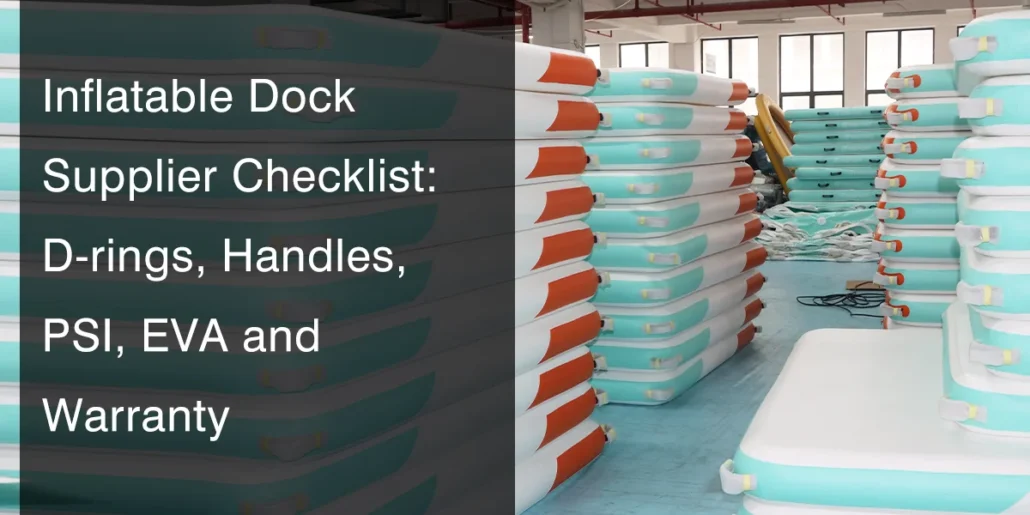
Choosing an inflatable dock supplier should not start with a catalog photo or the lowest unit price. Two suppliers can quote the same platform size while using different reinforcement around D-rings, different EVA coverage, different pressure recommendations, different packing methods, and very different finished-product inspection processes.
I’m Charlie from Huale. We manufacture inflatable drop-stitch dock platforms for marine distributors, yacht accessory brands, resorts, rental operators, and private label buyers. When we review a dock project with a buyer, we look beyond the headline specification and ask whether each detail can be confirmed on a drawing, sample, QC record, or packing list.
Short answer: a reliable inflatable dock supplier should be able to explain the product structure, show where D-rings and handles are reinforced, confirm working pressure against the actual design, document EVA and accessory requirements, complete pressure-retention testing, and define after-sales responsibilities before bulk production.
If you are looking for Huale’s production capability rather than a supplier-audit checklist, visit our inflatable dock factory page.
What Should You Check Before Choosing an Inflatable Dock Supplier?
Short answer: check whether the supplier can turn every important sales claim into a production specification or inspection point. “Heavy duty,” “high pressure,” and “commercial grade” are not useful procurement terms unless the supplier can explain what they mean for the actual dock.
| Supplier Check | What to Ask | Evidence to Request |
|---|---|---|
| Structure | What drop-stitch and reinforced PVC structure is quoted? | Specification sheet or production drawing |
| D-rings | How many, where are they placed, and how are they reinforced? | Top-view drawing and reinforcement detail |
| Handles | Are handle positions practical for the expected dock size? | Drawing plus physical sample review |
| Working pressure | What pressure is recommended for this exact structure? | Confirmed specification and pressure-test process |
| EVA deck | What area, texture, color and bonding finish are included? | Artwork, EVA sample and finished sample |
| QC | How are leaks, valves, seams and accessories checked? | Inspection checklist and pressure-retention record |
| Warranty / after-sales | What defects are covered and what evidence is required for claims? | Written terms before the purchase order |
1. Can the Supplier Explain the Drop-Stitch Structure?
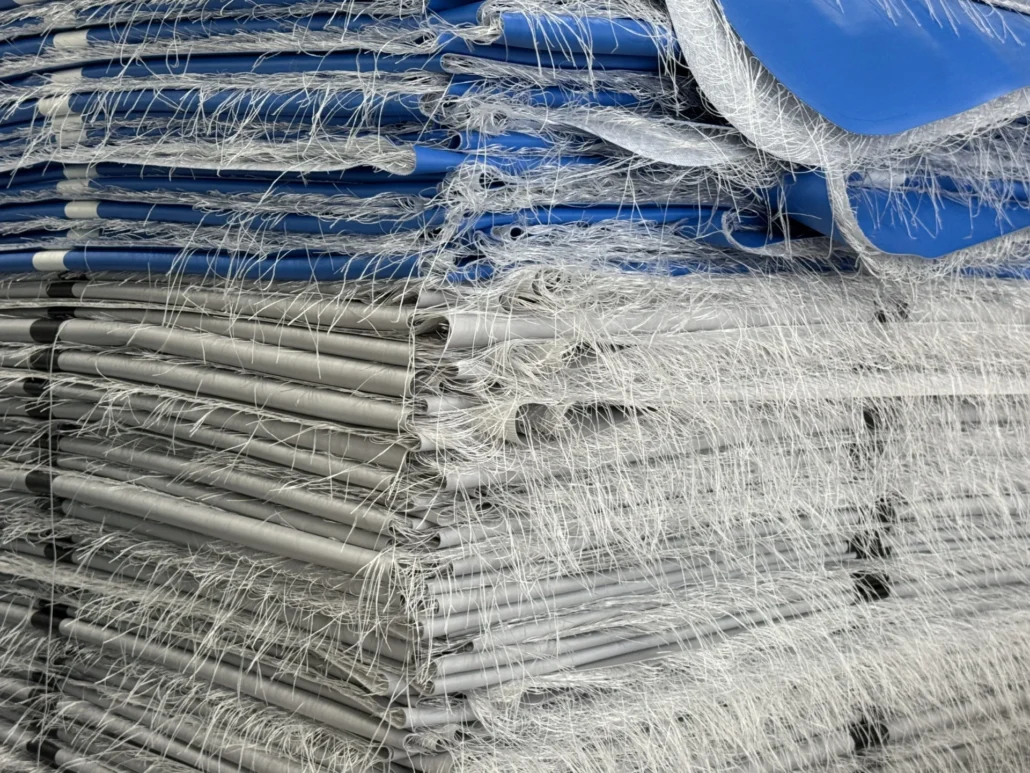
Short answer: do not accept “drop stitch” as the full specification. Ask what structure is being quoted and make sure the bulk order follows the same approved construction as the sample.
For many inflatable dock projects, a drop-stitch core with reinforced PVC is the starting structure. The exact material specification should still be confirmed before production because dock size, thickness, intended use and price target can change the construction.
Ask the Supplier These Questions
- What drop-stitch construction is used in the quoted dock?
- What reinforced PVC structure is included?
- Is the sample made with the same materials planned for bulk production?
- How are edge and stress areas reinforced?
- Which specification will be written into the purchase order or approved production sheet?
If a supplier changes material descriptions between quotation, sample and bulk production, clarify the structure before approving the order.
2. Are the D-Rings Designed for the Real Use Case?
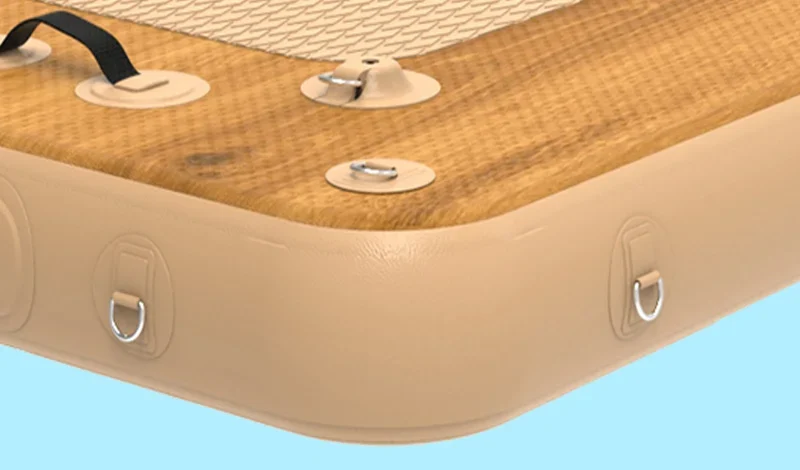
Short answer: count alone is not enough. D-ring position, reinforcement and intended load direction matter more than adding extra hardware for the product photo.
For many B2B dock requests, 4–12 D-rings is a common reference range. Modular platforms, marina applications and yacht connection layouts may need different quantities or positions. The final arrangement should be confirmed on the production drawing.
What to Verify
- Quantity: confirm the exact number included in the quotation.
- Position: mark each D-ring on a top-view drawing.
- Purpose: identify which points are for anchoring, vessel connection, accessories or modular connection.
- Reinforcement: check the PVC reinforcement around the attachment area.
- Sample accuracy: make sure the sample matches the approved drawing before bulk production.
A supplier should be able to explain why each D-ring is there. If the answer is only “this is our standard position,” ask whether that layout actually matches your boat, marina, resort or rental application.
For detailed specification selection rather than supplier auditing, use our inflatable dock specification buying guide.
3. Are the Handles Positioned for Staff and User Handling?
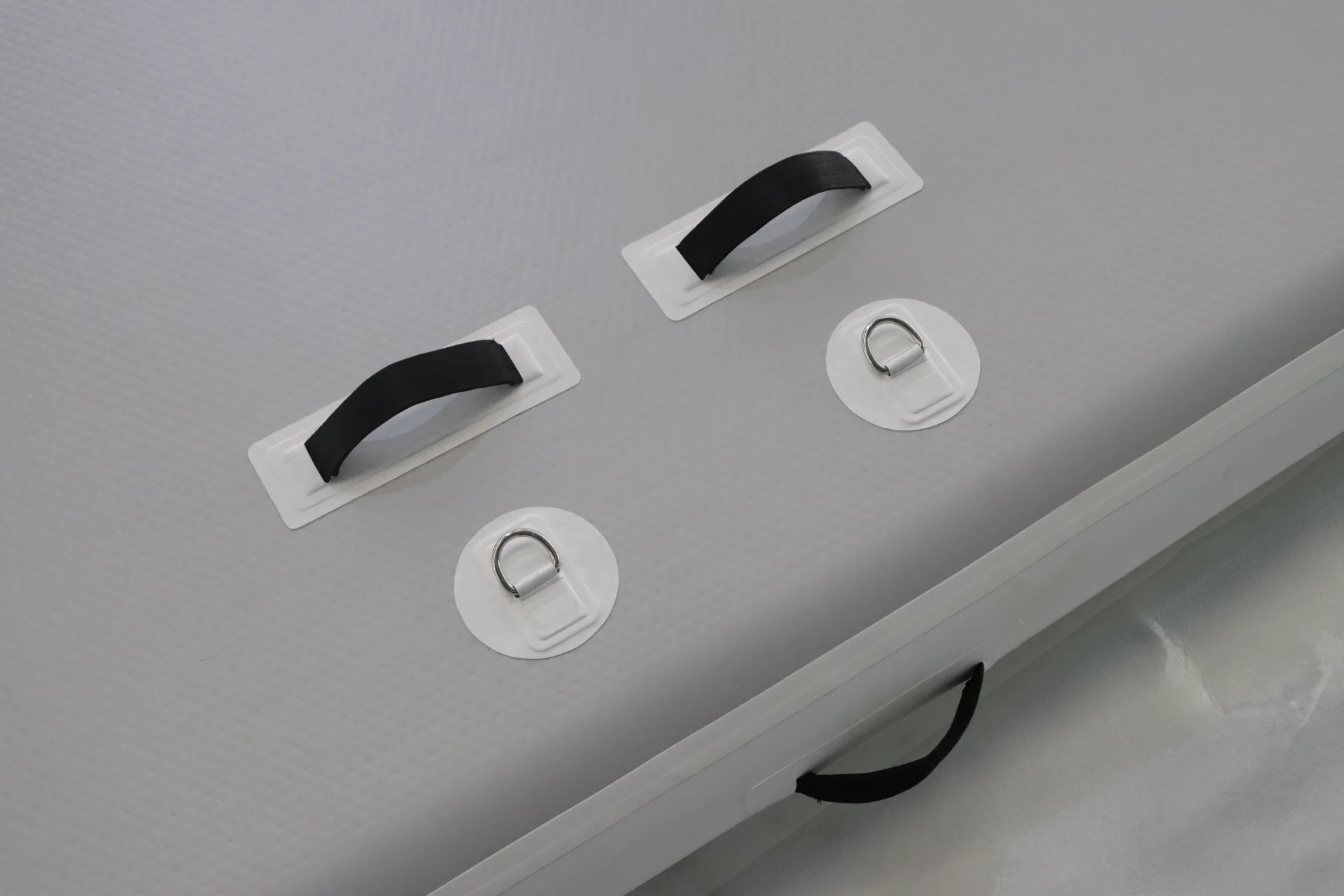
Short answer: handles should match how the dock will be carried, launched, recovered and stored. A large commercial platform with only visually balanced handles may still be awkward for rental or resort staff.
4–12 handles is a common reference range for many dock requests, but the correct quantity depends on platform size and operating workflow.
Supplier Questions
- How many people are expected to move the dock?
- Can staff reach the handles when the platform is wet?
- Are there enough handles on longer dock sections?
- How is each handle attachment area reinforced?
- Can handle positions be adjusted before sampling?
Rental operators should pay particular attention to this point because staff may move the product every day. A small drawing change before production can be easier than working around poor handle placement for an entire season.
4. Does the Supplier Give a Structure-Specific Working PSI?
Short answer: avoid suppliers who treat one PSI number as universal for every dock. Working pressure should be confirmed against the platform size, thickness, material structure and valve specification.
For many inflatable dock discussions, working pressure is often referenced around 6–10 PSI. This is a typical reference range, not a fixed setting for every Huale dock. Final pressure should be confirmed for the selected structure before production.
Ask for More Than a Number
- Recommended working pressure for the quoted model
- Pressure gauge or inflation guidance included with the product
- Valve specification
- Finished-product pressure-retention process
- Instructions for avoiding under-inflation or excessive pressure
A buyer should be able to trace the recommended PSI back to the actual product specification. “Our docks are high pressure” is not enough information for a commercial purchase.
5. How Does the Supplier Control the EVA Deck?
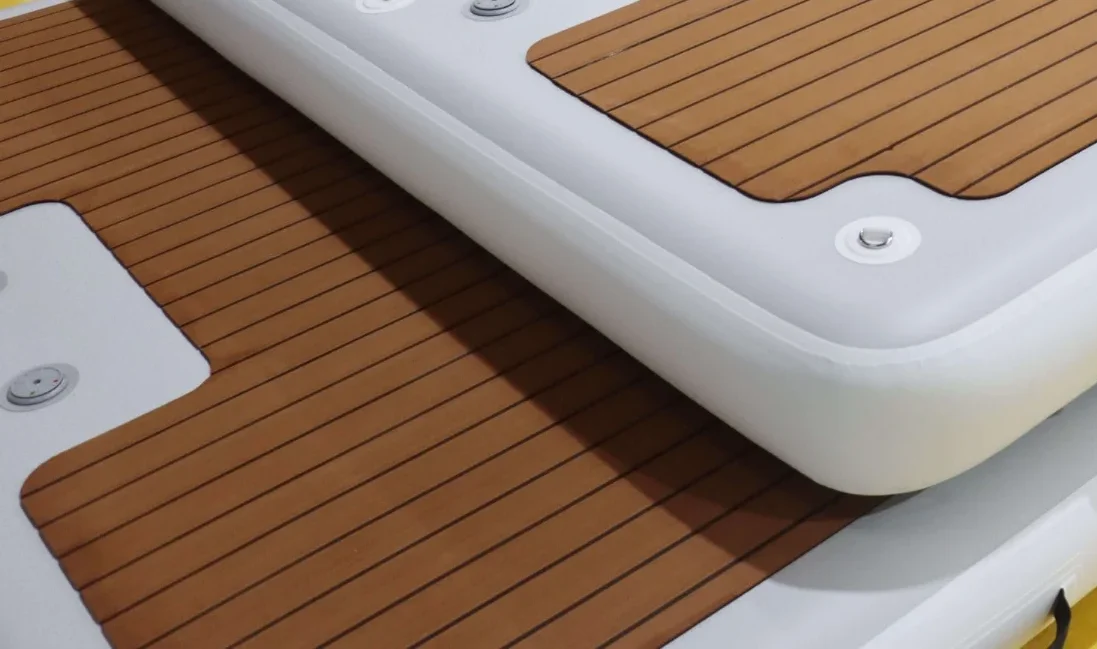
Short answer: EVA should be checked for coverage, texture, alignment, bonding and branding—not only color. For yacht, resort and marine retail products, the EVA deck is one of the most visible parts of the finished dock.
Buyers commonly request partial EVA, full EVA or teak-look EVA depending on product positioning. This checklist does not decide which option you should buy; it shows what to verify once the option has been selected.
EVA Supplier Audit Points
- Confirm full or partial EVA coverage in the quotation.
- Approve EVA color and texture before production.
- Confirm logo position and artwork where applicable.
- Inspect panel alignment and edge finish on the sample.
- Include EVA bonding in finished-product QC.
- Confirm whether repeat orders can follow the same approved appearance.
If EVA appearance is important to your brand, keep the approved sample or artwork reference for repeat production.
6. Can the Supplier Document the Connection System?
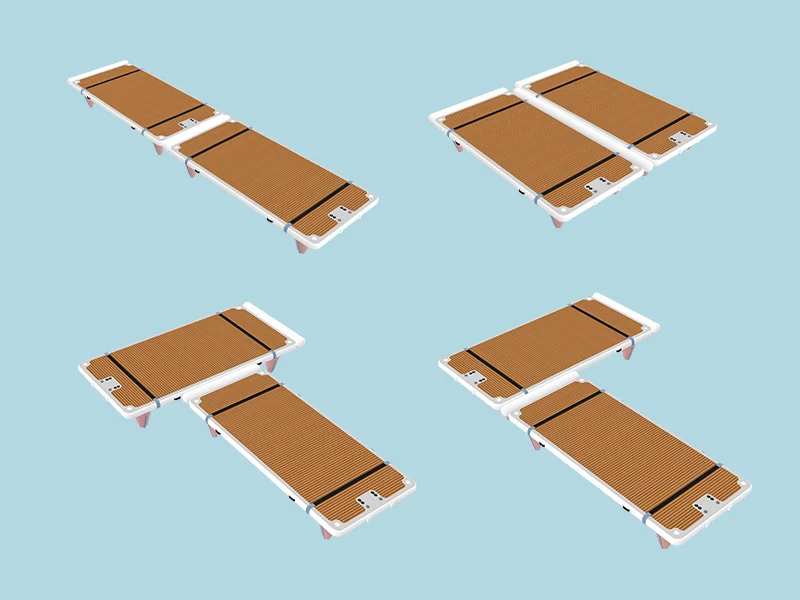
Short answer: modular dock projects need a connection drawing, not only loose straps in an accessory bag. D-rings, webbing straps, buckles and other connectors must line up when the modules reach the buyer.
What to Request
- Top-view module layout
- D-ring positions for each connection side
- Strap or buckle specification
- Quantity of connectors per dock section
- Replacement connector availability
- Setup instructions for staff or end users
For complex modular layouts, confirm connection details during sampling. A platform can pass an air test and still create an installation problem if the hardware positions do not match the planned layout.
7. What QC Does the Supplier Complete Before Packing?
Short answer: supplier evaluation should include the finished-product inspection process. For OEM and commercial dock orders, a 48-hour pressure retention test is a practical QC step before packing.
Dock QC Checklist
- Drop-stitch structure and overall shape check
- PVC surface inspection
- Seam and stress-area inspection
- D-ring reinforcement inspection
- Handle attachment check
- Valve sealing inspection
- EVA bonding and alignment check
- 48-hour pressure retention test
- Accessory count and packing inspection
- Logo, carton mark and private-label file check where applicable
For many inflatable products, HF welding can provide cleaner and more consistent seam bonding than processes that depend heavily on manual glue application and curing conditions. The supplier should still explain which seam process is used on the quoted dock rather than relying on a generic factory claim.
Ask whether QC results are recorded by SKU or order. This becomes more important when you move from one sample to repeat bulk orders.
8. What Should an Inflatable Dock Warranty Actually Explain?
Short answer: a useful warranty is written and specific. It should tell the buyer what manufacturing defects are covered, what is excluded, how a claim is documented, and what remedy is available.
Warranty duration and exact coverage can vary by supplier, product structure and commercial agreement. Do not assume a fixed warranty period unless it is written into the quotation, contract or purchase order.
Ask the Supplier to Clarify
- Which manufacturing defects are covered?
- Are valve, seam or bonding defects handled differently?
- What damage is treated as misuse, abrasion, overpressure or improper storage?
- What photos, video or inspection evidence are needed for a claim?
- Does the supplier provide repair material or replacement parts?
- Can individual accessories such as valves, straps, handles or bags be reordered?
- What happens if a confirmed manufacturing issue affects multiple units in one batch?
For B2B buyers, after-sales support is not only about receiving a replacement. Clear spare-part and repair procedures can reduce downtime for marinas, resorts and rental operators.
9. Will the Bulk Order Match the Approved Sample?
Short answer: the approved sample should become the physical and written reference for bulk production. Supplier reliability is difficult to judge if the sample specification is not documented.
Lock These Details Before Bulk Production
- Overall dimensions and thickness
- Material and drop-stitch structure
- D-ring quantity and position
- Handle quantity and position
- Recommended working pressure
- EVA coverage, color and artwork
- Connection hardware
- Accessory package
- Carry bag and carton
- Labels, manuals and private-label files
Sample MOQ can start from 1 piece. Bulk MOQ and production timing depend on final size, structure, logo method, packing and order quantity.
If a supplier changes any approved detail before bulk production, the updated specification should be confirmed in writing rather than left only in chat messages.
10. Do You Need Certification or Import Documents?
Short answer: yes, if your target market, retailer, marina project or private-label program requires them—but certification review is separate from this mechanical supplier checklist.
Depending on the market and project, buyers may need material test reports, product documentation, factory audit records or other compliance files. Do not assume a generic certificate automatically covers a custom dock configuration.
For CE, SGS, BSCI, ISO and importer-document questions, use our dedicated inflatable dock certification and compliance guide.
How Should You Compare Two Inflatable Dock Suppliers?
Short answer: normalize the quotation first. Two prices are not comparable if one supplier includes full EVA, twelve D-rings, an electric pump and private-label packing while the other quotes a bare platform.
| Comparison Item | Supplier A | Supplier B |
|---|---|---|
| Size / thickness | Confirm | Confirm |
| Material structure | Confirm | Confirm |
| D-rings / handles | Qty + layout | Qty + layout |
| EVA coverage | Confirm | Confirm |
| Working PSI | Structure-specific | Structure-specific |
| Accessories | List all | List all |
| QC | Test process | Test process |
| Warranty / after-sales | Written terms | Written terms |
| Packing | Carton + bag + CBM | Carton + bag + CBM |
Only compare unit prices after these items are aligned. If your next step is a direct product price, use our inflatable dock quote page.
What Should You Send Before Asking an Inflatable Dock Supplier for a Quote?
Short answer: send enough information for the supplier to quote the same product you actually intend to buy.
Prepare These Details
- Use case: yacht, marina, resort, rental, jet ski or modular platform
- Target size and thickness
- Expected user or operating scenario
- EVA coverage and appearance requirement
- D-ring and handle requirements
- Connection layout if modular
- Logo or private-label needs
- Accessory package
- Sample quantity and expected bulk quantity
- Packing requirements
- Destination country and port
- Any required QC, documentation or warranty terms
For FOB Guangzhou quotes, final pricing depends on structure, dimensions, EVA, hardware, accessories, branding, packing and quantity. Freight, destination charges, tax and inland delivery should be calculated separately for landed-cost planning.
For direct project discussion, use the Huale contact page.
FAQ: Inflatable Dock Supplier Selection
What should I check before choosing an inflatable dock supplier?
Check the quoted material structure, D-ring and handle reinforcement, working-pressure guidance, EVA specification, connection system, sample process, pressure-retention QC, packing data, after-sales terms and sample-to-bulk consistency.
How many D-rings should an inflatable dock have?
Many B2B dock requests discuss 4–12 D-rings, but the correct quantity depends on anchoring, yacht connection, modular layout and accessory requirements. Confirm the exact positions on a production drawing instead of choosing by count alone.
What PSI should an inflatable dock supplier recommend?
Many dock projects discuss a 6–10 PSI reference range, but there is no universal setting. The supplier should confirm working pressure against the actual size, thickness, material structure and valve specification.
What should an inflatable dock warranty cover?
Warranty terms should clearly define covered manufacturing defects, exclusions, claim evidence, repair or replacement procedure, and spare-part support. Exact warranty duration and coverage should be agreed in writing before the order.
Should I order a sample before a bulk inflatable dock order?
Yes. A sample can start from 1 piece and lets you verify structure, EVA, D-rings, handles, pressure guidance, connections, accessories and packing before approving bulk production.
Audit the Supplier Before You Approve the Bulk Order
Send us your dock use case, size, EVA requirement, D-ring and handle layout, connection method, quantity, packing requirement and destination. We can review the specification and identify the points that should be confirmed before sample and bulk production.
For factory capability and production details, visit our inflatable dock factory page.
We will respond within 24 hours with a factory-direct quote.
MOQ starts from 1 piece.