
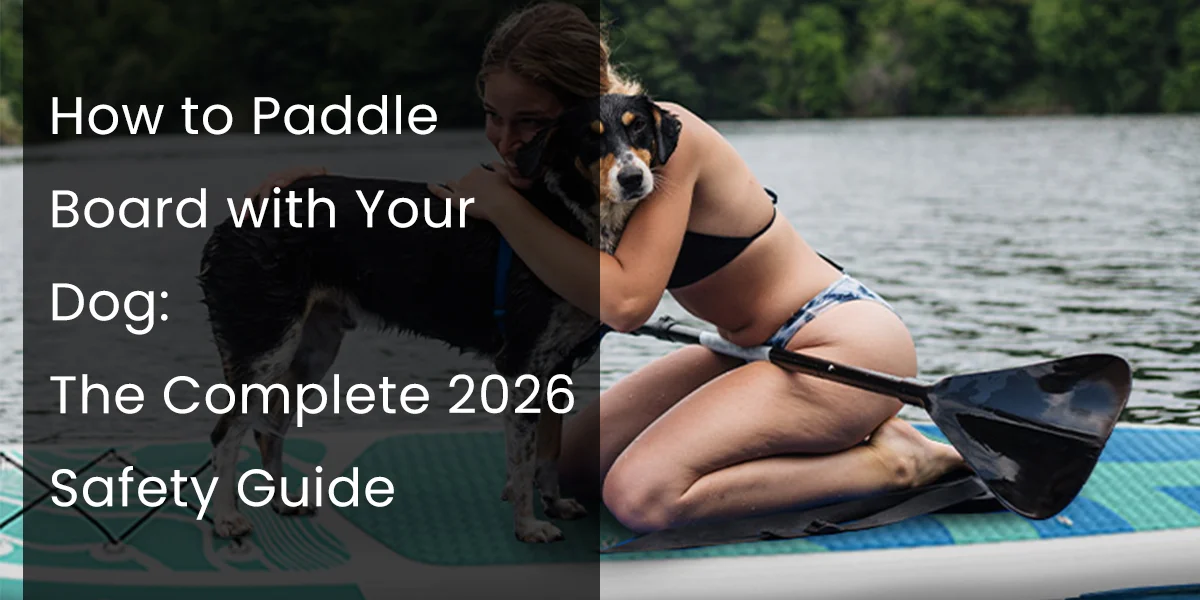
Paddle boarding isn’t just a solo sport anymore; it’s a bonding lifestyle. By 2026, we’ve seen a massive surge in “SUP Pups,” with more riders taking their furry co-pilots onto the water than ever before. However, the open water has variables that even the most obedient dog can’t predict.
Modern pet safety goes beyond just “buying a vest.” Whether you’re exploring calm lakes or coastal currents, here is your updated 2026 guide to keeping your K9 safe on board. It includes smart tech and the right deck traction.
1. Upgrade Your PFD: The “Handle-First” Protocol
In the past, dog life vests were only meant to keep them afloat. Retrieval mechanics are now the industry norm in 2026.
A lot of people think that all dogs can swim forever. You need to get your dog back on the board right away if they fall off in rough water or if you are in a panic.
Why the “Dorsal Handle” Matters
Don’t pay attention to the fashion prints on a Personal Flotation Device (PFD); instead, look at the handle. You require a vest with a low-profile dorsal handle that is strengthened (or two handles for big breeds).
- The Lift Test: Can you lift your dog’s full wet weight with one hand?
- Tech Integration: Modern 2026 vests now often come with AirTag or GPS tracker pockets. This technology can save your life if you get separated in a current.
Pro Tip: Read the latest guidelines on choosing the right canine life jacket fit from the American Kennel Club to ensure no neck restriction.
2. Traction Technology: Don’t Let Them Slip
The “slippery surface” is one of the main things that makes dogs on SUPs anxious. When a dog is afraid, it scratches at the board, which might cause holes in cheap PVC or, worse, the dog to fall overboard.
Full-Deck EVA Pads are the New Standard
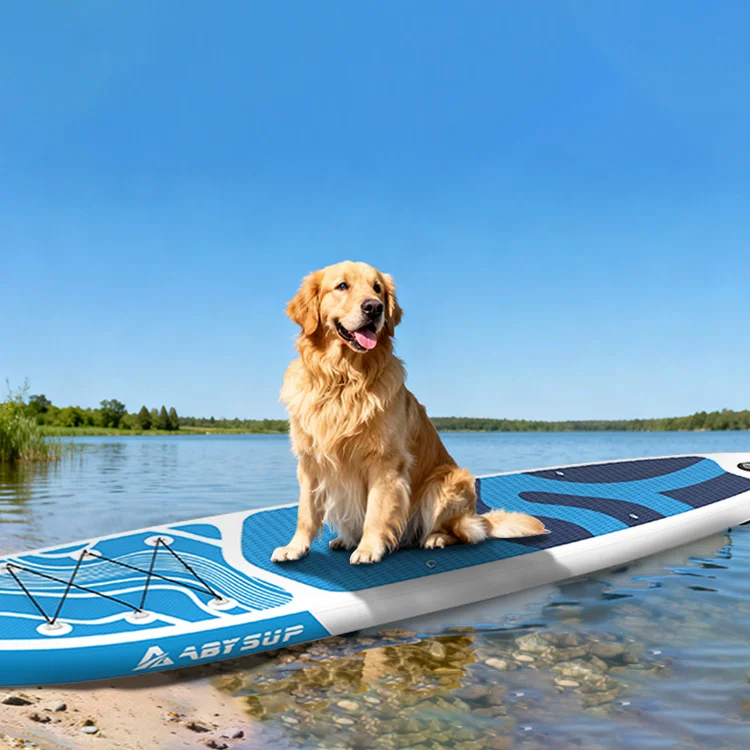
The greatest dog-friendly boards in 2026 aren’t only wide; they also have Full-Deck EVA Traction Pads. Old boards just featured foam where the person stood, but new “Pet-Friendly” SUPs cover the nose area as well.
- Why it helps: It gives your dog a “safe zone” at the front of the board where they can grip without sliding.
- DIY Fix: If your board doesn’t have this, consider buying aftermarket traction strips.
3. The “Smart” Leash Setup: Avoid Entanglement
Leashes can save lives, but they can also be harmful if you don’t use them correctly with dogs. If your dog falls, a regular ankle leash might easily get caught around its legs and pull both of you under.
Quick-Release Systems
Safety experts strongly suggest that you use a quick-release waist belt leash for yourself in 2026. This keeps the leash higher up and out of the dog’s reach.
- Never leash your dog to the board: This is rule #1. If the board drifts into a heavy current or capsizes, the dog needs to be free to swim.
- Collar Safety: Ensure your dog is wearing a breakaway collar or harness that won’t snag on submerged branches.
4. Hydration and Heat: The Silent Risks
The summer of 2026 will be hotter than in past years because of rising temperatures around the world. When UV rays hit the water, they bounce off the surface, which makes your pet’s exposure to heat twice as bad.
Water Quality Awareness (Blue-Green Algae)
Check local water quality applications before you start. Algae blooms that are harmful to health are happening more often. Don’t allow your dog drink or swim in water that looks like “pea soup.”
The Electrolyte Balance
Dogs don’t sweat as people do. You have to bring a bowl that can be folded up.
- Cooling Gear: Before your dog starts to pant too much, think about soaking their cooling bandana.
- Rest Breaks: Every 30 minutes of paddling, let your dog take a 5-minute pause in the shade or to swim to cool down.
5. The “Dry Land” Rehearsal (Desensitization)
Don’t put your dog on a floating platform without first practicing, just like you wouldn’t drive a car without instruction. 2026 training approaches stress positive reward on land first.
- The Living Room Phase: Blow up your board at home. Let your dog walk on it, eat treats on it, and hear the pump work.
- The Command: Teach a command like “On Board” or “Off.”
- The Balance Test: While the dog is seated, gently rock the board on the floor. This makes them feel more confident in their core by making them feel like the water is unstable.
For more detailed steps, check out this guide on positive reinforcement training techniques to build trust before hitting the water.
Conclusion: Adventure Responsibly
One of the best things you can do with your dog is paddle board with them. You can make sure that every splash is safe by updating to 2026 standards, which include wearing GPS-ready vests, choosing full-traction boards, and following heat restrictions.
Are you ready to help your pet select the most stable board? Check your gear, plan your route, and paddle safely!