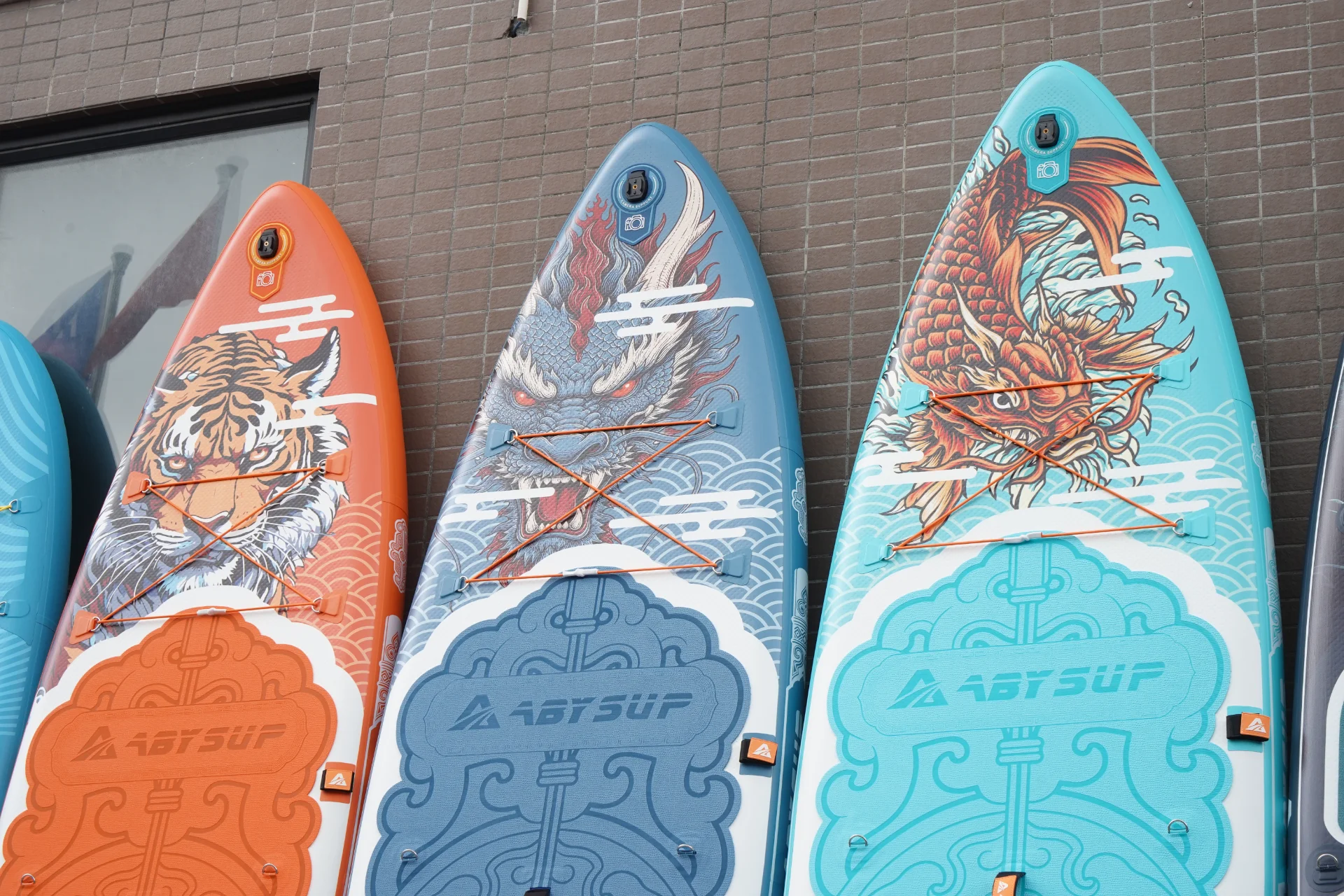
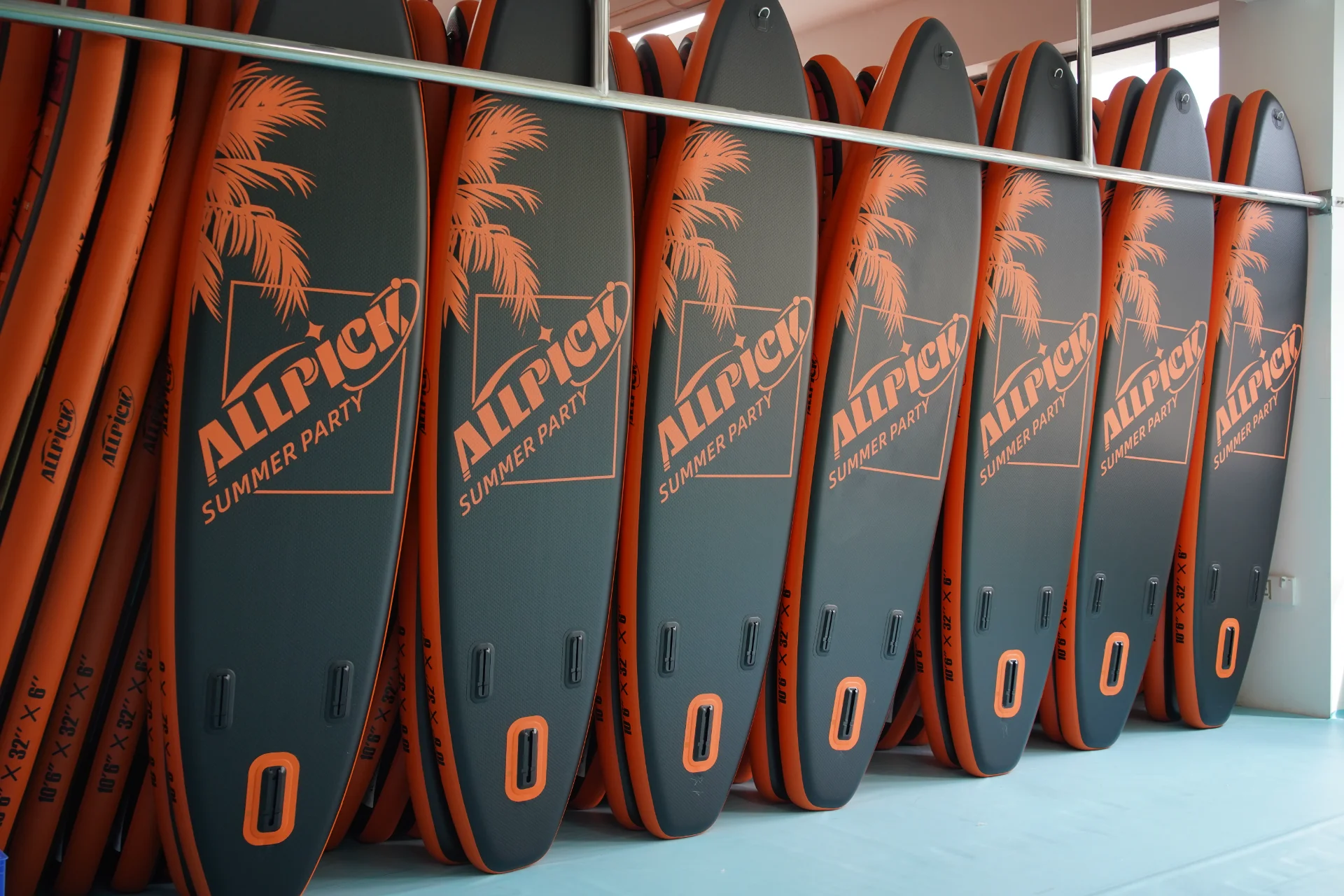
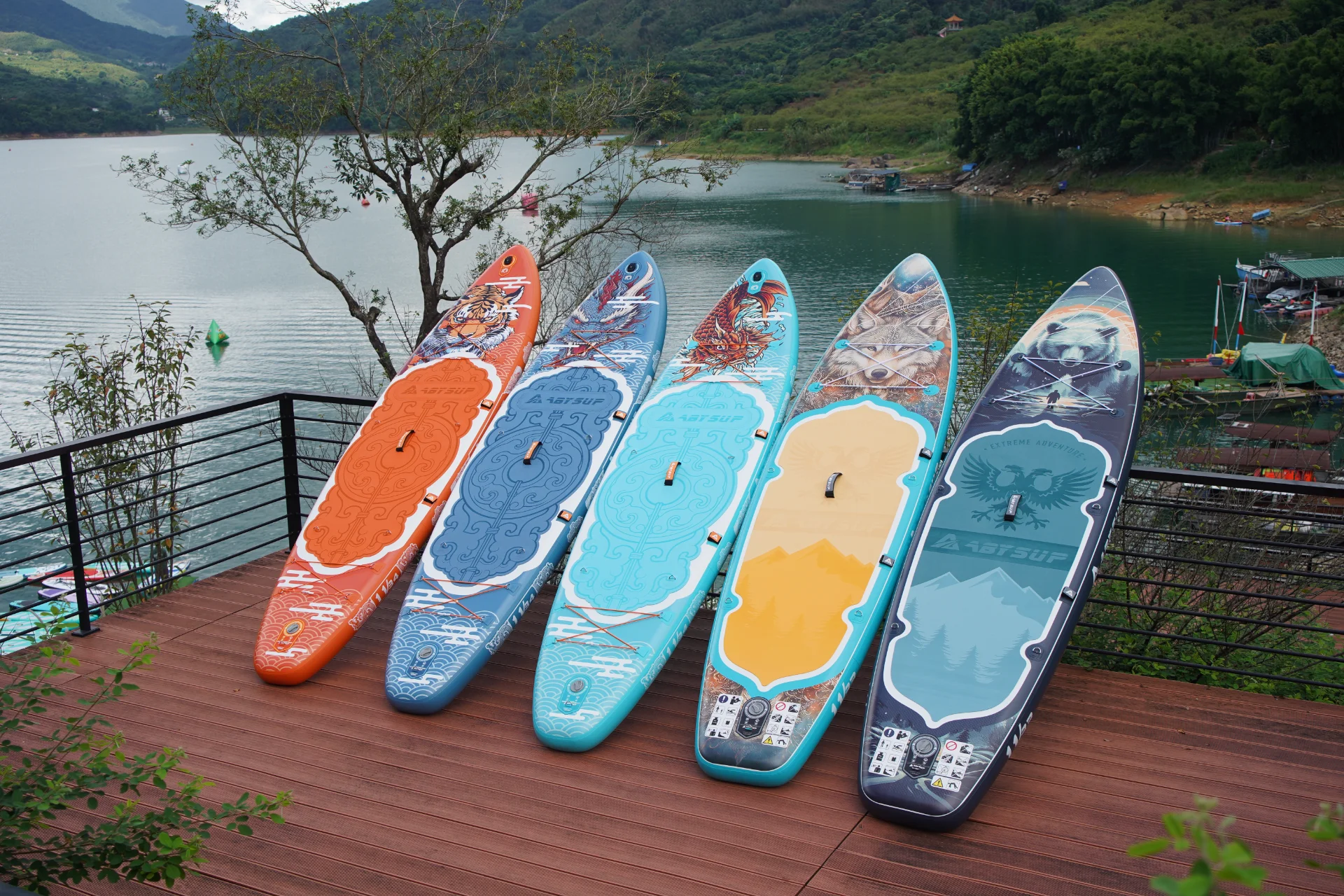
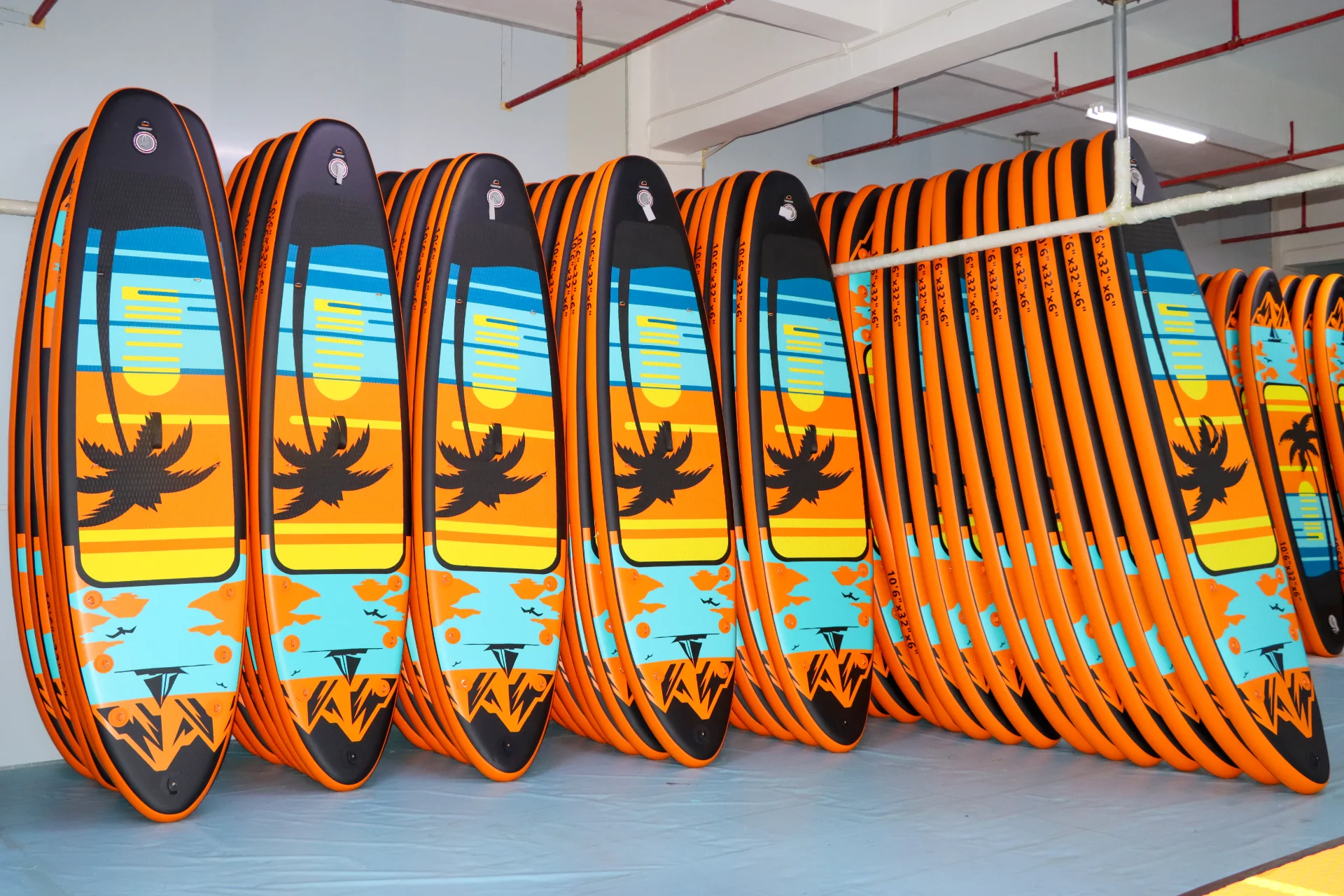
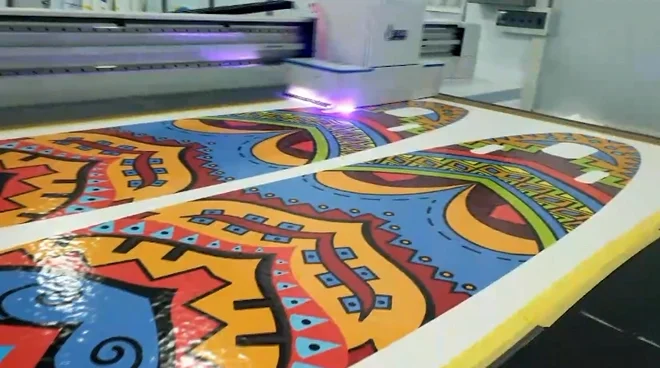
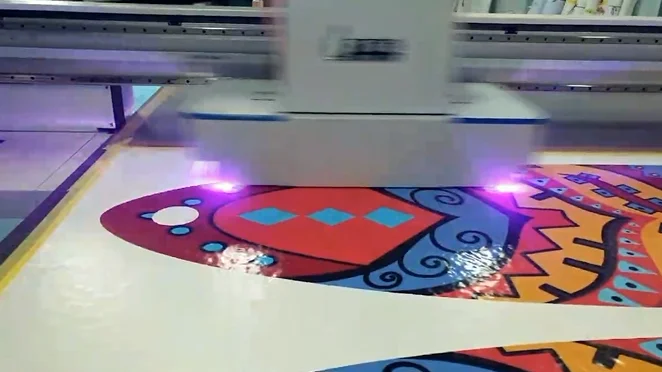
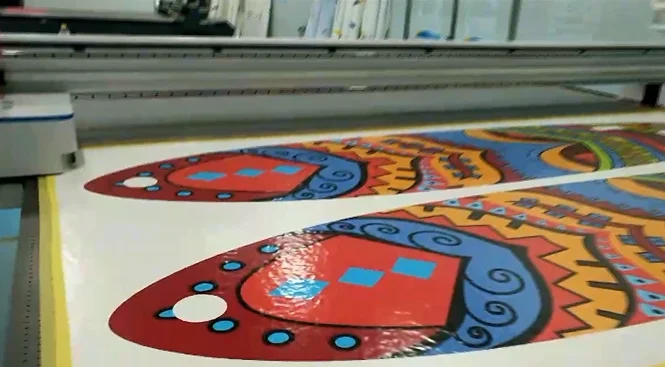
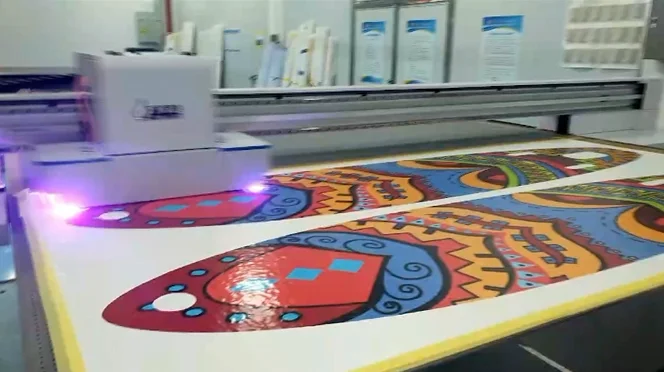
Detailed Logos & Artwork
Suitable projects may include detailed logos, illustration work, fine graphics and multi-color brand elements that would be difficult to reproduce using simpler single-color decoration methods.


CUSTOM SUP GRAPHICS · UV DIGITAL PRINTING
Huale supports custom graphics for inflatable SUP boards, from branded logos and detailed patterns to full-color artwork. We review print methods, artwork placement, material compatibility and sample requirements as part of an OEM paddle board manufacturing project.
PRINTING APPLICATIONS
UV digital printing is a method of applying artwork with inks cured by ultraviolet light. For inflatable SUP manufacturing, it can be considered for detailed graphics on compatible printable material surfaces. The chosen ink, substrate, artwork layout and construction sequence must be reviewed together.
Suitable projects may include detailed logos, illustration work, fine graphics and multi-color brand elements that would be difficult to reproduce using simpler single-color decoration methods.
Digital printing can support gradients, layered patterns and more detailed color transitions. Final color appearance depends on the artwork, substrate and approved print sample.
Brands can develop consistent graphic directions across recreational, touring or other SUP ranges. Each board model still requires its own artwork placement and production specification.
HUALE · CUSTOM SUP GRAPHICS & PRINTING
Explore custom inflatable paddle board designs and graphic printing applications. From colorful deck patterns and branded SUP collections to large-format printing equipment, these examples show how graphic design can support private-label paddle board manufacturing.
Project note: These images show branded SUP designs, product graphics and printing applications. The appropriate printing method, printable material, artwork placement and sample requirements are reviewed for each OEM/ODM project.
Both methods can be useful for custom inflatable paddle boards. The better choice depends on artwork complexity, substrate compatibility, order quantity, setup requirements and the approved durability criteria.
| Buying Factor | UV Digital Printing | Screen Printing |
|---|---|---|
| Artwork Detail | Well suited to detailed artwork and color transitions when the substrate and print setup are suitable. | Often suitable for logos, defined graphics and repeated spot-color designs. |
| Color Preparation | Digital artwork preparation; the printed result still needs color approval. | May require separate screens, separations or other setup steps depending on the design. |
| Complex Gradients | Can be a practical choice for detailed transitions. | Possible with appropriate halftone and process-printing methods, but setup differs. |
| Production Economics | Setup and unit costs depend on artwork, ink, print area and quantity. | Screen preparation may add setup costs, while repeat quantities can change the cost comparison. |
| Flexible PVC Material | Requires checking ink adhesion, flexibility and compatibility with the printable surface. | Also requires a compatible ink system and appropriate process controls for flexible substrates. |
| Durability | Must be verified on the approved material and ink. | Also depends on ink, substrate, process and intended operating conditions. |
Neither method is automatically more durable for every SUP construction. Print quality and suitability must be assessed using the actual material, design and intended handling conditions.
The printable layout must match the approved SUP construction. A graphic that looks correct on a flat design file may be covered, distorted or interrupted by components on the finished board. These areas should be reviewed before artwork is released for printing.
01 / DECK SURFACE
EVA traction pads can cover part of the deck artwork. Check the planned EVA outline, logo position and exposed graphic areas before approving the final layout.
02 / RAIL GEOMETRY
Board rails, nose curves and joined material sections require special layout consideration. Artwork crossing these areas should be checked against the actual panel and assembly design.
03 / HARDWARE
The placement of fin boxes, valves, handles, D-rings and other hardware can affect visible graphics. Leave sufficient clearance according to the final component layout.
04 / MATERIAL BEHAVIOR
Inflatable boards are handled, folded and stored after use. Ink and substrate compatibility, adhesion and flexibility should therefore be reviewed using the intended material and print configuration.
Printing is one part of an OEM project. Before bulk production, the artwork, print placement, material and finished sample should follow the same agreed specification.
Share your available vector artwork, design files or reference images, together with the intended SUP model, target market and estimated quantity.
Review file suitability, graphic scale, colors, printable areas and substrate requirements. Any unavailable print effects or manufacturing constraints should be identified before approval.
Check artwork placement against the board shape, EVA deck pad and hardware positions. Record the approved version and any agreed color references.
Where required, check a printed material sample or completed SUP prototype for color appearance, graphic alignment and relevant adhesion or handling requirements.
Confirm the approved artwork files, printing method, material, sample reference, inspection checkpoints and order details before proceeding with the agreed OEM production plan.
If you need a digital concept before sampling, review our 2D/3D design service . For physical sample evaluation, see OEM prototyping and sample testing .
Print quality should be evaluated against the approved artwork, the selected PVC material and the finished product's intended use. Different print systems and substrates may require different inspection methods.
01 / COLOR & DETAIL
Compare approved artwork and a physical print sample under agreed viewing conditions. Check important logos, gradients, fine details and visible defects.
02 / ADHESION
Confirm the print system is compatible with the material. Any adhesion assessment should use a defined method and acceptance criteria suitable for the selected construction.
03 / FLEXIBILITY
Consider how the printed surface behaves when the board is folded, packed and handled. Flexibility requirements should be reviewed using the actual printed material.
04 / EXPOSURE
Where required, define appropriate abrasion and weathering assessments. Their results should not be replaced with unsupported claims of scratch-proof or permanent fade resistance.
A clear printing brief helps the manufacturing team assess artwork preparation, production feasibility and the work needed before sample approval. The following information is useful even if your design is still being developed.
Board category, length, width, thickness or the existing Huale model you are considering.
Vector AI, PDF, EPS or other available artwork and reference images. Final file requirements are confirmed after review.
Brand guidelines, available color references and important areas that require closer visual matching.
Preferred graphic placement on the deck, bottom or other areas, subject to printability and construction review.
Planned EVA deck-pad shape, handle, valve, D-ring and other relevant component positions.
Expected sample and bulk quantities, retail channel, branding needs and destination country.
Quotation note: Printing setup, material requirements, samples, MOQ and production scheduling depend on the approved artwork, board model and order quantity. These details should be confirmed before the quotation is finalized.
CONTINUE YOUR SUP OEM PROJECT
Printing is one part of developing an inflatable SUP range. The next step depends on whether your board specification, graphic layout and sample requirements have already been approved.
01 / PRODUCT CUSTOMIZATION
Review complete SUP customization, including board shape, material, EVA deck pads, printed artwork, fins, accessories and packaging.
View Custom SUP Options →02 / FACTORY EVALUATION
Review the wider manufacturing process behind inflatable boards, including production capabilities, material choices and quality-control considerations.
View SUP Manufacturing →03 / ARTWORK PLANNING
Review colors, branding, component positions and graphic placement on a digital SUP concept before approving a physical sample.
View Design Review Service →04 / SAMPLE APPROVAL
Assess the physical SUP construction, graphic appearance, EVA layout and component positioning before bulk manufacturing approval.
View Prototyping Process →Common questions about printable materials, artwork files, printing methods and OEM orders.
UV digital printing can be considered for detailed graphics, gradients and multi-color artwork on compatible printable surfaces. The print area, material, ink system and physical color result should be confirmed for the selected SUP model.
It depends on the design and order. UV digital printing can be useful for detailed artwork and complex color transitions. Screen printing may be practical for defined logos and repeated designs. Material compatibility, cost, setup and durability need to be assessed for both methods.
Coverage depends on the board construction and printable areas. EVA deck pads, rails, seams, valves, handles and fittings may limit the final layout. A full-coverage design should be reviewed against the actual panel geometry before approval.
Send your available vector files, such as AI, PDF or EPS, together with reference images and color guidelines. The production team will review file suitability and confirm any additional requirements before print preparation.
Sample requirements can be reviewed as part of the custom inflatable SUP manufacturing process. Depending on the project, approval may involve a printed material sample or a completed board prototype. Sample availability, costs and schedules are confirmed by project.