
I’ve seen it happen, and believe me, it’s a coach’s worst nightmare.
A strong gust of wind picks up a 10-meter air track that isn’t tied down and flips it over, or worse, sends it flying over the field like a gigantic kite.
When athletes are on it, the scenario goes from “inconvenient” to “dangerous” un a matter of seconds.
We care about more than just how high your athletes jump. We also worry about how safely they land.
An outdoor tumbling mat makes training more enjoyable and fresh, but it also adds an element we can’t control: the weather.
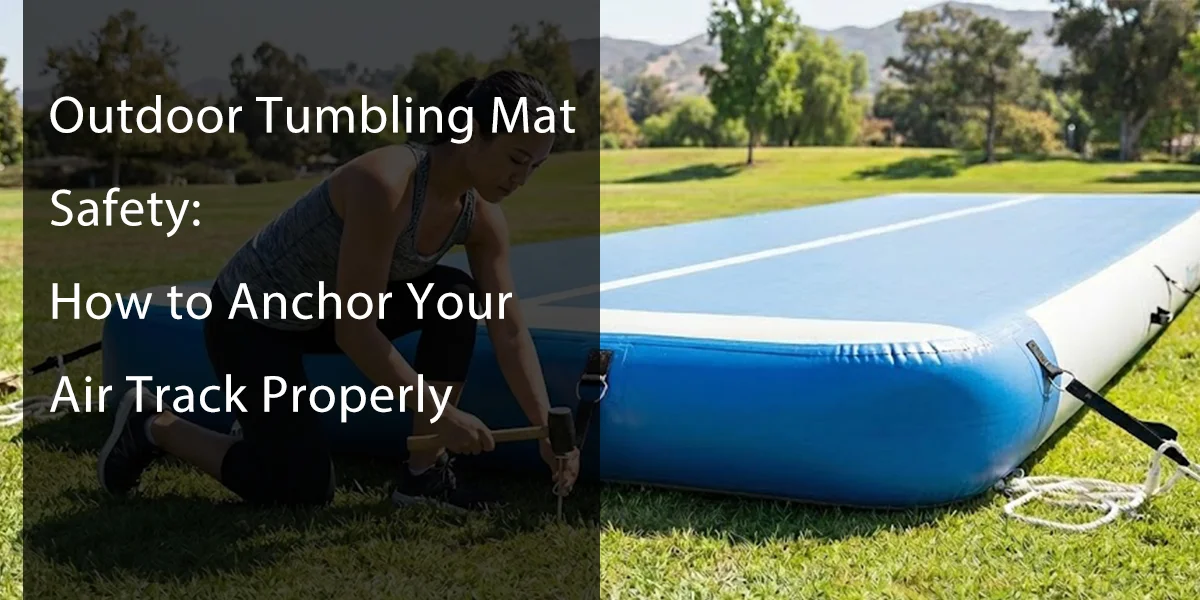
Today, I want to show you the exact anchoring procedures we tell our professional gym clients to follow.
Why “Heavy” Doesn’t Mean “Safe”
A common misconception I hear from school purchasers is: “But the mat weighs 80kg, the wind won’t move it.”
Physics tells a different story. An air track is essentially a large wing.
Once the wind gets under that outdoor tumbling mat, the lift generated can easily overcome the dead weight of the PVC. This is why anchoring isn’t optional—it is mandatory.
Step-by-Step: The Correct Anchoring Protocol
You need a plan before you even roll out the mat. This is how to make sure your setup is safe.
1.Location and Orientation
You should always put the mat on the ground, and grass is the best surface to anchor it to. It’s very important to try to put the narrow end of the mat into the wind. This makes the area that catches the wind smaller.
2.Utilize the D-Rings
This is where the quality of manufacture comes into play. The sides of our air tracks have reinforced, stainless steel D-rings on them. These aren’t simply for looks.
- For Grass: Use strong corkscrew stakes, like the ones that hold up big tents. Hammer them deep into the ground and use bungee cords or straps that don’t stretch to link them to the D-rings.
- For Turf/Hard Courts: You can’t dig holes, so you have to use sandbags. I think each anchor point should be able to hold at least 20 kg.
Essential Air Track Safety Instructions
In addition to anchoring, you must follow certain safety guidelines when using an inflatable outside. Please share this list with your coaching staff:
- Pressure Check: The air inside the mat gets bigger when the sun shines on it. It may pop by midday if you blew it up to 100% pressure in the cold morning. If the mat is in the hot sun, you should always let some of the pressure out.
- Clearance Zone: Stay at least 2 meters away from the mat. There are no benches, fencing, or other equipment.
- Wind Limits: Know when to stop. We recommend halting all training if wind speeds exceed Level 4 on the Beaufort Wind Scale (approx. 20-28 km/h). Even the best anchors have their limits.
Conclusion: Responsibility is Part of the Sport
Buying a high-quality outdoor tumbling mat is a way to invest in your team’s future. But the best way to protect that investment is to treat it with care.
Don’t skip steps when setting up. It’s worth the extra five minutes to hammer in the stakes for piece of mind.
Do you need a professional anchoring kit or safety advise for your business? Contact Huale, and we’ll help you train safely, no matter what the weather.


