
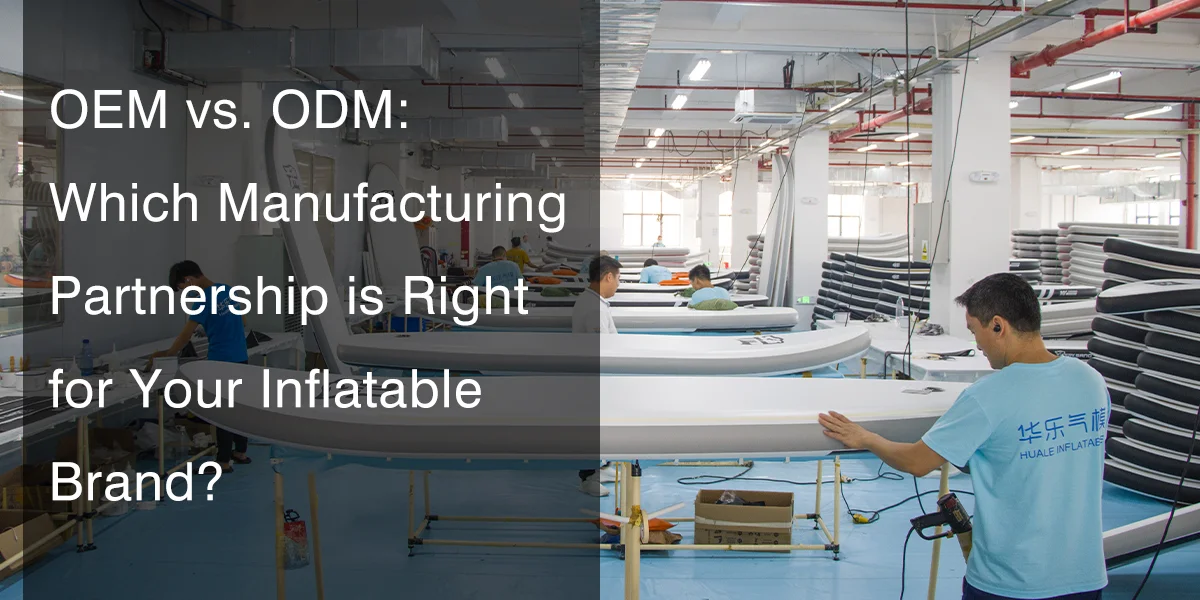
I’ve been in charge of production lines for drop stitch pools and ice baths for fifteen years. I’ve seen a lot of businesses get stuck at the same point: How can we actually create this?
It is the most important choice you will make before you put adhesive on PVC.
If you pick the wrong partnership model, you could either waste your money on tools you don’t need or, on the other hand, develop a generic product that gets eaten up by competitors on Amazon.
OEM (Original Equipment Manufacturer) and ODM (Original Design Manufacturer) are terms that get thrown about a lot in the industry.
But knowing the strategic difference—especially for the inflatable market—is what sets the flash-in-the-pan sellers apart from the long-lasting brands.
OEM: For the Visionaries (and the Patient)
Let’s begin with OEM. This is probably what you think of when you think about “building a brand.” In this case, you are the builder.
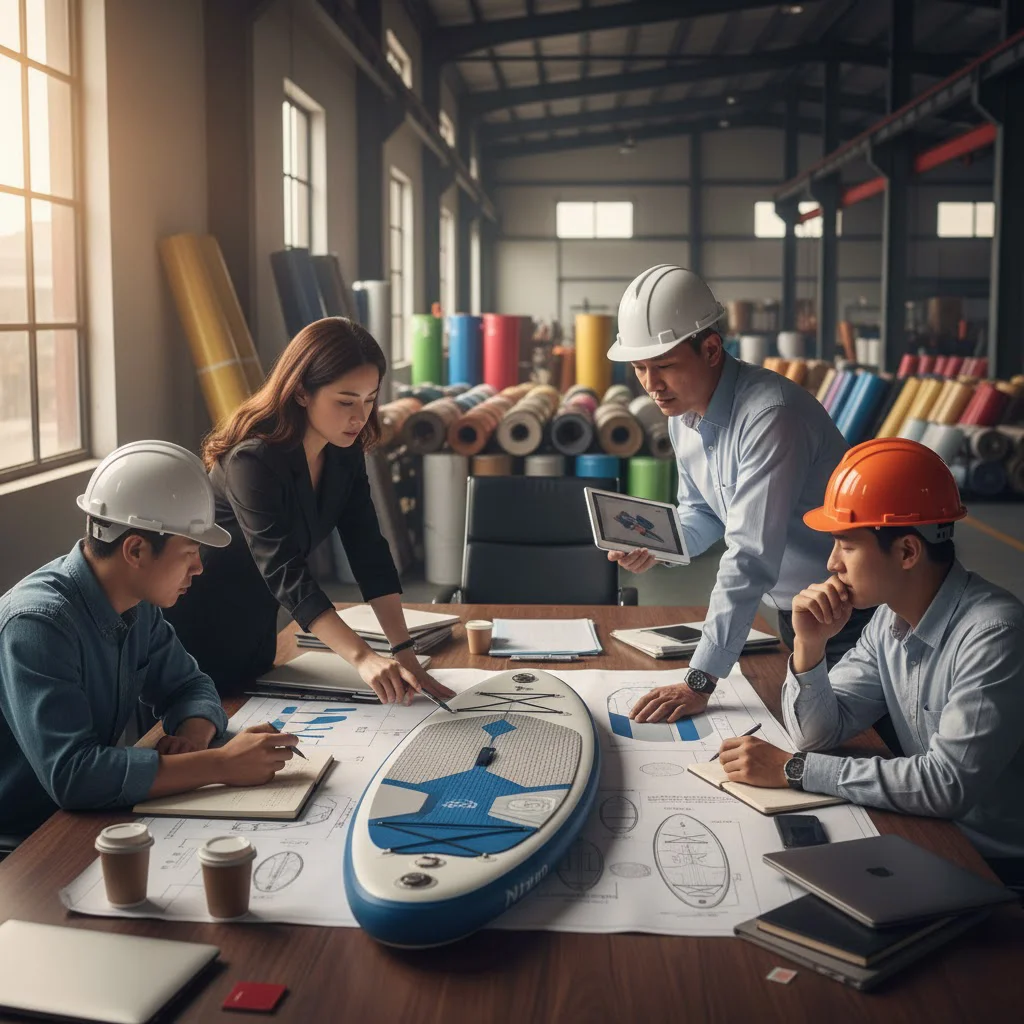
You give us the 3D CAD files, the exact drop stitch density needs, the valve positions, and the distinctive geometric shapes. The factory is only the pair of hands that makes your idea come to life.
Why pick this? You need to go OEM if you have made a revolutionary drop stitch pool with a filtration port that has never been seen before or a shape that is distinctive and comfortable.
It gives you ownership of your intellectual property. In a market as competitive as ours, having your own mold means that no other company can legally sell your exact design (as long as you have the necessary contracts, which we’ll talk about later).
The Check of Reality: But there is a cost to creativity. In the inflatable industry, OEM means paying for molds and tools, which can cost thousands of dollars before even one item is made.
The lead time is also rather long. You aren’t just taking stock off the shelf; you are making a prototype, checking for leaks, changing the shape, and testing again. It’s not a sprint; it’s a marathon.
ODM: The Fast Track to Market
ODM is on the other side of the production floor. People commonly call this “white labeling” or “private labeling.”
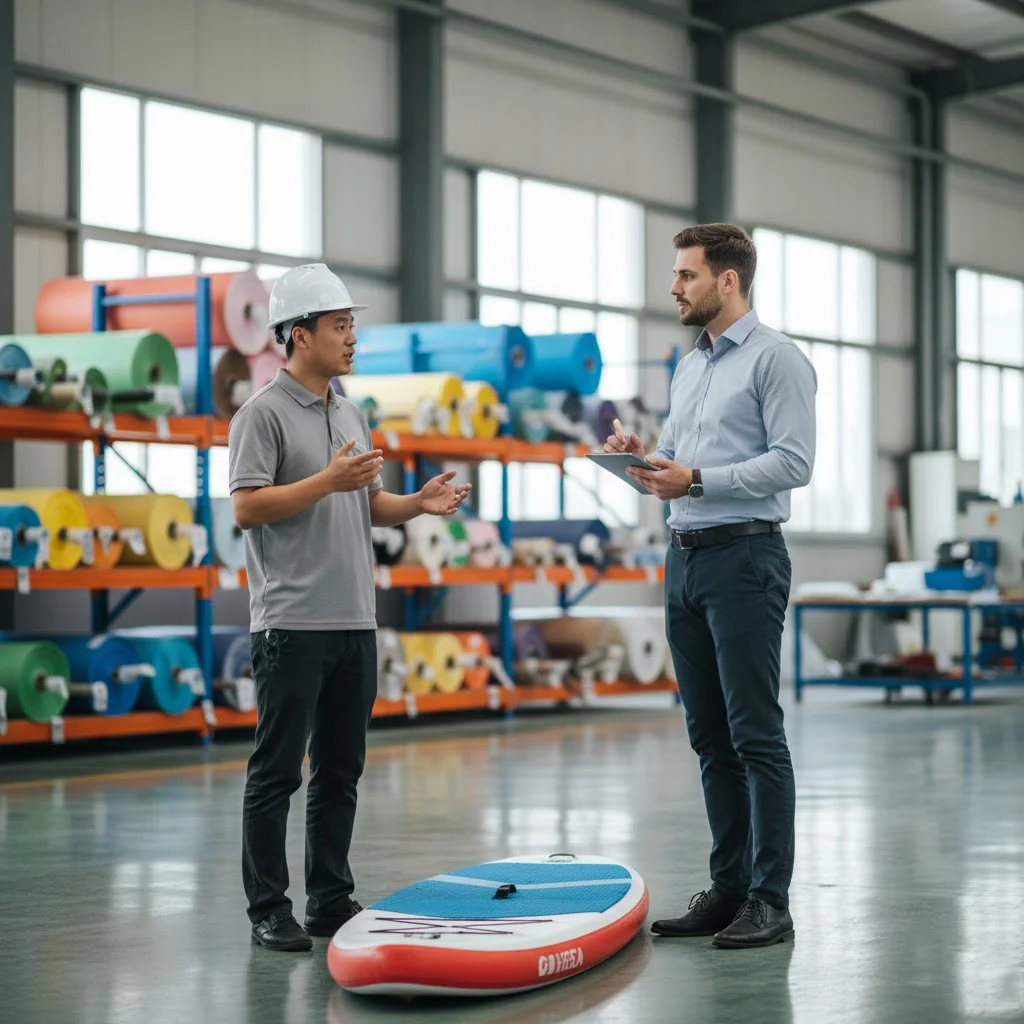
In this case, the factory (like Huale) has already done the hard work. We came up with the pool design, built the framework, and paid for the molds. We have a list of products that are ready for the market and have been tested. All they need is your branding.
The Strategic Advantage: For firms that prioritize marketing over engineering, ODM is a powerful tool. You can skip the six-month research and development period and start selling products in just a few weeks.
I regularly tell new clients with little money to start here. Instead of investing in untested molds, why not utilize a factory’s existing R&D to test your market first?
Of course, the trade-off is differentiation. Because you’re buying a “shelf” product, it’s possible that a competitor in another area is selling a pool that looks a lot like yours.
Your product’s shape won’t give you an edge over the competition here; your branding, customer service, and marketing story will.
Which Model Fits Your Business Stage?
It’s not just a matter of preference when you have to choose between these two; you also need to think about your finances and how much risk you’re willing to take.
Go with ODM if:
- Your main goal is speed: You want to prepare for summer, but you have less than 4–6 months.
- Budget is tight: You want to spend your money on marketing (Google Ads, influencers) instead of steel molds and prototypes.
- You are testing a niche: Are you not sure if round or square ice baths will sell better? Use ODM to try out both types with modest minimum order quantities (MOQs).
Go with OEM if:
- Differentiation is survival: You are entering a saturated market and need a unique feature (like a specific reinforced wall structure) to stand out.
- Control is non-negotiable: You require more than the factory’s default quality standards, like a special European-standard PVC or a custom valve system.
- You are scaling up: A lot of my long-term clients started with ODM to make money, and then they used that money to make their own OEM flagship items later.
Final Thoughts
There is no “bad” decision here; there is only the choice that fits with the way your business is right now. I have seen big brands throughout the world employ ODM for their accessories and OEM for their main items.
The best brands don’t only choose a factory; they also choose a partner that knows how both models work. The goal is still the same, whether you give us a napkin drawing or just a logo file: to get a high-quality, leak-proof product into your customer’s hands.


