
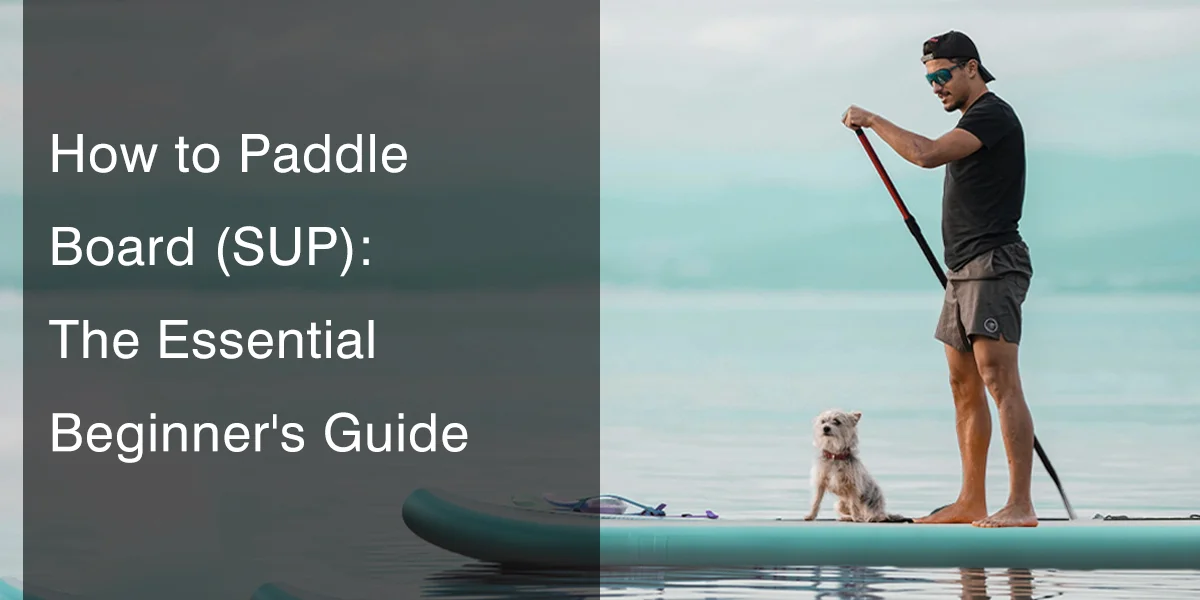
Stand-up paddleboarding (SUP) is a rapidly expanding watersport that provides a distinctive combination of relaxation, a full-body exercise, and a fresh perspective on the water.
The barrier to entry is low, whether you are gliding across a calm lake or traversing gentle coastal waters. However, a rewarding experience is contingent upon mastering the fundamentals of gear, technique, and safety.
This guide will provide you with a comprehensive overview of all the information you require to begin your SUP journey.
Must-Have Equipment for Stand-Up Paddleboarding
Good news: Stand-up paddleboarding necessitates only a handful of essential pieces of equipment. Although you may be able to rent equipment for your initial excursions, the first step towards developing a sense of self-assurance as a paddler is to comprehend the fundamentals.
The Board and Paddle
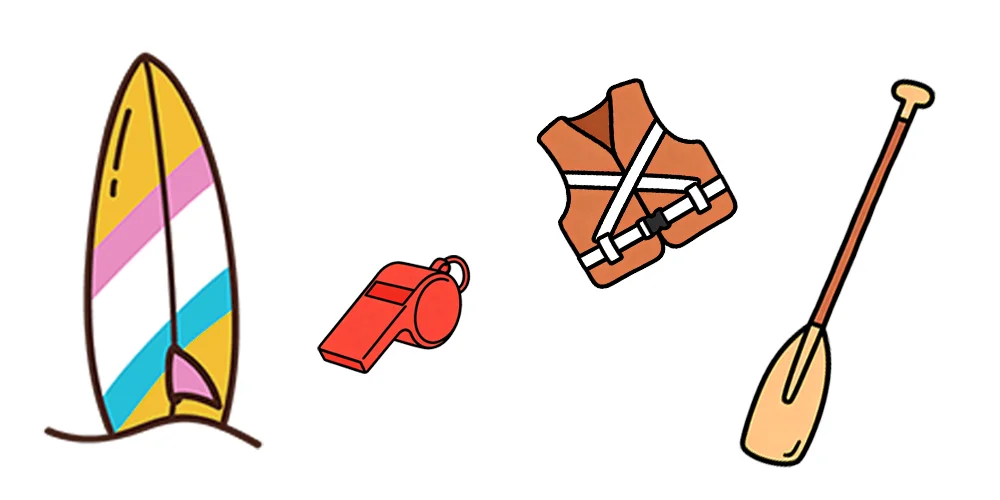
- Paddle Board: The selection of a paddle board is contingent upon the weight of the paddler, the intended use (recreational, touring, yoga), and the local conditions.
Wider, more stable platforms are frequently advantageous for novices.
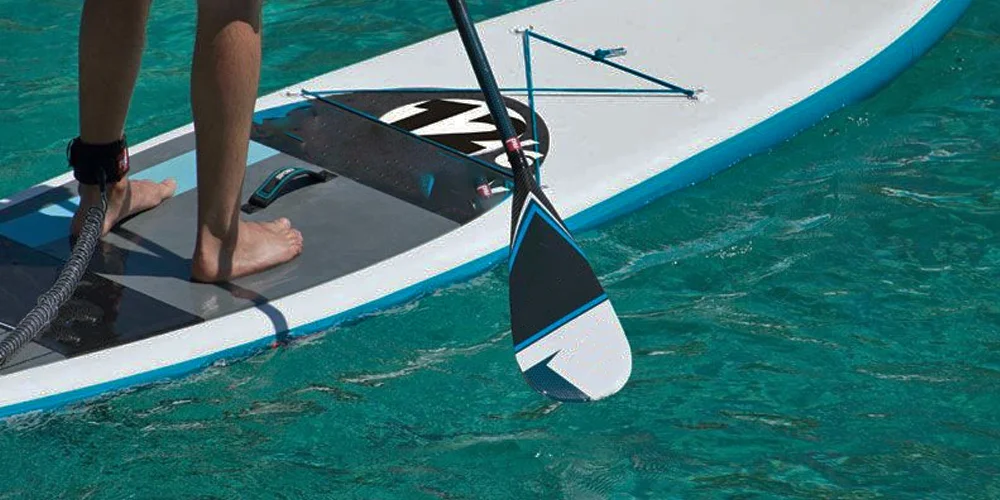
For novice paddlers, inflatable boards (iSUPs) are an exceptional, portable alternative. - SUP Paddles: Distinguished by their teardrop-shaped blades that are inclined forward.
The paddle should reach your wrist when you stand it in front of you and raise your arm above your head.
For optimal efficacy, ensure that the blade is always angled away from you, towards the nose of the board.
Clothing and Safety
- Personal Flotation Device (PFD): Stand-up paddleboards are classified as vessels by the U.S. Coast Guard as Personal Flotation Devices (PFDs).
To paddle outside of a surf or swimming area, it is mandatory to have a personal flotation device (PFD) on board. While adults are frequently exempt from wearing it, children are required to do so.
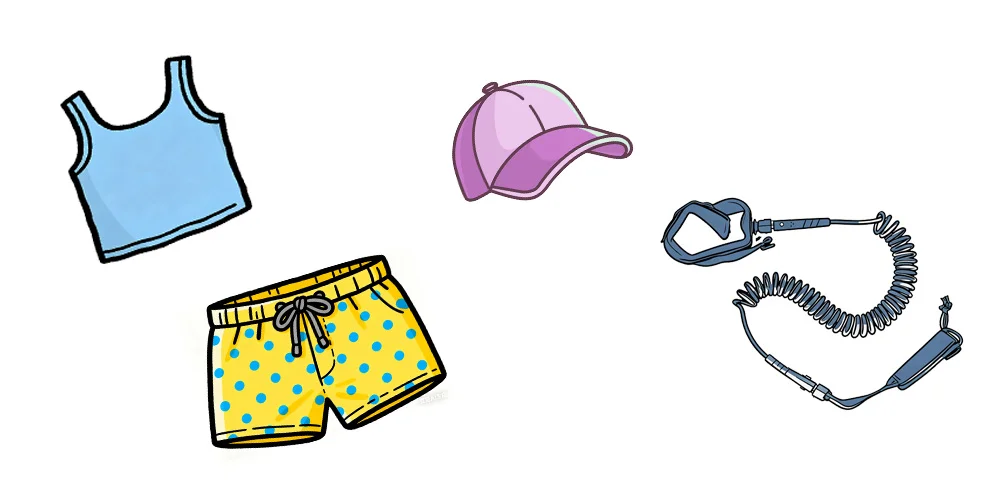
It is imperative to verify the regulations in your area - Leash: A leash is essential for safety, particularly in gusty conditions, as it secures your board to your body.
Your board functions as a substantial flotation device, and the leash guarantees that it remains secured. - Appropriate attire: Ideal attire for warm weather includes a swimsuit and a long-sleeved rash guard for solar protection.
In order to prevent hypothermia in chilly conditions, it is essential to wear a wetsuit or dry suit.
Mastering the Basic SUP Techniques
Upon their initial use of a stand-up paddleboard (SUP), the majority of novices are capable of standing up and commencing paddling with minimal guidance.
How to Stand Up and Find Your Balance
- Begin by kneeling: Commence in water that is tranquil and at least knee-deep. Kneel just behind the centre carry handle and place the paddle across the board.
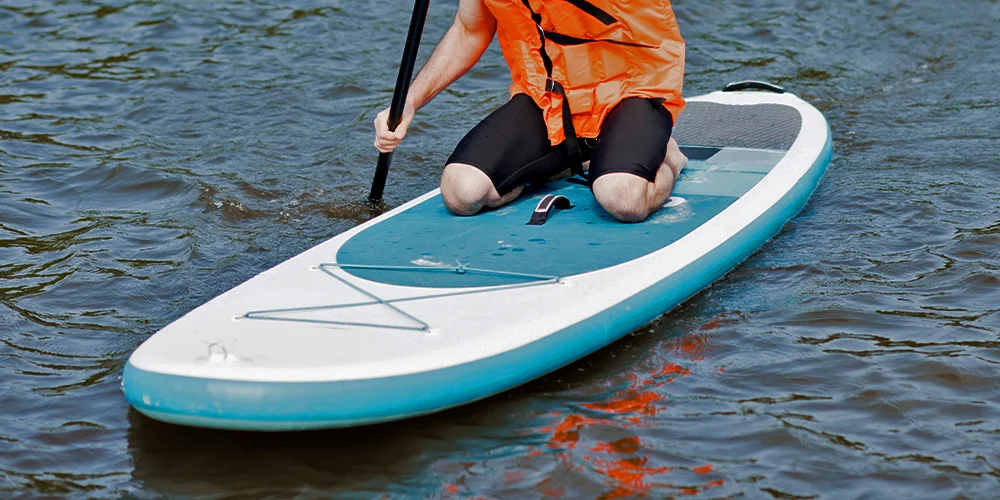
- Change to a standing position: Maintain your palms on the sides of the board to ensure stability. Slowly advance one foot to the location where your knees were.
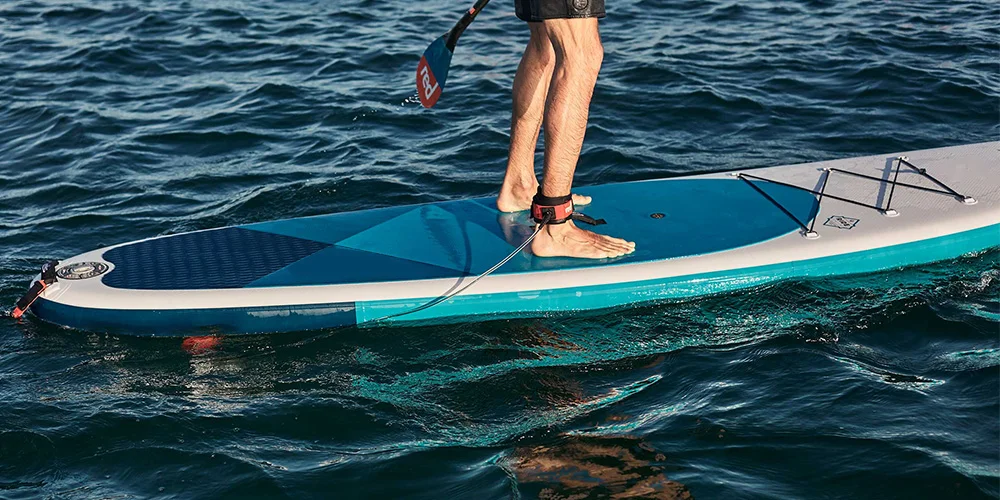
- Stand Up: Instead of standing in one quick motion, raise your chest up first while keeping your knees bent. Once your chest is vertical, extend your legs to stand up. Balance Advice: Make sure that your feet are centred on the board and that they are parallel and hip-width apart. Maintain a straight spine, slightly bent knees, and a level gaze towards the horizon. Refrain from gazing at your feet.
The Three Essential Strokes
Forward Stroke:
This is the primary stroke. Pull the board past the paddle by engaging your core and twisting your torso, then plant the entire blade in the water.
Reach forward approximately two feet. Instead of drawing with your lower arm, apply pressure to the T-grip with your dominant hand.
Maintain a straight line by alternating sides every three or four strokes.
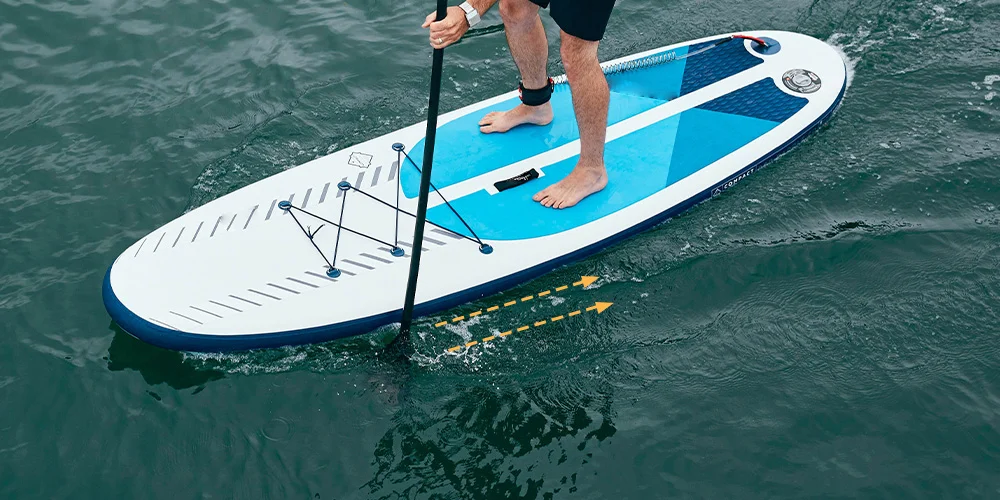
Reverse Stroke:
This technique is employed to reduce the rate of movement, as well as to halt and pivot.
Place the paddle near the board’s rear and propel it forward.
To rotate the board’s snout to the right, execute the reverse stroke on the right side.
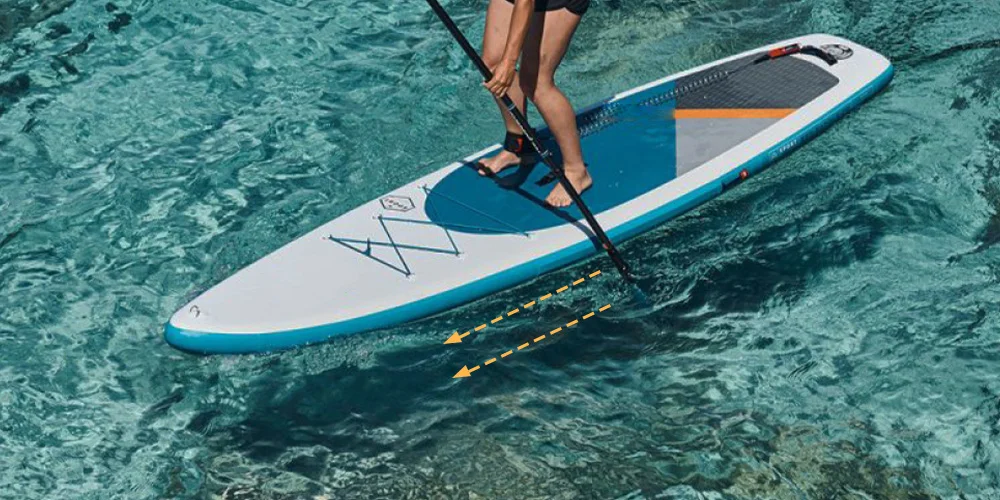
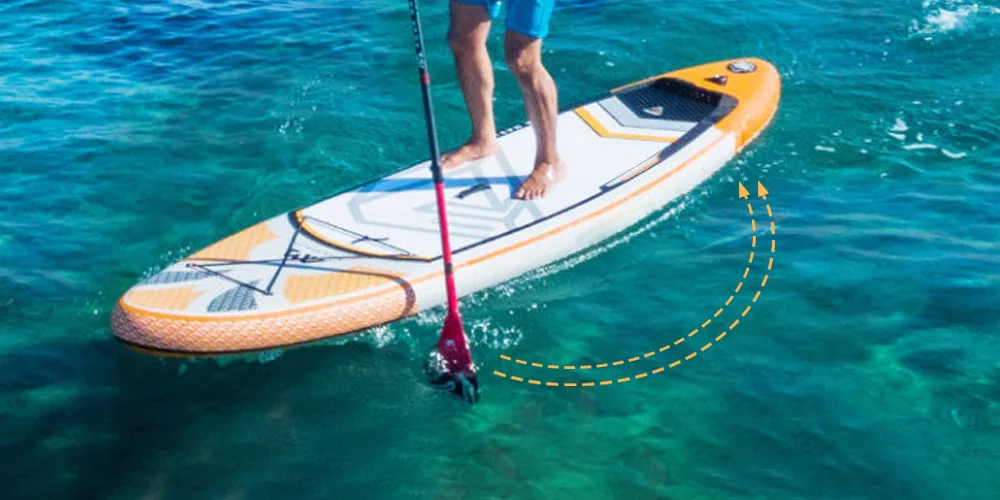
Sweep Stroke:
Employed for acute curves. Use your torso to generate momentum and plant the paddle far out to the side of the board. Sweep it in a wide arc from the nose to the tail. The board will be rotated to the left by sweeping on the right side.
Advanced Tips for Your First Outing
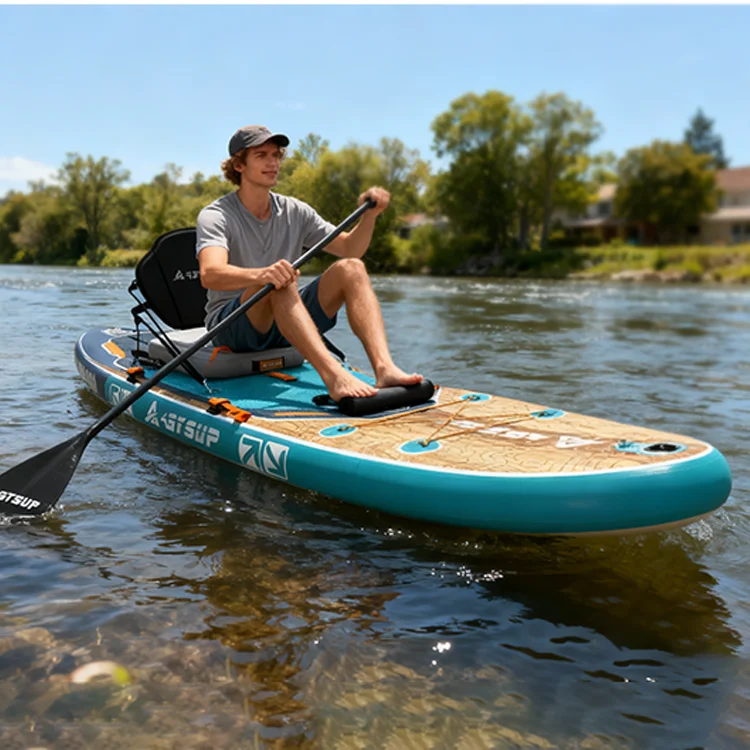
The planning of your initial stand-up paddleboarding excursion can be the deciding factor between a tranquil glide and a frustrating struggle.
Weather and Water Conditions
- Wind is Your Foe:
Select a day that is sunny and has minimal to no wind.
If you must paddle in the wind, start by paddling into it on your way out.
In this manner, the wind will assist in propelling you forward when you are fatigued. - Currents and Tides:
Prior to embarking on a voyage, it is imperative to consult the local tide and current charts.
It can be hazardous and laborious to paddle against a strong outgoing tide.
Arrange your journey to ensure that you are paddling against the current on the way out and with it on the way back.
Safety and Gear Checks
- The “Fall Away” Rule:
If you experience a fall, attempt to tumble away from the board and into the water, rather than onto it. A fall onto the unyielding surface is more likely to result in injury. - Paddle Retrieval:
If you lose your paddle, retrieve your board first, then climb back up. Compared to your paddle, your board is a significantly larger flotation device that is less likely to float away. - Visibility:
If you are paddling in congested areas or at dusk, it is advisable to incorporate a small, waterproof light or a vibrant, visible flag into your board.
Novice mariners often overlook this crucial safety precaution, which increases your visibility to other boaters.
Conclusion: Paddle Board With Huale
Stand-up paddleboarding is a rewarding and accessible method of establishing a connection with the water.
By prioritising safety, conquering fundamental strokes, and acquiring the appropriate equipment, you will rapidly transition from a novice to a confident paddler.
It is important to begin on a small scale, select calm waters, and always show respect for the force of the wind and current.
Immediately retrieve your paddleboard and enjoy the sensation of gliding!


