
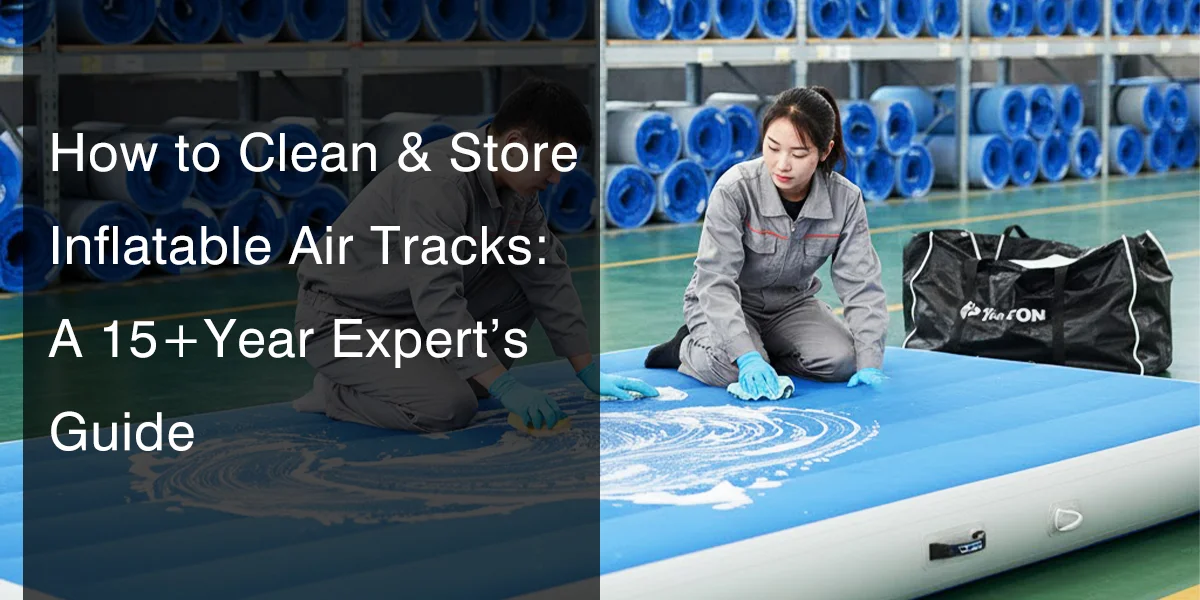
If you’ve bought an Air Track for your home or gym, you know it’s not just a “mat.”
It’s a piece of performance equipment. I’ve been making and fixing drop stitch inflatables for fifteen years, and I’ve seen more Air Tracks get broken by bad storage than by actual tumbling.
I remember a customer who kept a $800 track in a garage that was moist all winter.
When they unrolled it in the spring, the PVC had stuck together and pink mold had eaten through the coating. It was a complete loss.
It’s not hard to keep an Air Track in good shape, but you do need to follow certain steps.
Forget the usual advice; here is the engineer-approved strategy to keeping your track springy and clean for ten years.
Cleaning: The “Do No Harm” Protocol
What do I see the most often? Cleaning too much with the incorrect chemicals. Drop stitch PVC is strong, but severe solvents can harm it.
What NOT to Use (And Why):
- Chlorine bleach: Don’t ever use this. Bleach accelerates a chemical process called plasticizer migration.
This is a technique that removes or moves to the surface the important ingredients that keep the PVC flexible. Your mat will become fragile and easy to shatter after these are gone. - Oil-Based Cleaners: Stay away from anything greasy. It makes a slippery film that makes it dangerous for gymnasts to land flips.
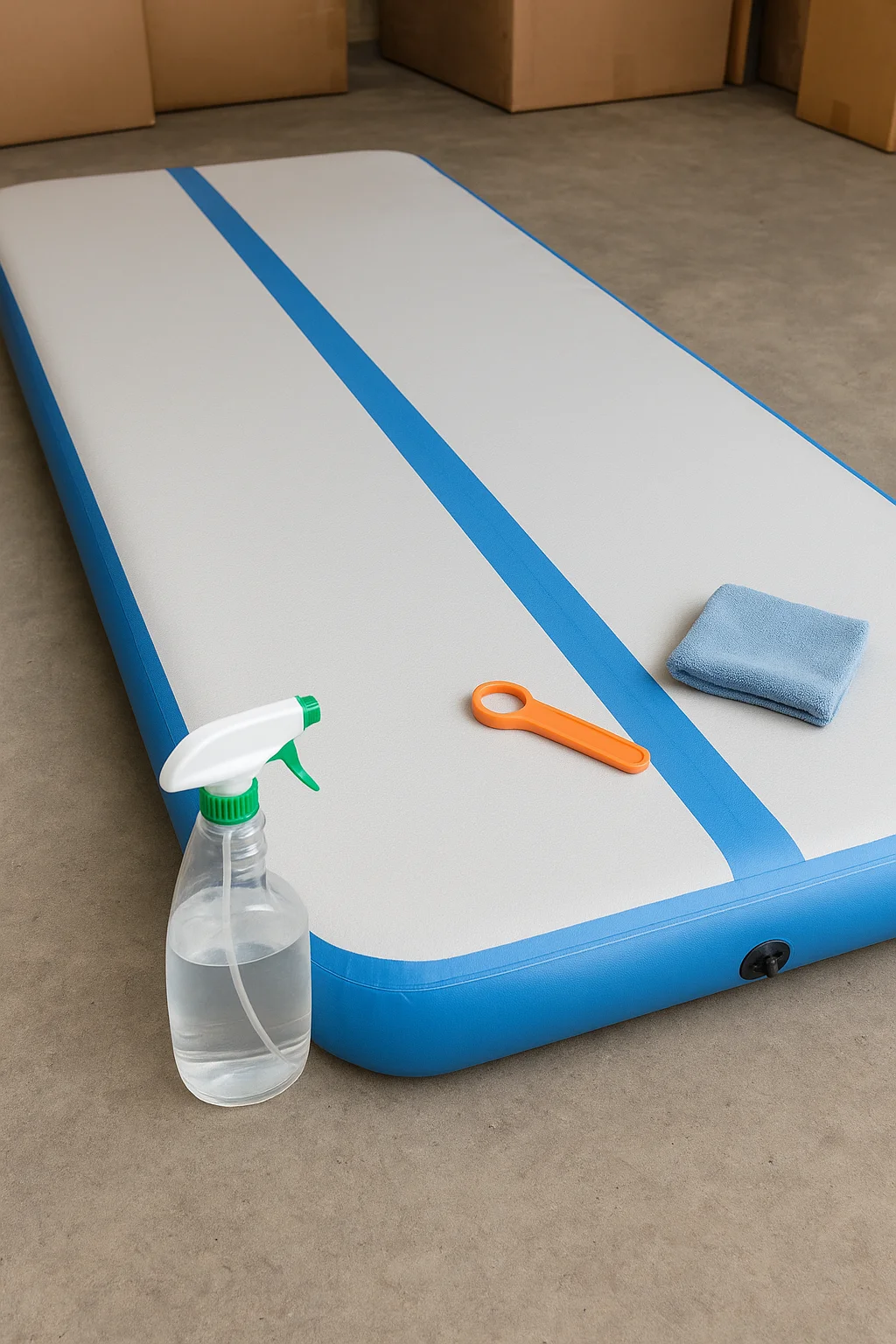
The Expert’s Cleaning Solution: You don’t need to buy pricey “specialty” cleaners. The gold standard in the business is easy:
- The Mix: A few drops of moderate, pH-neutral dish soap in warm water.
- The Tool: A microfiber towel with a soft texture or a brush with soft bristles. Never use scouring pads because they leave tiny scrapes that retain dirt later.
Pro Tip: Use a white eraser sponge (sometimes called melamine foam) to get rid of black scuff marks that won’t come off (typically from rubber shoe bottoms). This stuff acts like very fine sandpaper, so be careful. Only wipe the mark, not the area around it, to keep the PVC finish shiny.
The “Bone Dry” Rule
This is not up for discussion. It has to be completely dry before you even think about rolling your track.
Mold like to grow in rolls that have moisture in them. Mold, on the other hand, gets into the fabric layers and is almost tough to get rid of.
After washing, rinse it off with a towel and let it air dry in the shade. Check the seams and valve region with your touch. These places hide water droplets that can cause problems later.
The Art of Packing: The “3-Fold” Technique
You can’t easily roll up Air Tracks like a sleeping bag because they are wider than paddle boards. To keep the sidewalls safe, you need to control the width.
Step 1: Let the air out Totally Use the “Deflate” side of your electric pump to suck out all the air. A track that has been vacuum-sealed is much tighter and less likely to get creased than one that has air spaces in it.
Step 2: The 3-Fold (Very Important Step) Most tracks that are 1 or 2 meters wide are meant to be folded lengthwise before they are rolled.
- Put one-third of the width in the middle.
- Place the other third on top of it.
- Expert Note: Make sure the track is flat and the sidewalls aren’t twisted when you fold it.
Step 3: The Roll That Isn’t Tight Start rolling from the end that isn’t near the valve. This pulls the last bits of air toward the open valve. Roll it up tightly enough to fit in the bag, but don’t push it. You are rolling too tightly if you detect white stress markings on the fold lines.
Long-Term Storage: Fighting the “Cold Crack”
Winter is coming, and where you put your track matters.
There is a certain Glass Transition Temperature (Tg) for PVC material. At this stage, the polymer chains stop moving around freely, and the material goes from being flexible to being hard.
If you keep your track in a shed that doesn’t get heated and the temperature drops below freezing, the material will pass this line.
- The Danger: When you try to unroll a frozen track, the hard PVC might break or snap like glass. This is damage to the structure that can’t be fixed.
- The Fix: Put it in a place where the temperature stays the same. If it has been outside in the cold, bring it inside and let it warm up to room temperature for 24 hours before you unroll it to make it flexible again.
Valve Maintenance (The Forgotten Step)
A grey or orange plastic wrench comes with your Air Track. Don’t throw this away.
Check every six months. The vibrations from tumbling can slowly dislodge the valve core.
- Deflate the board.
- Put one hand under the material to grasp the nut for the valve.
- Put the wrench in the top of the valve and turn it gently to the right.
Warning: When the track is inflated, don’t use this wrench! The valve can spin and rip the fabric inside because of the pressure.
Final Thoughts
A good Air Track is a good investment in your safety and skills.
You can keep your mat’s “brand new” bounce for years by following these simple steps: using gentle washing, letting it dry completely, folding it correctly, and storing it in a climate-controlled space.


