
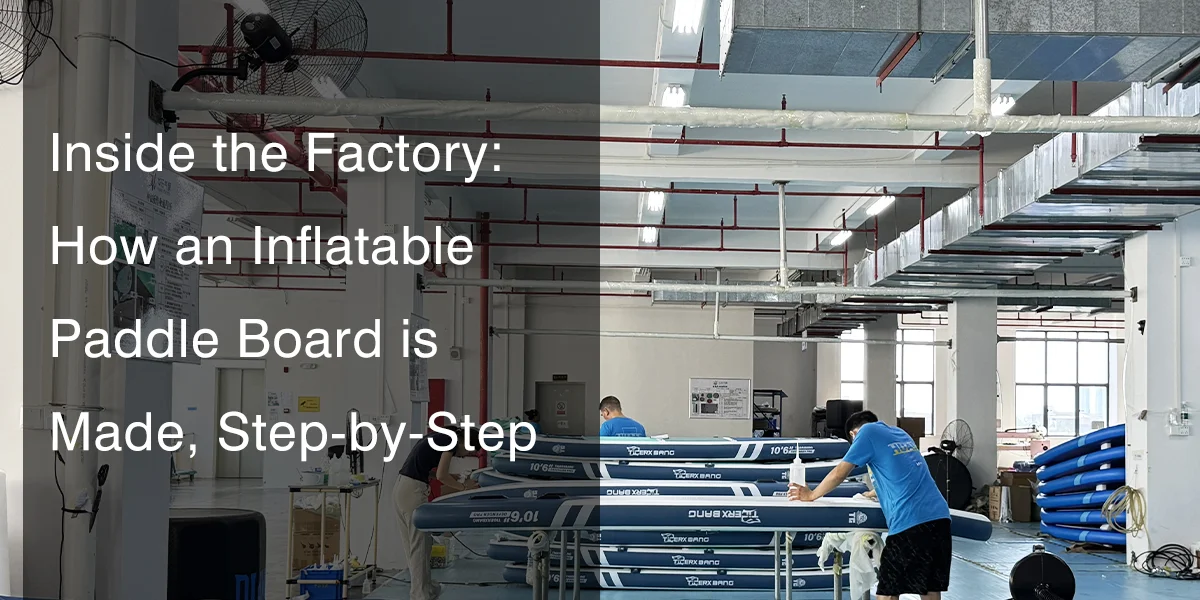
The first thing that would hit you if you stepped onto our production floor today isn’t the bright surfboards; it’s the smell of PVC and the repetitive buzz of CNC cutters.
Over the past fifteen years, I’ve seen the process of making inflatable paddle boards (iSUPs) change from a messy, glue-heavy manual job to a high-tech symphony of engineering and automation.
A lot of people think these boards are just “stamped out” like plastic toys, but that’s not the case.
To make a board that can hold 15 PSI of pressure without breaking, you need both surgical accuracy and tremendous strength.
Let’s take a look behind the scenes at how raw materials are turned into the gear you trust to be ready for adventure.
It Starts with the “Heart” (The Drop Stitch Prep)
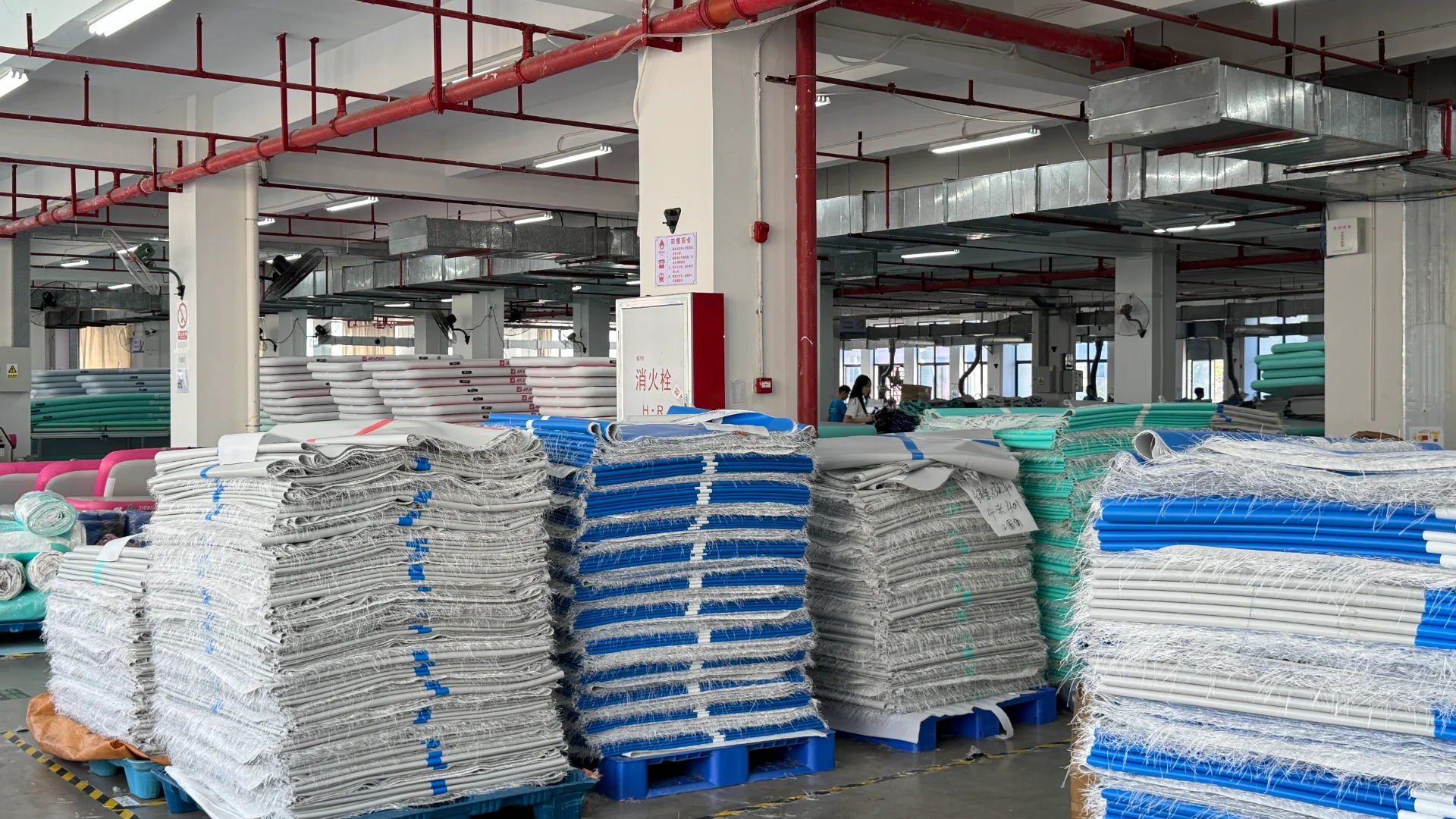
A board is merely a big, hefty roll of Drop Stitch cloth until it is shaped.
This plastic isn’t like the kind you usually see in pool floats. There are two layers of military-grade PVC that are held together by tens of thousands of polyester threads.
When I initially started in this field, we had to check these rolls by hand for broken threads, which was a long and boring process.
Today, we unroll the material onto big tables for examination, where automatic sensors check to see if the density is the same throughout.
We’re not only looking for holes; we’re looking for things that are the same. When inflated, the board will twist if the threads in the nose are thicker than those in the tail. The cutting room only gets rolls that pass this strict “flatness test.”
The Cut: Where Precision Meets Design
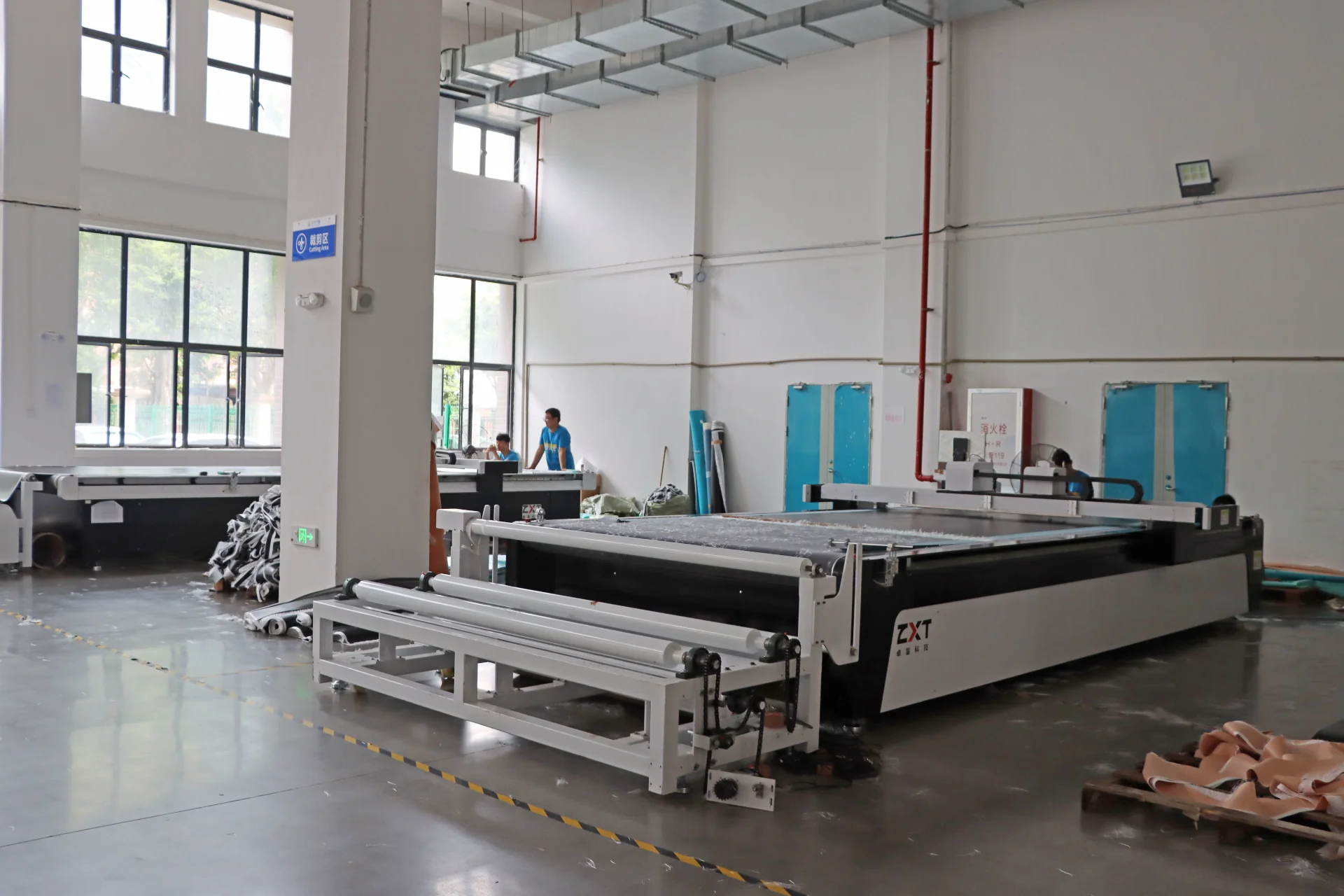
Once the material is accepted, it goes to the cutting table that works on its own.
We employed hand templates and razor blades in the past, which naturally caused some differences in the rocker and outline.
We can now send 3D CAD files straight to a flatbed CNC machine. The blade moves across the PVC with millimeter precision, cutting away the top deck, bottom hull, and the internal rail bands.
The board also gets its personality from this. The PVC is flat, but it can still go through our big UV printers.
Screen printing can peel over time, but UV printing bonds the ink straight into the PVC pores. This means that your images will last for years in the sun and salt without fading.
Sealing the Rails (The “Make or Break” Moment)
This is the most important phase of the whole process. The sides of a board are where it will most likely leak or break.
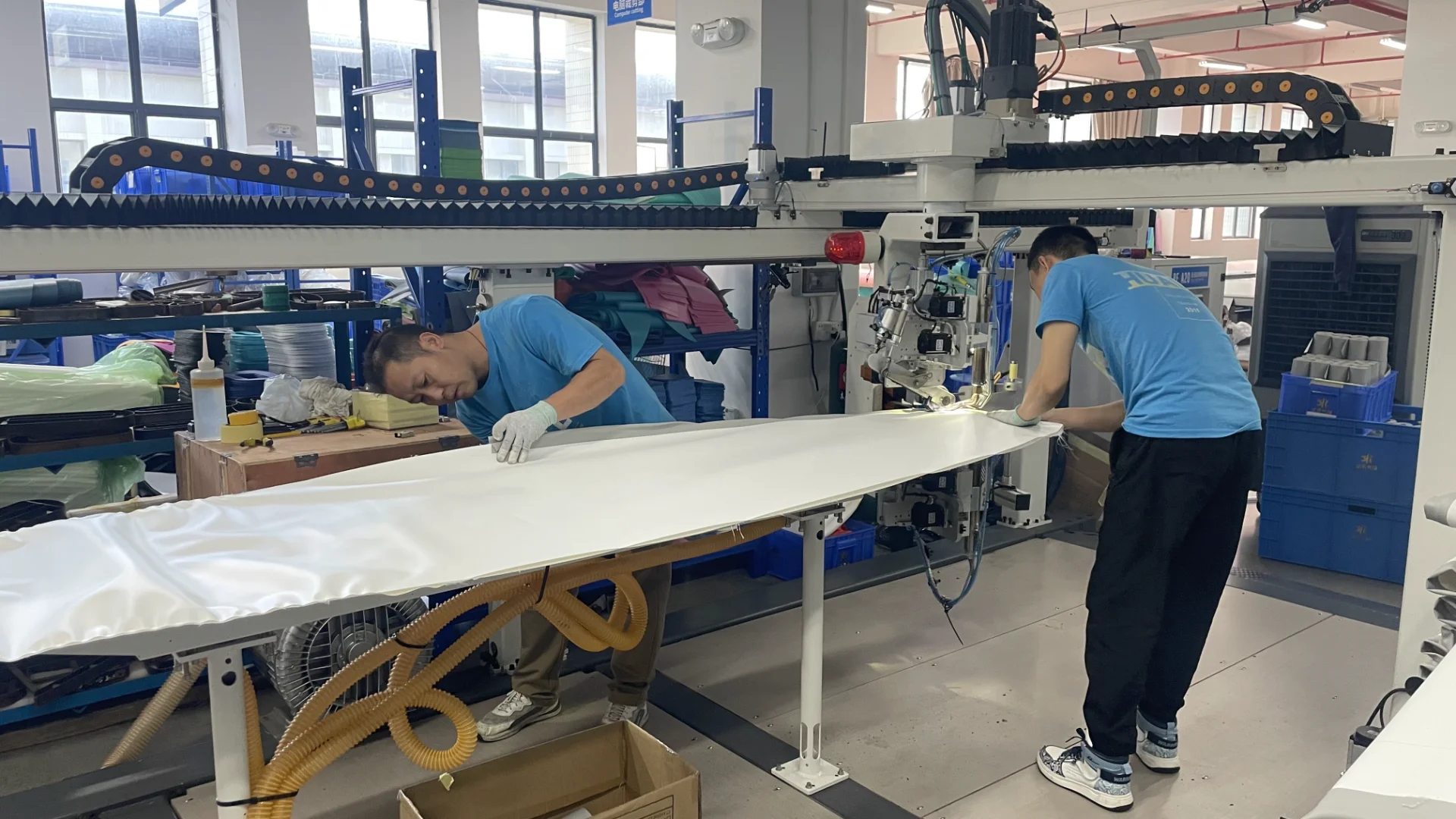
To make a chamber that is airtight, you need to connect the top and bottom layers. We use an inner rail band to do this.
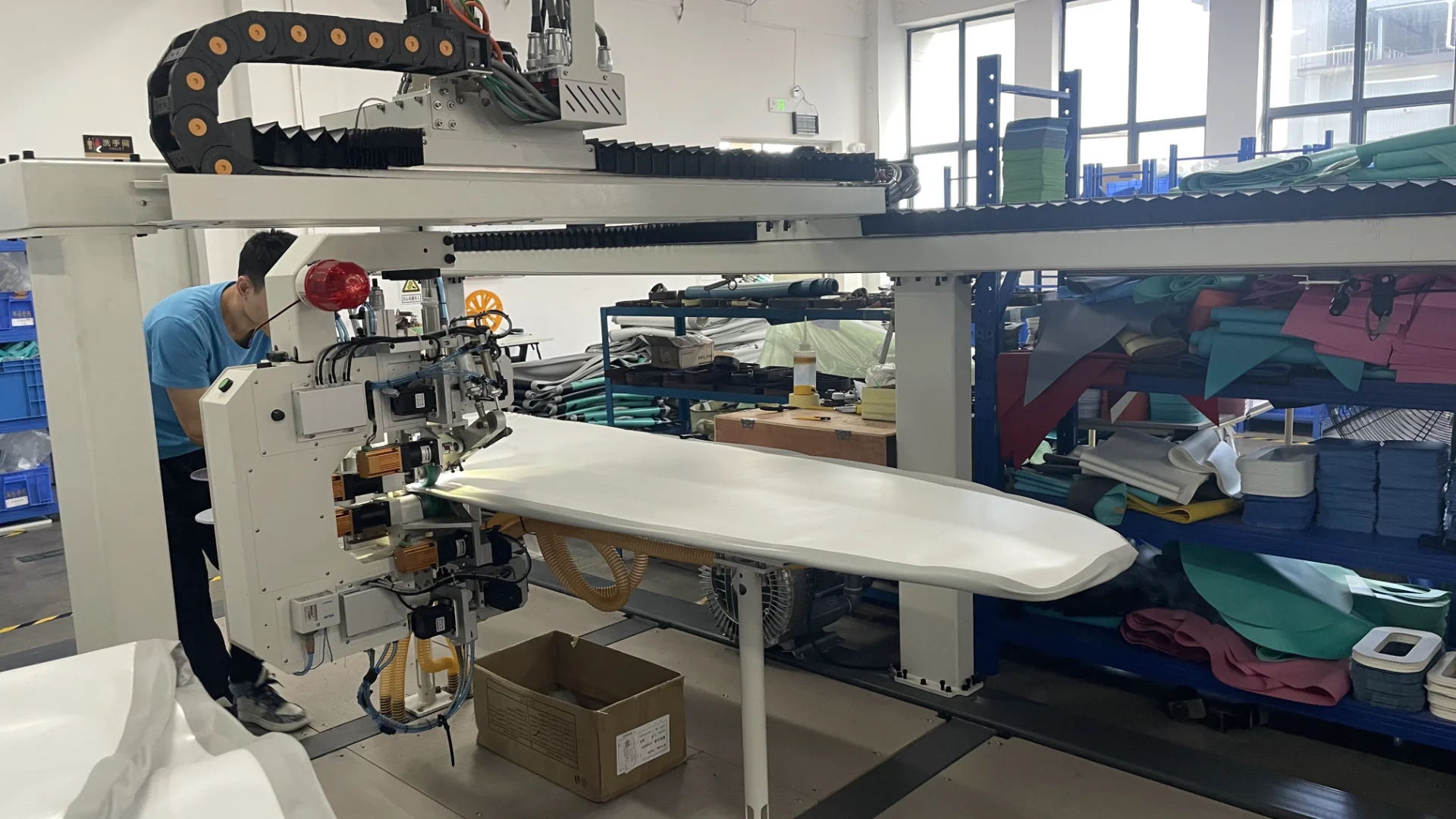
Cheaper manufacturers still use hand-gluing, which is heavy and easy to mess up. We use Heat Fusion Technology instead.
We employ a special machine that heats the PVC to more than 500°F to fuse the inner rail tape to the top and bottom layers.
The material physically melts together to become one piece that is strong. This approach gets rid of the need for harmful glues, makes the board around 2kg lighter, and makes a bond that is stronger than the material itself.
The Human Touch: Deck Pads and Hardware
The board now looks like a surfboard now that the hull is sealed, but it’s not ready to ride yet. It goes to the finishing station, where the work goes from machines to experienced workers again.
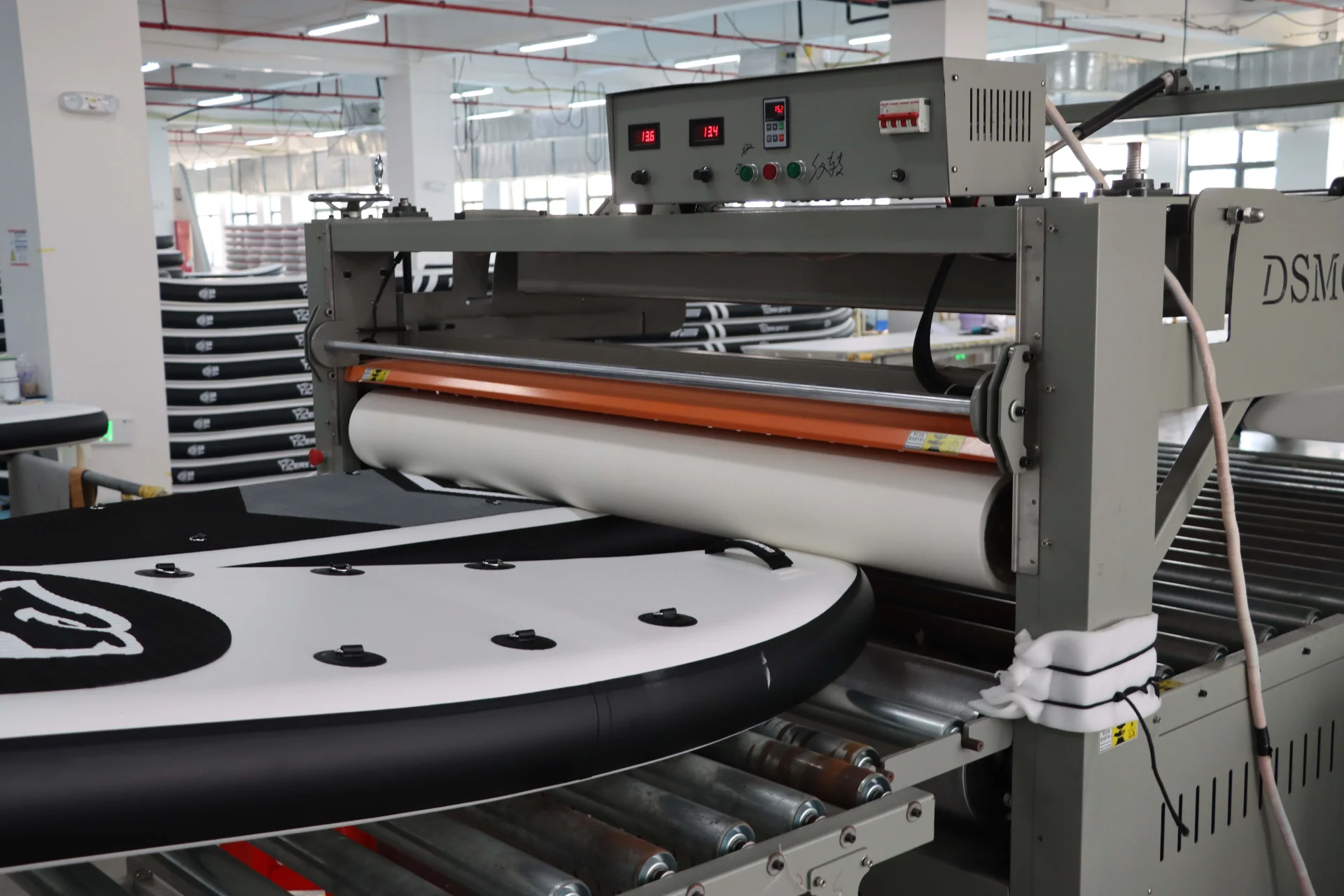
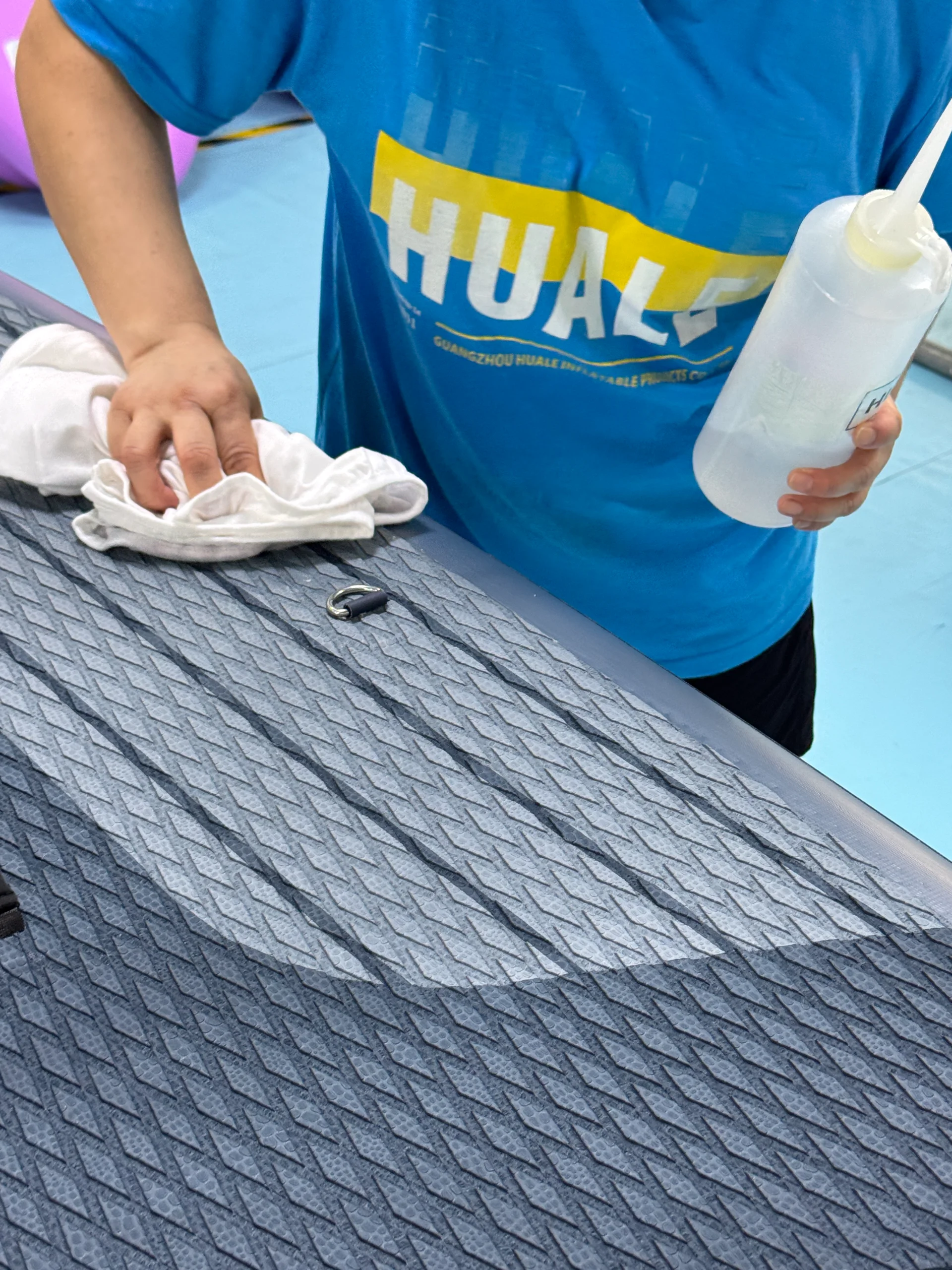
The EVA traction pad (the soft foam you stand on) is precisely lined up by workers.
You need to push down hard on this to make sure that no air bubbles are caught underneath it, which could cause peeling later.
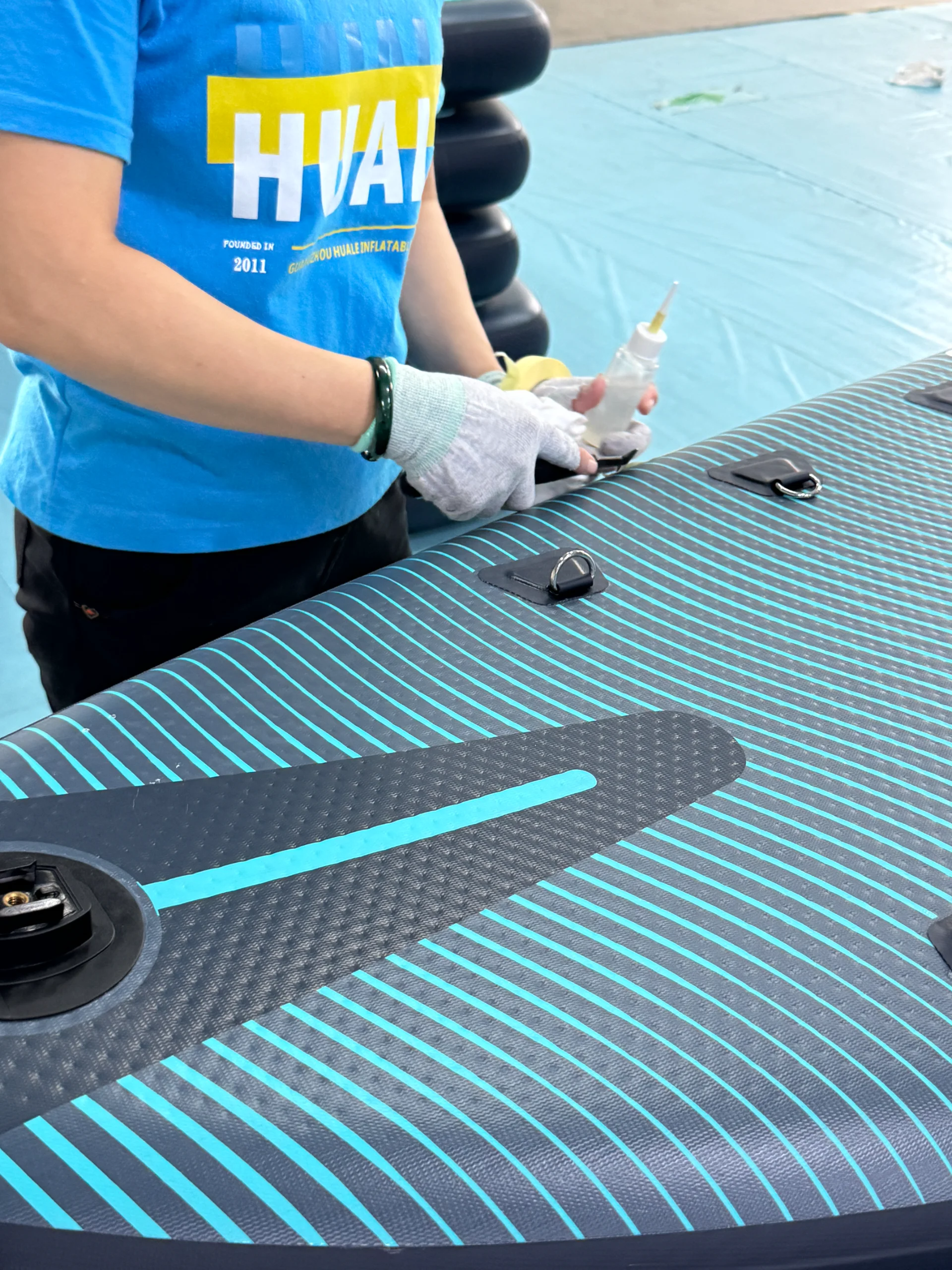
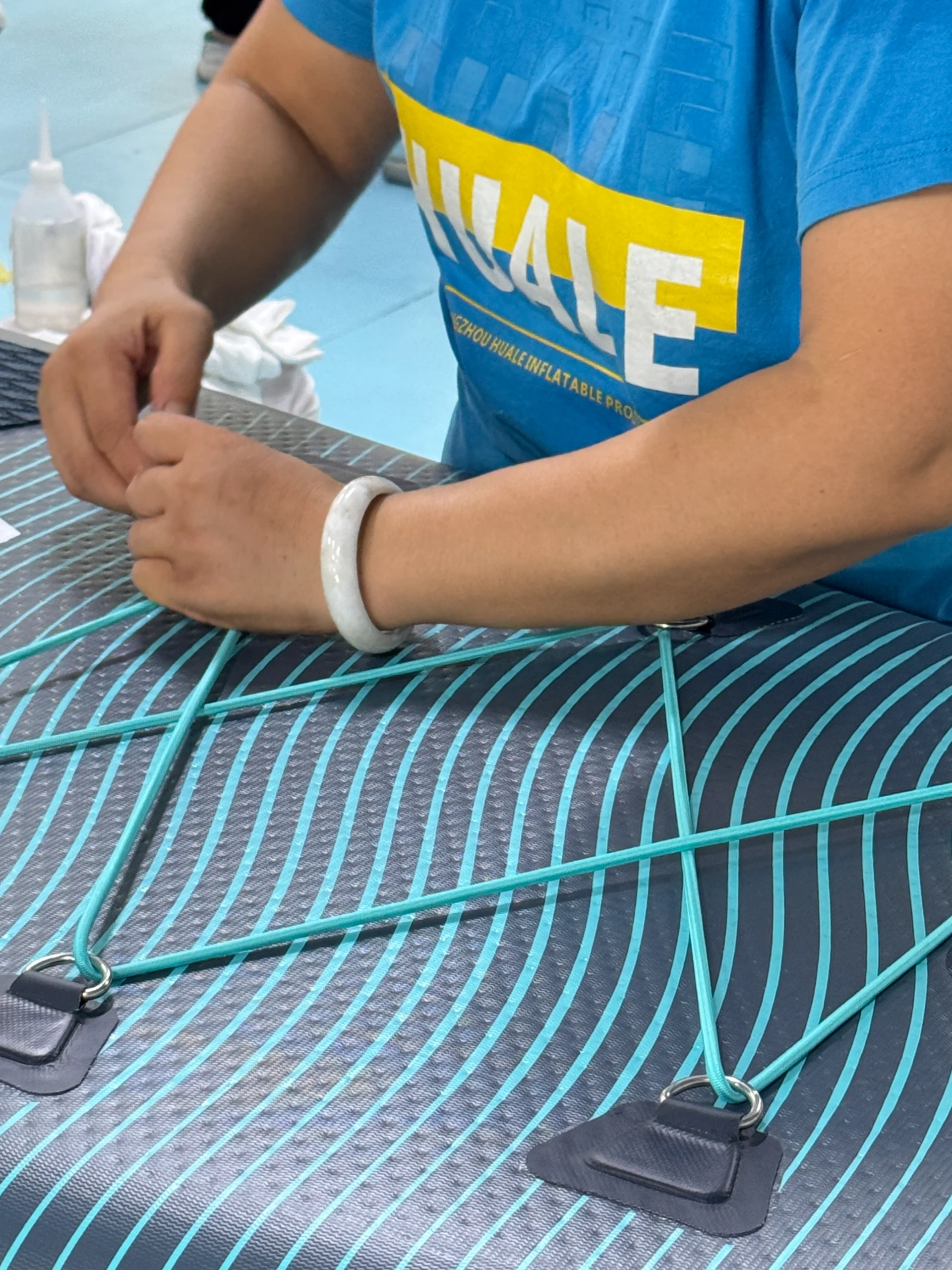
After that, the fin box, D-rings, and bungees come. I constantly tell my crew that the fin box is the board’s “anchor.”
If it isn’t completely straight (90 degrees to the tail), the board will move in a twisted way in the water, which will annoy the rider. Before the glue dries, we utilize laser guidelines to make sure everything is perfectly symmetrical.
The “Torture Test” (Quality Control)
You could think that the procedure is over after the board is done. The hardest part is just getting started.
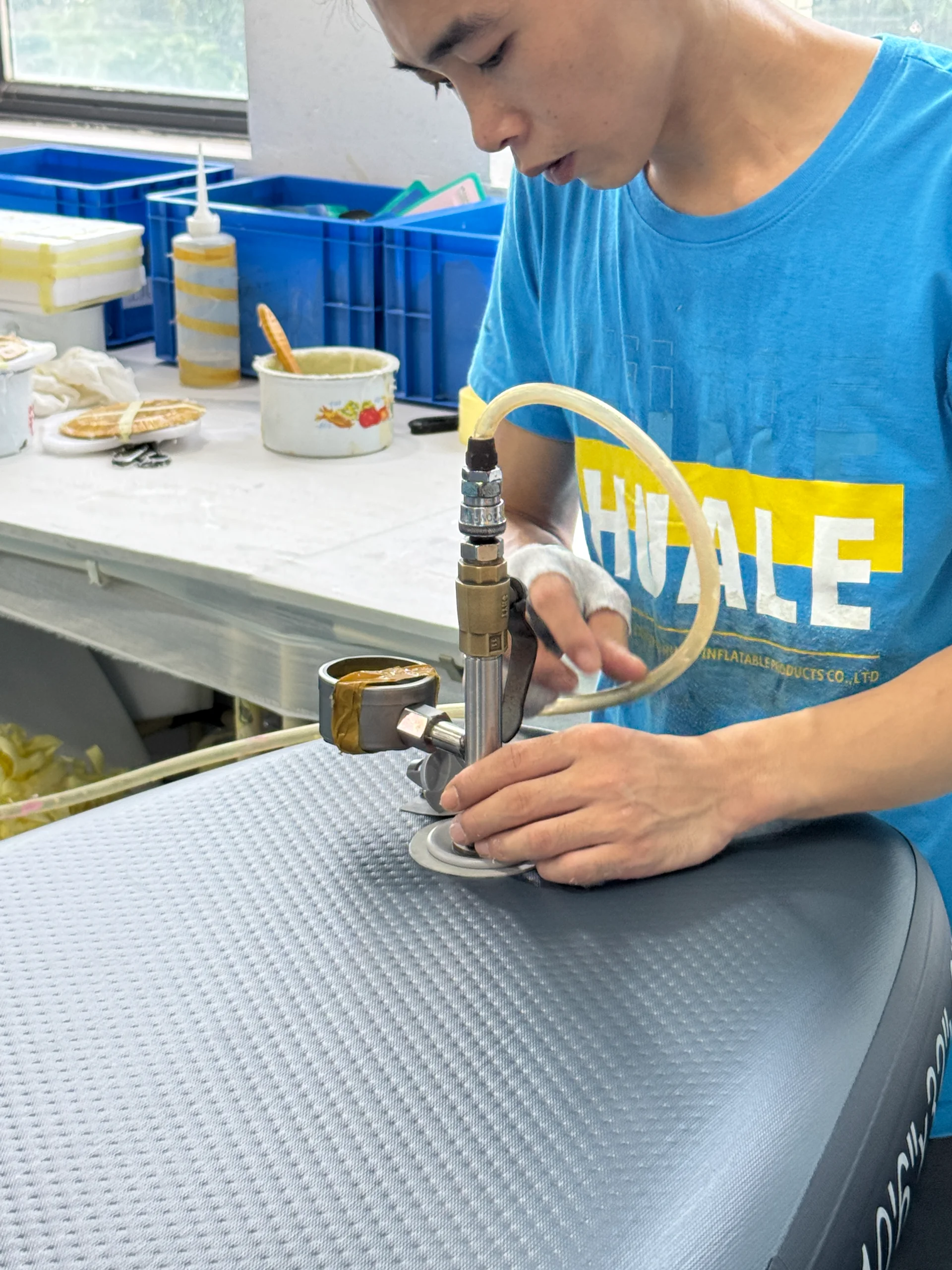
Every Huale board is pumped up to its highest PSI and then left in a chamber with a controlled temperature for 72 hours. This is not up for discussion. We aren’t only looking for big leaks; we’re also measuring little decreases in pressure.
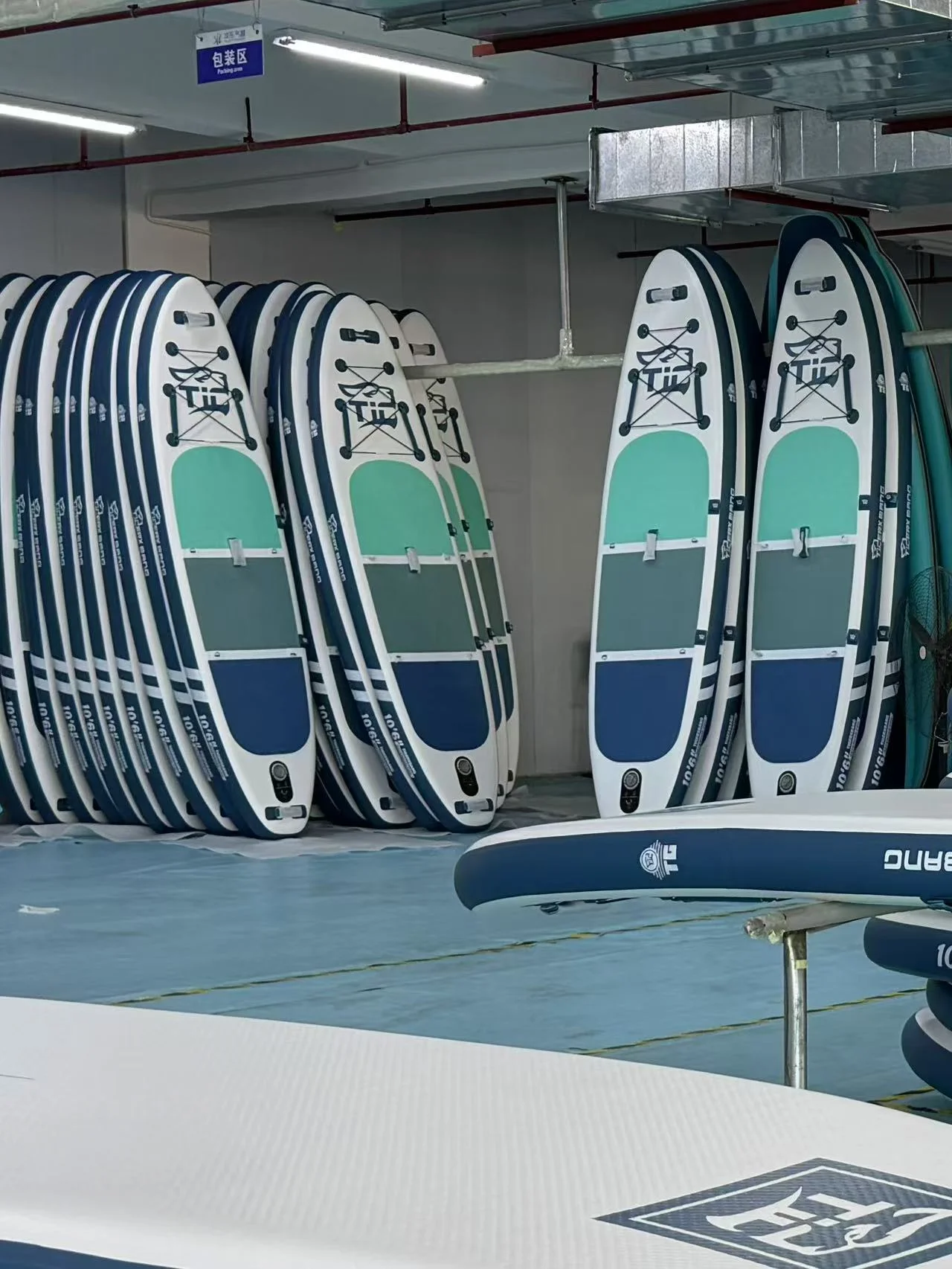
A board fails if it loses more than 0.5 PSI in three days. We also execute a “stress test” on random samples from each batch, blowing them up until they break to make sure our safety margins are correct. (Interesting fact: a board that is rated for 15 PSI can normally handle more than 25 PSI before it breaks.)
Conclusion: Why This Process Matters
You shouldn’t have to worry about the engineering under your feet when you’re out on the water, three miles offshore. You can trust it.
You can see that a high-quality inflatable board is more than simply PVC and air by looking at the careful processes we take, like the CNC cutting and the 72-hour inflation test. It is the result of engineering, perseverance, and a never-ending desire for quality.


