
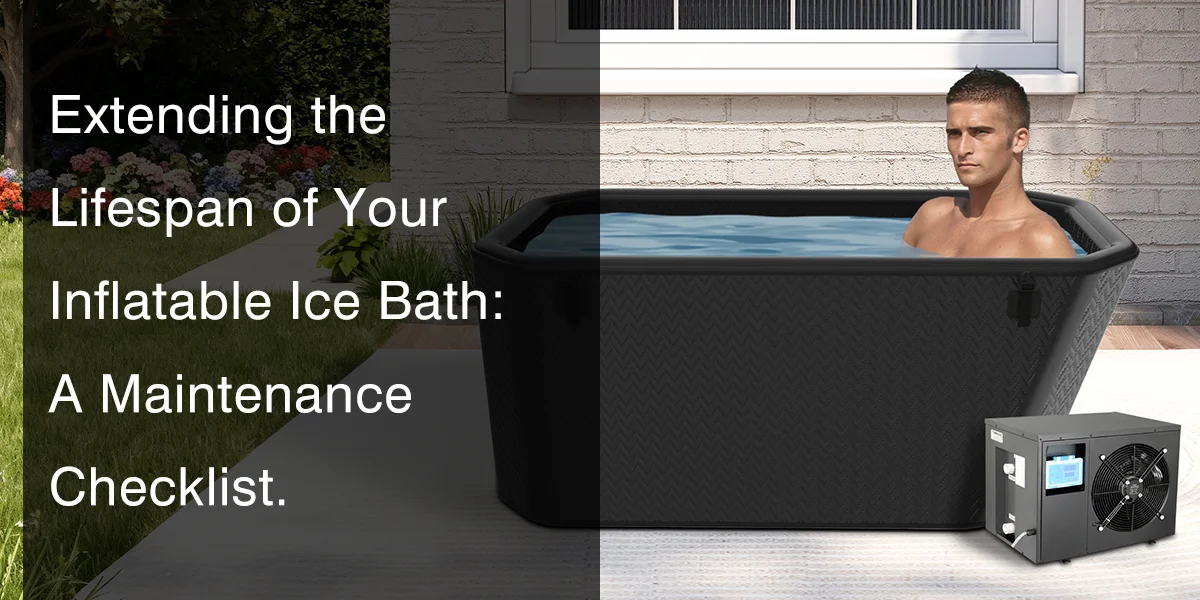
The “Cold Plunge” concept has really taken off in the previous few years. But as a manufacturer, I also witness what happens next: thousands of dollars’ worth of high-end inflatable tubs sent back to the factory, not because they were broken, but because of terrible chemistry and poor storage.
An inflatable ice bath is a complicated piece of engineering. It has Drop Stitch fabric for strength and thermal layers for insulation.
These materials interact with the water and the surroundings in a biological way, unlike a hard-shell acrylic tub.
You need to stop treating your investment like a baby pool and start taking care of it like the piece of wellness technology it is if you want it to last more than one season. This is my own list of things to do to live a long life.
Water Chemistry: The Fine Line Between Clean and Damaging
Chemical burns, not punctures, are what kills inflatable tubs the most.
A lot of pool owners throw in regular chlorine tablets and then forget about them. What’s the problem? When a chlorine tablet lies directly on the PVC floor, it forms a concentrated acidic area that bleaches the color and makes tiny cracks in the material. This is called polymer degradation.
The Expert Fix:
- Use a Dispenser: Don’t let tabs touch the PVC. Use a floating dispenser every time.
- Switch Sanitizers: Consider using Hydrogen Peroxide or non-chlorine oxidizers. If you must use chlorine, keep levels low (1-3 ppm). You can read more about the effect of harsh oxidizers on polymer structures to understand why chemical balance is non-negotiable for PVC longevity.
Combating “Biofilm” (The Slippery Enemy)
Have you ever felt a slimy texture on the walls of your tub? That isn’t just “dirty water”; it is Biofilm
Biofilm is a colony of bacteria that bonds to the surface of the PVC. Once it hardens, it is incredibly difficult to remove without scrubbing so hard you damage the coating. According to studies on bacterial biofilm formation, these colonies can degrade synthetic surfaces over time if left unchecked.
My cleaning rule is to not wait for the slime. You should wipe down the inside with a soft cloth and a moderate vinegar-water solution every time you change the water (which should be every 2 to 4 weeks, depending on how much you use it).
The vinegar’s acidity breaks down biofilm that is still in its early stages without hurting the drop stitch material.
The Physics of Freezing: Don’t Let It Turn Solid
It may sound hilarious to be afraid of freezing in a “Ice Bath,” but there is a big difference between cold water and a solid block of ice.
If you keep your tub outdoors in winter, you are fighting physics. As we know, water expands by about 9% when it freezes—a phenomenon explained by water density properties.
If the water in your tub freezes solid, that 9% growth has nowhere to go. It will push out with a lot of energy, tearing the internal drop stitch threads and separating the seams.
The rule is that if you leave water in the tub overnight while it’s cold, you need to use a floating heater or have a chiller running to keep the water circulating. If you don’t have these, empty the tub. A solid slab of ice will break your tub. End of story.
UV Exposure and the “Balloon Effect”
Don’t forget about the sun outside while you’re fretting about the water inside.
Ice baths that are dark in hue quickly soak up heat. On a hot day, if you keep your tub inflated and under direct sunshine, the air inside the chamber will get bigger.
I have seen tubs turn into round sausages because the pressure within them went from 8 PSI to 15 PSI in just a few hours, which blew out the shape of the tub.
Storage Strategy: When you’re not using it, always keep the heated cover on. Put the tub in the shade if it’s outside, or get a cover that reflects light. Let off a little bit of air pressure if you know a heat wave is coming. This will give the gas room to expand.
Summary: Routine Beats Repair
It sounds like a lot of work to keep things clean, yet it only takes five minutes to check your pH levels or clean a wall. It takes weeks to send a tub back for repairs.
If you take care of your inflatable ice bath by balancing the chemicals, keeping it from freezing solid, and keeping it out of the sun, it will be a part of your recovery routine for years to come.


