
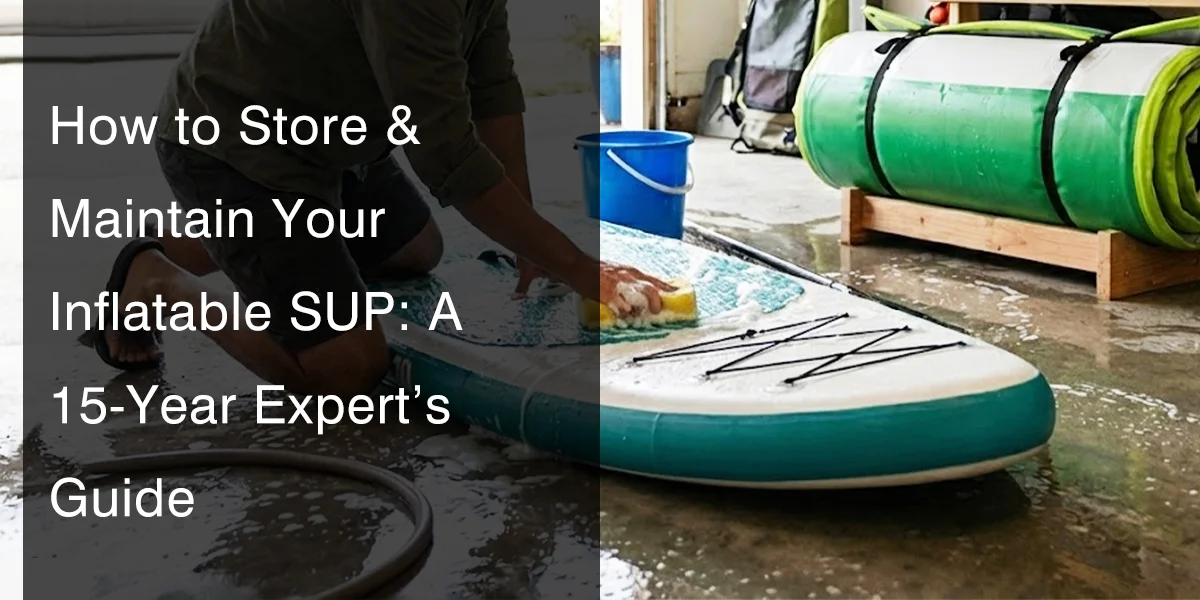
It’s fun to buy a decent inflatable paddle board (iSUP), but I’ve seen too many good boards get wrecked in just one season—not by rocks, but by how people store them.
As a maker with 15 years of expertise, I can tell you that 90% of how long your board lasts depends on what you do once you get off the water.
Don’t bother with the generic guides. Here is the expert way to maintain your Huale board looking and working like new for years.
The Golden Rule: Rinse, Don’t Just Dry
This is not up for discussion if you paddle in seawater. Salt crystals are tiny knives. If you leave them on the PVC, they can rust the material and block the valve pin.
- The Fix: Always wash your board with clean water. Pay close attention to the area around the valve and the fin box.
- Chemical Warning: Never use bleach or harsh detergents. These can accelerate plasticizer migration, causing the PVC to become brittle and crack over time. Use mild dish soap if you need to scrub off mud.
Sun Damage: The Silent Killer
All PVC products hate UV radiation. If you leave your board fully inflated on the beach in the scorching sun, it will be a disaster.
According to Charles’s Law, when heated, gas gets bigger. A board that is inflated to 15 PSI can quickly rise to 20 PSI in direct sunshine, which might cause a seam to break.
- Pro Tip: When you take a break on the beach, “burp” your board (let some air out) and keep it in the shade.
The Art of Rolling (Don’t Fold It Tight!)
How you pack your board matters.
Don’t: Fold it like a stiff piece of paper with sharp edges. This puts stress on the material.
Do: Like a sleeping bag, roll it up loosely.
Step-by-Step:
- Let all the air out.
- To force out the rest of the air, start rolling from the nose (the side opposite the valve).
- Don’t bend the fin box; keep it flat!
Long-Term Storage: Fight the Mold
If you are putting your board away for the winter, the most dangerous thing is dampness.
Putting a wet board in a bag makes it a good place for mold and mildew to grow, which can leave lasting stains on the deck pad.
- The “Bone Dry” Test: After drying it with a towel, let it sit in the shade for another 30 minutes to dry. Look under the bungees and at the seams.
- Storage Location: Put it in a cold, dry location. It’s okay to put it in the garage, but stay away from places where the temperature changes a lot. The best technique to keep crease marks from forming is to leave the board loosely curled or even a little inflated (1–2 PSI).
Valve Care
The valve is the only moving item on your board.
- Tighten It: Use the plastic wrench in your repair kit to check the valve every few months to see if it is tight. (Do this only when the board is flat!)
- Clean It: Usually, sand or salt is what makes the valve pin stick. To clean it, rinse it with warm water and press the pin a few times.
Conclusion
Taking care of things doesn’t have to be a pain. Your gear will last twice as long if you rinse it off and roll it up properly.
If you take care of your board, it will be ready for your next trip.


