
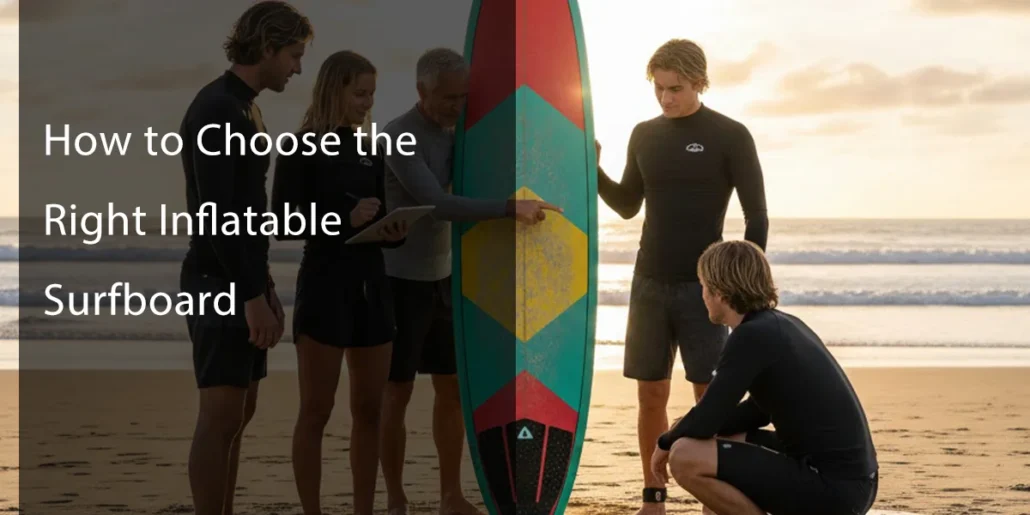
Let’s be honest: going into a surf store or looking for your first board online might be scary. You encounter endless forms, perplexing liter measurements, and exorbitant costs.
I’ve been in the business for ten years, and I’ve seen the same error happen hundreds of times: a rookie buys a cool-looking shortboard, goes to the beach, can’t catch a single wave, and quits two weeks later.
We don’t want that. You want to ride the waves now.
This guide isn’t about hard-to-understand hydrodynamics. It’s all about selecting the board that makes surfing fun and easy for you right away.
The Golden Rule: Volume is Your Best Friend
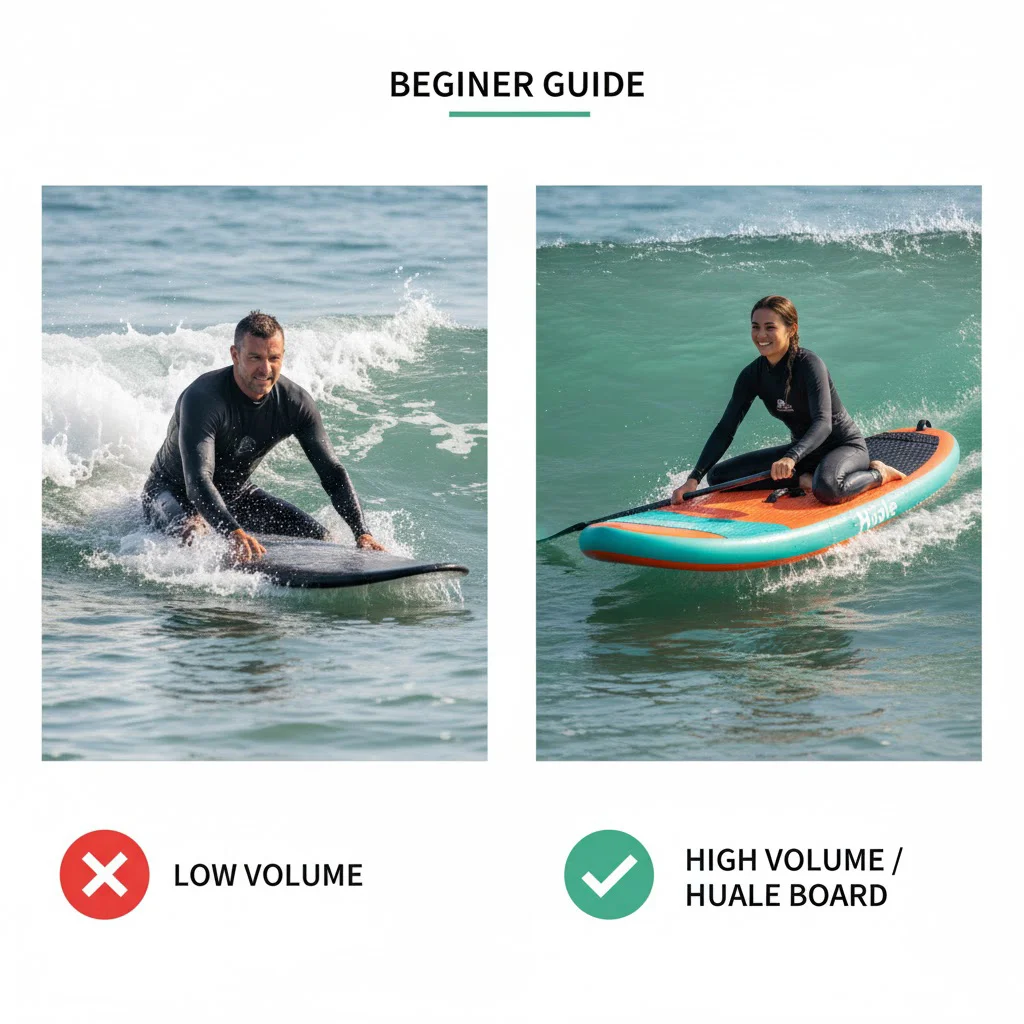
For a moment, forget about length. If you only remember one thing from this handbook, let it be Volume. Liters (L) are used to measure volume. It shows how much the board can float.
- More volume means easier paddling, better stability, and more waves caught.
- Less volume makes it harder to paddle, makes you twitchy, and makes it hard for beginners.
You need “float” if you’re just starting out. You don’t want to sink into the water; you want to sit on top of it.
| Your Weight (kg / lbs) | Recommended Volume (L) | Ideal Board Type |
|---|---|---|
| 50-60kg (110-130lbs) | 45L – 55L | 7’0″ – 8’0″ Mini-Mal or Foamie |
| 60-75kg (130-165lbs) | 55L – 70L | 8’0″ – 9’0″ Longboard / Inflatable |
| 75-90kg+ (165-200lbs+) | 70L – 90L+ | 9’0″+ Inflatable Longboard |
Material Matters: Why “Inflatable” is Taking Over
Let’s get to the point: Why should you buy an inflatable surfboard instead of a regular fiberglass one?
Inflatable boards were only pool toys ten years ago. What about today? Everything has changed because of the technology.
Drop-Stitch Technology makes modern inflatables rock-hard as you pump them up. But they have some unique benefits for the average surfer:
- The “Ouch” Factor (Safety): Fiberglass boards are hefty and durable.
When you wipe out (and you will), getting smacked by a powerful board hurts. The hard board can either hurt you or cut you. Soft-top and inflatable boards work like a buffer.
They are tough enough to ride but soft enough to let you make mistakes.
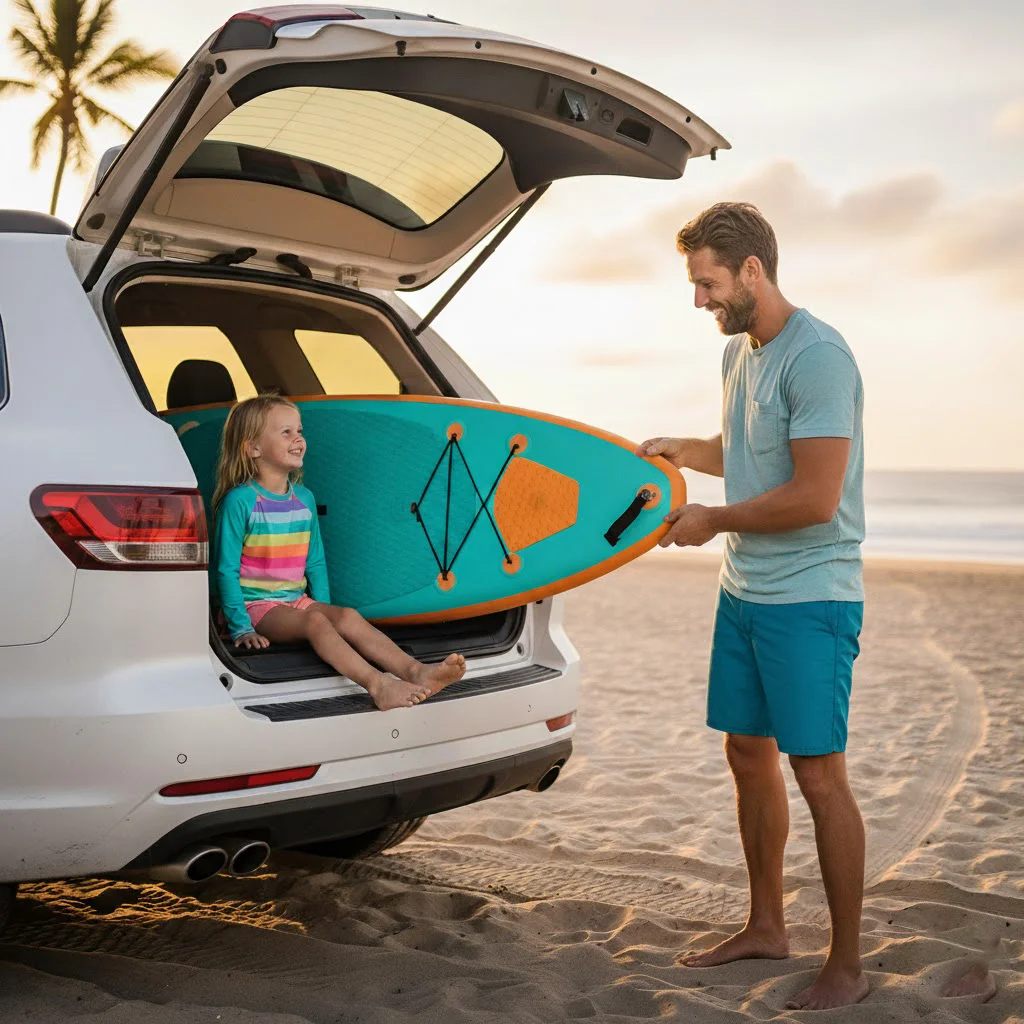
This is a safety element that you can’t live without if you’re buying for a family or kids. - The Travel Nightmare is Do you own a little car? Do you live in an apartment?
It’s a logistical headache to store and move a 9-foot hardboard.
You can roll up inflatable surfboards and put them in a backpack. You may throw it in your trunk, check it on a plane without paying many extra expenses, or put it in your closet.
It takes away the tension between you and the ocean. - Lastingness If you drop your fiberglass board in the parking lot, it breaks and costs $100 to fix.
Did you drop your inflatable board? It bounces. They are made to last in the real world.
Be Honest About Your Skill Level
For most people, this is the hardest part. We all want to be as talented as Kelly Slater, but buying a pro board won’t make you one.
- Level 1: The White Water Warrior. You are trying to stand up while catching broken waves (white foam). A longboard or a high-volume inflatable (8 feet or more) is what you need.
- Level 2: The Green Wave Catcher. You can paddle out to the lineup and catch waves that aren’t broken. You might even turn a little. A funboard or hybrid form (7 to 8 feet) is what you need.
The answer: If you’re at Level 1 or early Level 2, don’t use “shortboards” (anything shorter than 6’6″).
They are made for waves that are steep and quick, as well as for advanced moves.
Using one prematurely may hinder your progress.
Final Thoughts
Surfing is not a race; it’s a voyage. The best surfboard for you is the one that lets you catch the most waves in one session. You get better faster the more waves you catch.
For 90% of our clients who are just starting out, buying a high-quality inflatable longboard is the best thing to do. It is safe, can go with you, and keeps its worth better than a fiberglass board that has been damaged.