
If you cut open two inflatable paddle boards from different brands, the insides can look the same. But I can tell you that the way they seal those layers together makes all the difference. I’ve been in charge of production lines for more than 10 years. A board that lasts ten years is different from one that blows up in the parking lot after two seasons.
For a long time, the industry standard was only glue. A lot of it. But recently, things have changed and people are starting to use Heat-Welding (or Fusion Technology).
This isn’t simply a marketing gimmick; it’s a big revolution in how materials are made. Today, I want to talk about the physics underlying these two ways and why you should care about how your board is put up if you care about quality.
The Old Guard: Hand-Gluing (and Why It’s Fading)
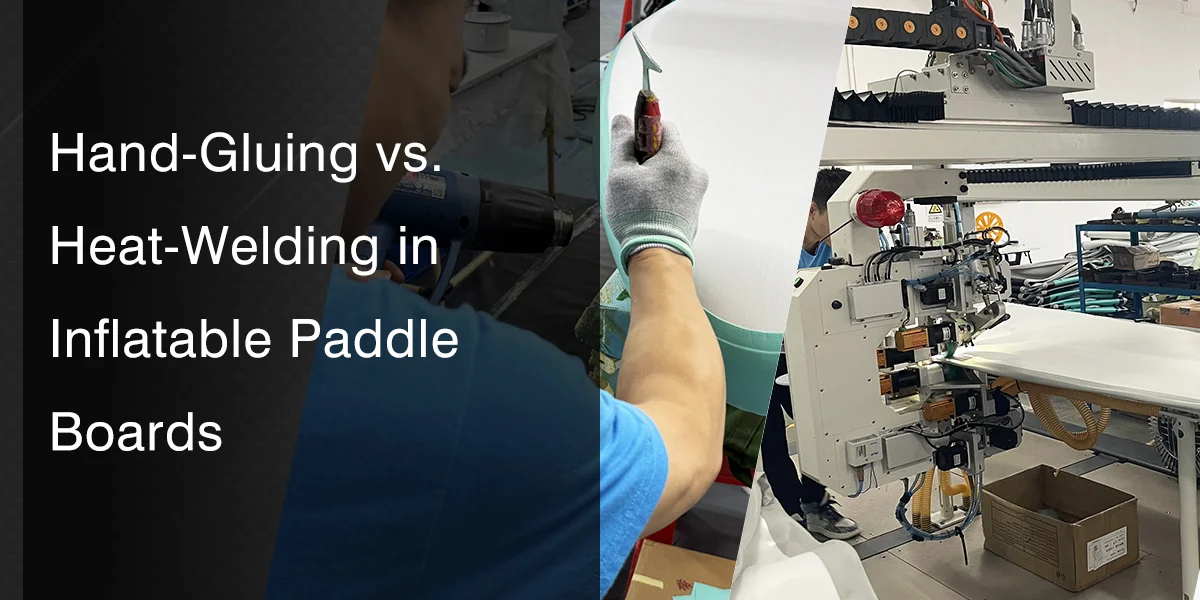
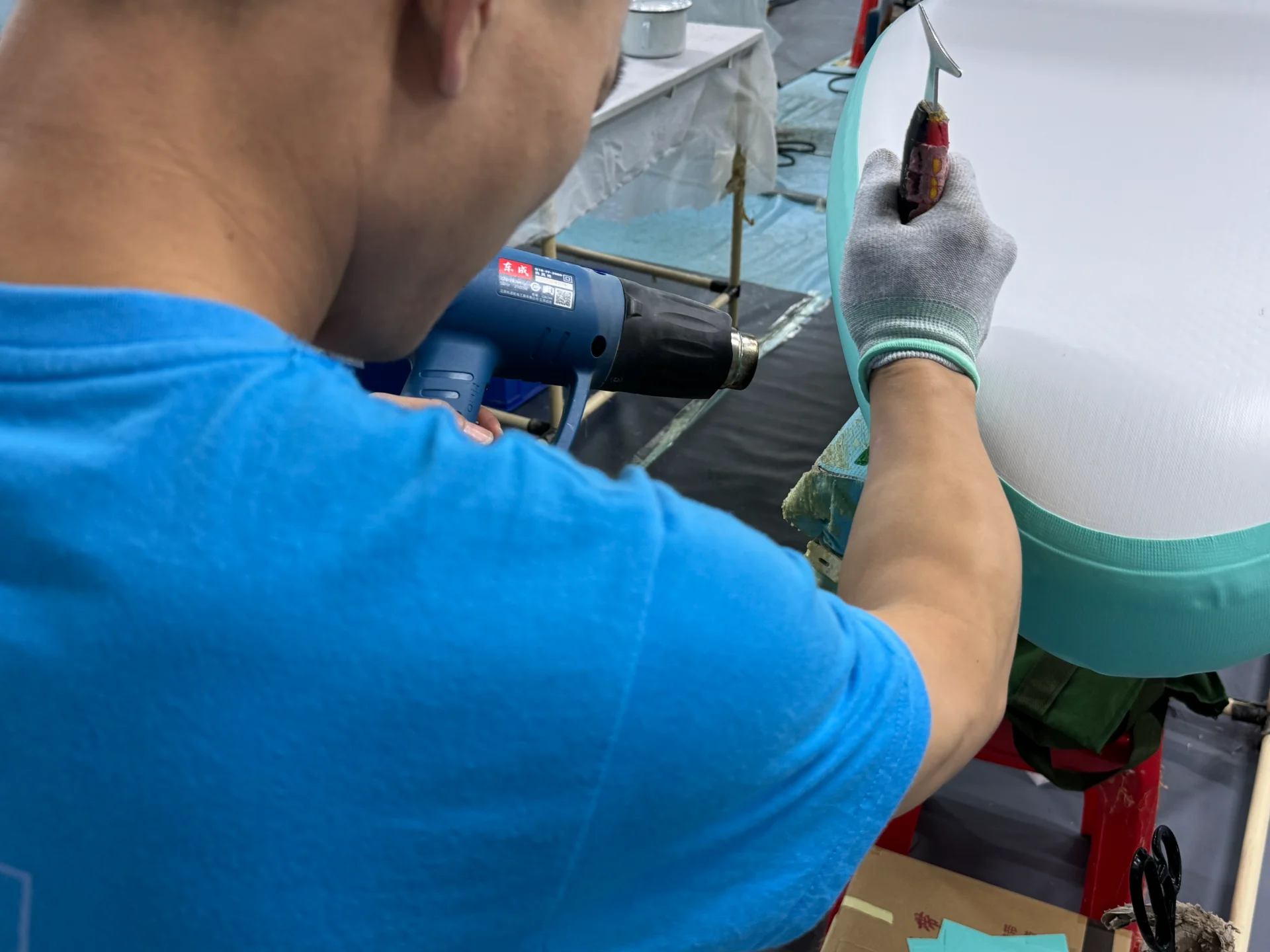
The factory floor smelled very strongly of solvent when I initially started working in this field. That’s because every seam on every board was rubbed by hand with strong glue.
How it works: A chemical adhesive is used to stick the drop stitch core to the outside PVC layers of a hand-glued board. It depends on a bond on the surface. It works like really strong double-sided tape.
The Problem with Glue: Glue works fine at first, but it adds a “ticking clock” to the product.
- Weight: Glue is hefty. A board that is fully glued can hold an extra 1.5 kg to 2 kg of weight only from the glue that has dried.
- The “Plasticizer” Problem: This is where things become complicated. Over time, the plasticizers in PVC (which make it flexible) might move around and react with the glue, which makes the connection weaker. To understand why this degradation is unavoidable, you can learn more about how plasticizer moves in polymers.
- Sensitivity to Heat: Glue gets softer when it’s hot. On a 90°F day, the air pressure within a glued board rises and the glue weakens if you leave it in the trunk of a car. What happened? A seam that has come apart.
The Revolution: Heat-Welding (Fusion Technology)
“Fusion” or “Machine Lamination,” which is also known as “Heat-welding,” changed everything.
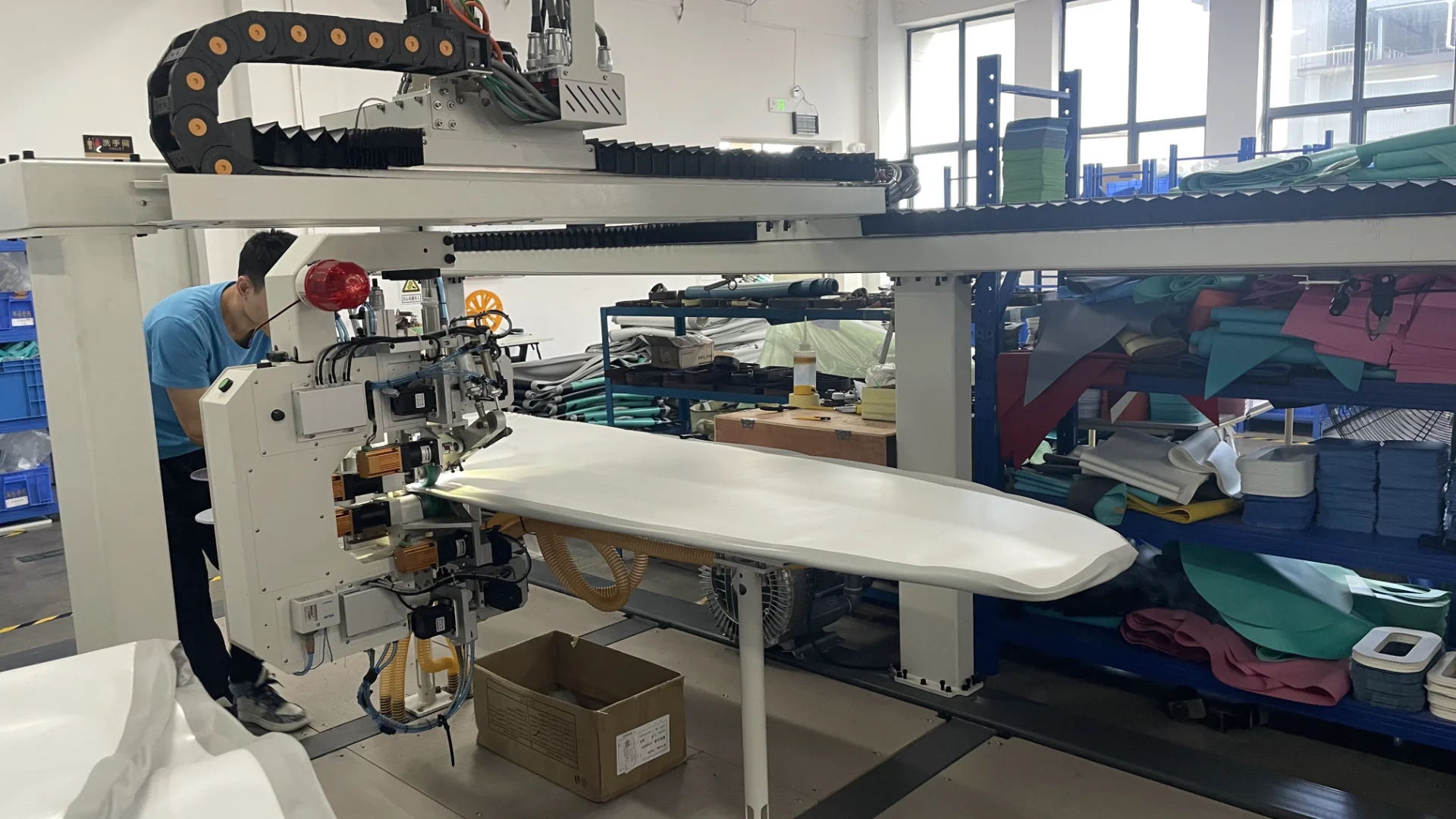
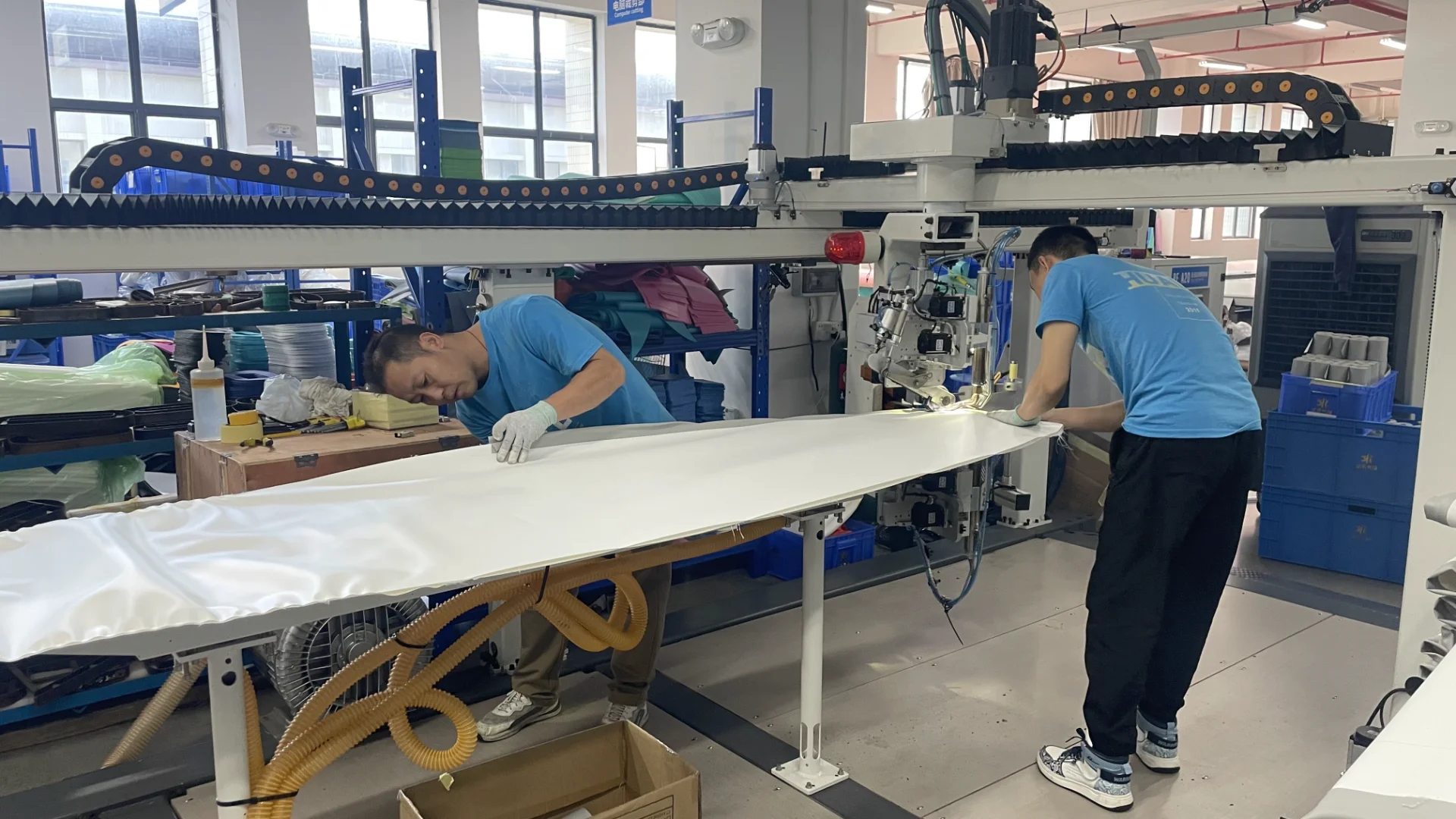
How it works: Instead of putting a coating of liquid glue on top, we run the raw ingredients through a specific machine that employs exact heat and pressure. This method makes a mechanical bond. The outer skin doesn’t only stick to the core; it actually becomes one with it.
In engineering words, this makes a structure that is more like a “monocoque” design.
Thermoplastic welding principles say that fusing the materials removes the weak point of the interface, making a bond that is often stronger than the material itself.
The Expert Advantage:
- No Leaks: The seam is bonded, so air can’t get out.
- Lighter and stiffer: By taking off the thick adhesive layer, we make the board around 20% lighter and make it stiffer in the torsion direction.
- Eco-Friendliness: This procedure cuts down on the use of chemical solvents by a lot, which cuts down on the amount of Volatile Organic Compounds (VOCs) that are used in the production process.
The Real-World “Torture Test”
I have personally been in charge of burst tests, where we blow up boards until they break.
- Around 20 to 25 PSI, glued boards usually break at the seams. The glue gives up before the cloth does.
- Heat-welded boards can usually hold up to 35–40 PSI. When they do break, it’s usually the fabric that tears, not the seam that pops.
Most high-end brands have switched to fusion technology because of this safety margin. We may now give 3-5 year warranties instead of the usual 1-year warranty.
Final Verdict: Check the Specs
When you’re looking for your next board (or brand), don’t just look at the color or the extras. Ask the tough question: “Is this board glued or fused?”
If you want a cheap board for light use, gluing is OK. Heat-welding is the only professional choice if you want a piece of equipment that can handle the weather, travel, and high pressure without breaking.