
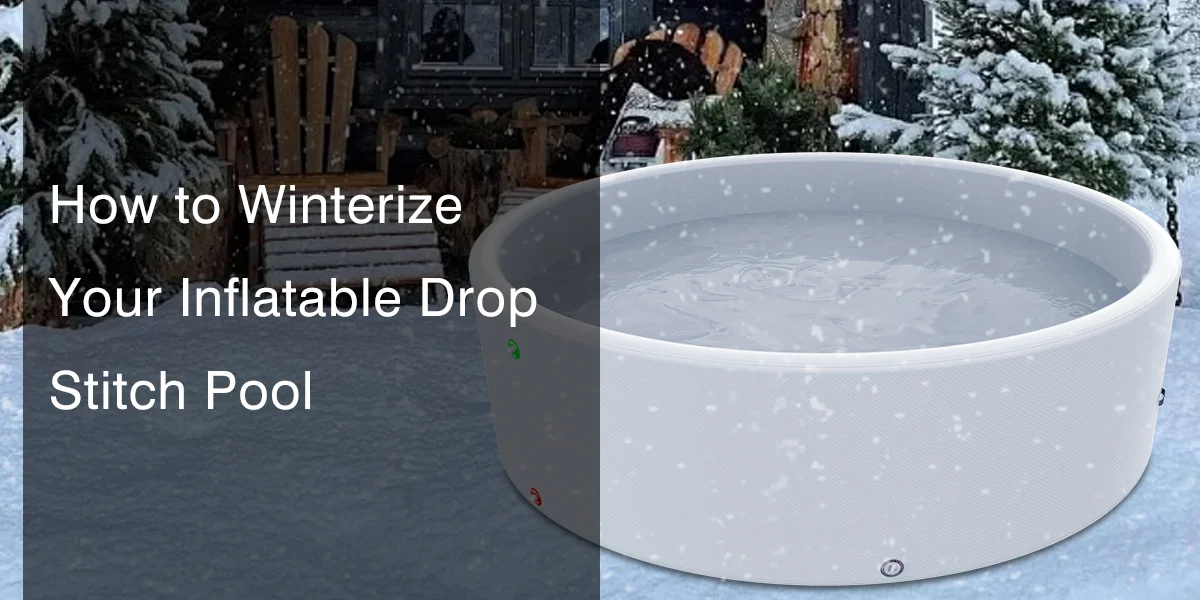
I’ve been working with drop stitch technology for fifteen years, and I’ve seen a distressing trend: most of the damage to inflatable pools happens in January when they’re not being used, not in July when they’re being utilized.
People sometimes think that drop stitch material can endure being thrown into a cold shed because it is “military-grade.” The PVC is durable, but the complicated interior fibers and coatings have a weakness: they become brittle when it’s cold and when chemicals sit about for a long time.
You need a winterization plan that takes care of the materials if you want to open your pool following season and find it in perfect condition instead than patched. This is how I take care of my own tools.
1. The Draining Phase: It’s Not Just About the Water
It looks easy to empty the pool, but just pulling the plug isn’t enough. As the water level goes down, you are racing against dirt.
During the summer, body oils, sunscreens, and tiny algae probably developed a thin, undetectable layer on the PVC walls. If this film dries on the surface, it will make mold grow, which will eat away at the covering.
My Pro Tip: Start cleaning the pool before it becomes empty. While the water is still wet, scrub the floor and waterline with a soft-bristled brush. Cleaning up dried scum is a million times harder than cleaning up liquid filth.
2. The “Bone Dry” Rule (Where Most People Fail)
This is the phase that 80% of pool owners mess up. You might believe the pool appears dry after an hour in the sun, but drop stitch material is great at hiding moisture since it has a rough surface and strong seams.
Mildew can grow in your pool by spring if there is moisture trapped in it and it is gloomy. Water swells when it freezes, which is even worse. If moisture gets trapped in a valve or a deep wrinkle, it can micro-fracture the PVC layers.
The Towel Test: After the floor has dried, use a dry microfiber towel to wipe along the bottom borders where the wall meets the floor. The item is not ready to pack if the towel becomes wet. I normally suggest that you dry the whole thing off by hand with a towel, taking specific attention to the inflation valve.
3. Rolling vs. Folding: Protecting the Material Memory
When it’s time to put the pool away, you might want to fold it up into a nice, compact square to save space. Don’t give in to the urge.
Folding thick drop stitch PVC over and over again makes “hard creases.” After being stored in the cold for months, these wrinkles produce weak spots where the material might wear down and break (we call this “cold cracking”).
Choose the “Loose Roll” method instead. Consider wrapping it up like a large poster rather than folding it like a sheet. Rolling spreads the stress equally over the material. If you must fold it to fit in a box, do so loosely and don’t put heavy things on it.
4. The Storage Environment Matters
Finally, where you put the pool is just as important as how you pack it.
I once had a client store their pool on a concrete garage floor. By spring, mice had chewed through the bag and the pool liner because they love the texture of PVC for nesting.
The Ideal Setup:
- Elevation: To keep mice away, keep the pool off the floor on a shelf or in a plastic bin.
- Temperature: PVC can handle the cold, but it gets stiff. If the weather is below freezing, don’t move or unroll the pool. The material gets brittle and can break easily. A basement with climate control or a garage with insulation is the best place.
Final Thoughts
Winterizing your pool isn’t simply a job; it’s a way to make sure it lasts longer. When the sun comes back out, you’ll be glad you spent an extra thirty minutes today making sure the material is clean, dry, and loosely wrapped. It will save you days of work and trouble.


